
Mariam Veiszadeh warns political rhetoric becomes a 'permission slip' for racism
2026-10-23T16:45:00+11:00

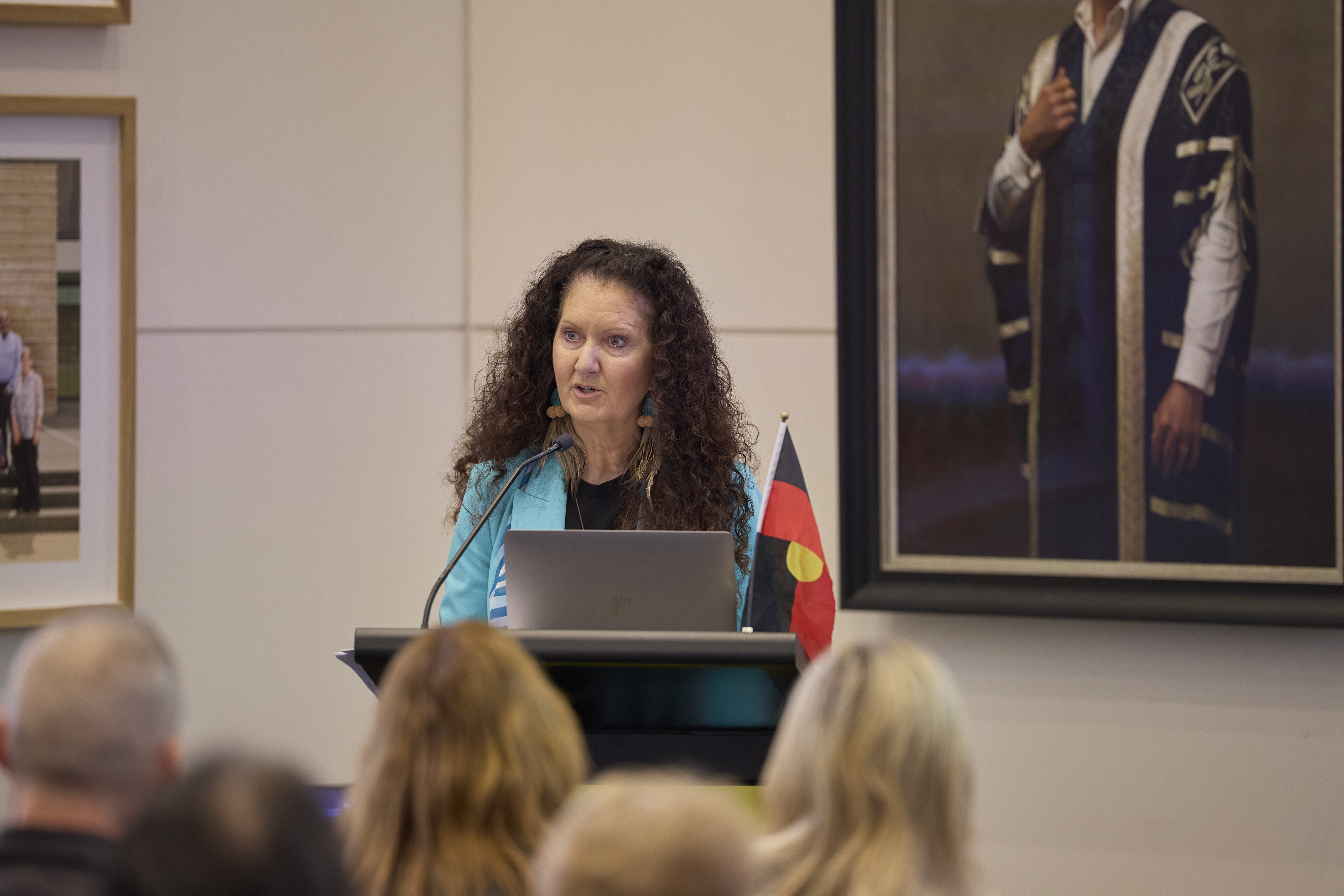
In UNSW’s 2026 Kaldor Centre Oration, lawyer and advocate Mariam Veiszadeh argued that inflammatory rhetoric acts as a "permission slip" for prejudice and can undermine social cohesion long before violence occurs.
Photo: Jacquie Manning
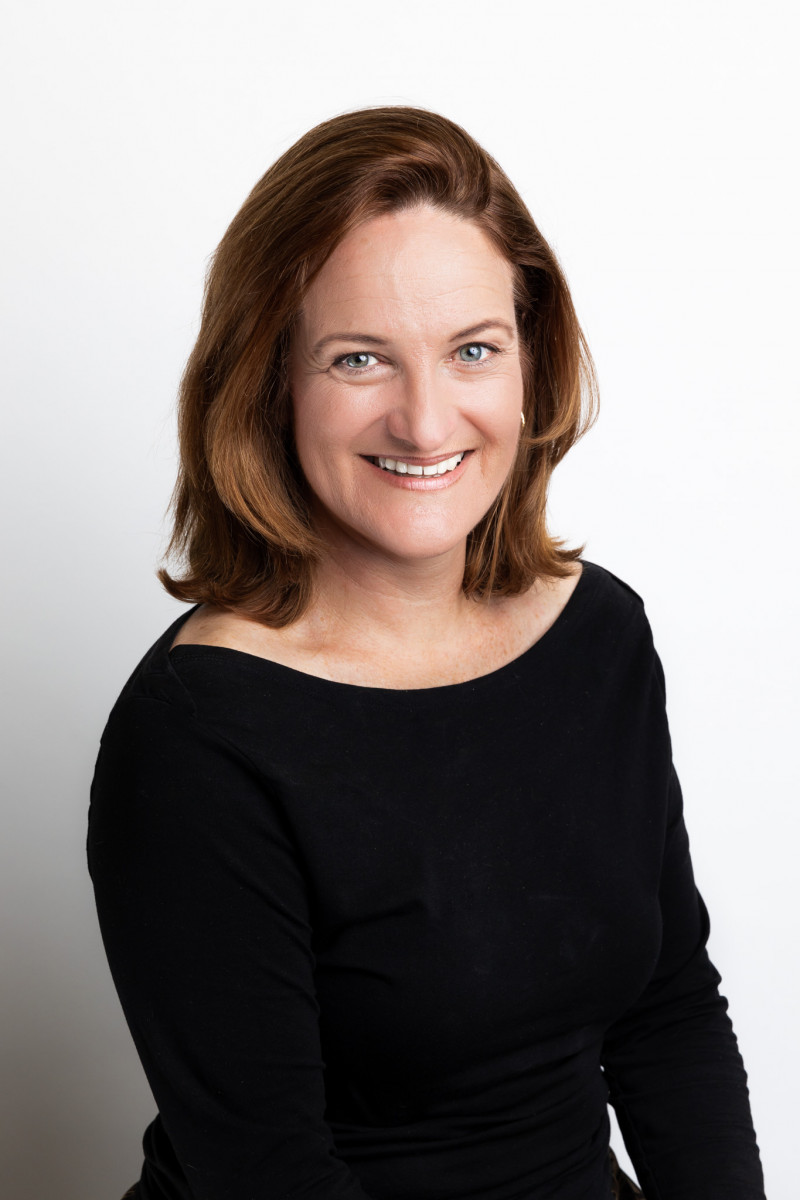
Lawyer and advocate Mariam Veiszadeh delivered the 2026 Kaldor Centre Oration at UNSW, exploring how racism spreads between politics, media and everyday life.
In the wake of the alleged attack on independent MP Helen Haines, which has reignited debate about political violence, lawyer and advocate Mariam Veiszadeh urged Australians to pay closer attention to how hostility spreads through public life.
She called it trickle-down racism.
“Unlike trickle-down economics, it actually works,” Ms Veiszadeh told an audience of hundreds at the Kaldor Centre Oration on Tuesday. Language used by politicians and commentators “trickles all the way down into boardrooms, into workplaces and classrooms and our social media feeds”.
Ms Veiszadeh pointed to recent comments in parliament directed at minister Anne Aly, the first Muslim woman in Australia’s parliament. A Liberal MP said in a policy debate that Aly should be “shamed and stoned in the square”; she later apologised for the physically violent imagery. Days later, UNSW Centre for Ideas deleted a comment which included the words “being stoned” responding to a Facebook post on its page promoting Tuesday's oration.
“Words uttered in Parliament trickle down into the comments section,” she said. “When people with power and platforms speak about migrants and refugees in derogatory terms, they give everyone else a permission slip to do the same.”
“Racism doesn't only trickle down,” though, Veiszadeh added. “It trickles up.
“What gets said in the darkest corners of the internet on Monday is repeated, a little more politely, on a podium by Friday.”
Ideas migrate both ways, between anonymous online spaces and mainstream debate. “One gives permission to the next – from the comment sections to the workplace, from social media to the Senate floor, from breakfast television to the playground.”
This cycle is sustained, she argued, when too few people challenge it because of the personal cost of speaking out.
ASIO Director-General Mike Burgess has repeatedly warned that grievance, intolerance and polarisation are creating an environment in which violence becomes more likely.
Ms Veiszadeh was careful not to draw a direct line between inflammatory rhetoric and any individual act of violence. She argued the conditions that enable hostility are often established long before violence occurs.
When racism becomes personal
In her remarks entitled ‘Advance Australia fair?’, Ms Veiszadeh noted that she was born in Kabul, Afghanistan in 1984, during the Soviet war, the same year Advance Australia Fair became our national anthem. Granted asylum by Australia in 1991, she arrived aged seven not knowing a word of English.
Since arriving in Australia, she has built a career as a lawyer and advocate focused on anti-racism, belonging and cultural diversity. An experienced non-executive director, she has served as CEO of Media Diversity Australia, been a TEDx speaker, and acted as a spokesperson for the Afghan Australian Advocacy Network. In 2023, she was named Australia's Most Influential Asian-Australian.
In 2014, Ms Veiszadeh founded the Islamophobia Register Australia, a secure platform for reporting Islamophobic and anti-Muslim incidents.
When people with power and platforms speak about migrants and refugees in derogatory terms, they give everyone else a permission slip to do the same.

By 2015, she had become the target of horrendous online abuse that lasted several years – including, she said, when “an image circulated online depicting me being stoned to death, with photoshopped blood running down my cheek, and to this day it makes me sick.”
“I had police patrolling outside my house and my work, beefing up my home security given the credible death threats I was receiving,” she said. “Wikipedia cites me as case study on [cyberbullying].”
The limits of belonging
Overt abuse isn’t the only manifestation of racism. Conditional belonging is another. As Ms Veiszadeh put it: “Belonging shouldn't come with a performance review.”
Yet it often does, she suggested. Take footballer and former refugee Nestory Irankunda, who was celebrated nationwide when he scored the Socceroos’ first goal in the 2026 FIFA World Cup. That’s not the case for many other people of his background, Ms Veiszadeh noted. People perceived to be African were nine times more likely to be searched by Victoria Police than Anglo-Saxon people, according to 2024 data.
“The same community that is celebrated when it scores goals is over-policed when it walks down the street,” she said.
Ms Veiszadeh also cited other Australians, such as former Australian Test cricketer Usman Khawaja and celebrated lawyer and OAM recipient Nyadol Nyuon, who experienced abuse after speaking out about politics and racism.
“There is a script this country has written for refugees and migrants,” she said. “Be grateful. Be exceptional. Be unthreatening. The ‘good refugee’. The ‘model minority’.”
This script renders acceptance conditional. It can be withdrawn as soon as the mood, or headline, shifts.
And it invites a hierarchy of belonging. “Sorting us between mediocre and exceptional is rarely applied to people who are viewed as ‘real Australians’ – which at times feels like a designation reserved for people who are of an Anglo-Celtic background or thereabouts.”
What social cohesion really means
Social cohesion is often talked about as important in Australia. At the Kaldor Centre Oration, co-presented by UNSW’s Kaldor Centre for International Refugee Law and the UNSW Centre for Ideas, Ms Veiszadeh urged the audience to think about what social cohesion looks like in everyday life.
“Too often, cohesion is quietly defined as the absence of discomfort for those already at the centre,” she said.
“If cohesion only ever asks the people on the margins to stay quiet, stay grateful and stay small, then it isn’t cohesion. It’s compliance.”
Belonging shouldn't come with a performance review.
A cohesive community is one in which people experience institutions as fair and trustworthy, Ms Veiszadeh said. “And on that measure, I believe we are failing. Not because communities aren’t trying, but because too many of our institutions aren’t,” she said. Ms Veiszadeh cited data showing persistent disparities in employment and opportunity:
Recent migrants earn 10% less than comparable Australian-born workers.
Recent migrant women with postgraduate degrees earn about 31% less than similarly educated Australian-born women.
Job applicants with non-English names, even those born and educated here, receive fewer than half the callbacks for leadership roles.
“We know that most Australians generally hold inclusive values,” Ms Veiszadeh said.
“But those values are vulnerable when economic anxiety is high and political leaders offer a scapegoat.”
Taking a stand
Ms Veiszadeh called her own story one of privilege. She credits Australia's generosity, and one teacher in particular, for changing the course of her life.
“I did not earn my place in this country by being exceptional. I was given a chance, by a nation that once understood protection as an obligation, and by my ESL teacher, Mrs Brown.”
English as a Second Language (ESL) teacher Mrs Patricia Brown did not ask who deserved belonging; “She made all of us feel welcome,” Ms Veiszadeh said. On stage in conversation with Ms Veiszadeh, broadcaster Nicole Abadee said, “we need more Mrs Browns”. People who ask what Australians owe one another.
“What we are living through is a failure of imagination, and of courage,” Ms Veiszadeh said, concluding with a challenge:
“If you lead an organisation, measure cultural diversity, close the intersectional and cultural pay gap, and make it safe to name racism.
“If you consume the news, ask more of the media you read and watch, and of the politicians you vote for.
“If you hear a dog whistle, in the boardroom, the staffroom or the group chat, don’t let it pass.
“And if you work in law, policy or advocacy … call out injustice without fear or favour, at home and abroad.
“Because,” she warned, “what we tolerate today becomes the culture we inherit tomorrow.”
Media enquiries
For enquiries about this story and interview requests, please contact Lauren Martin:
Tel: 0407 393 070
Email: lauren.martin@unsw.edu.au