Donna Strickland’s path from curious kid to Nobel laureate
2025-07-16T11:06:00+10:00

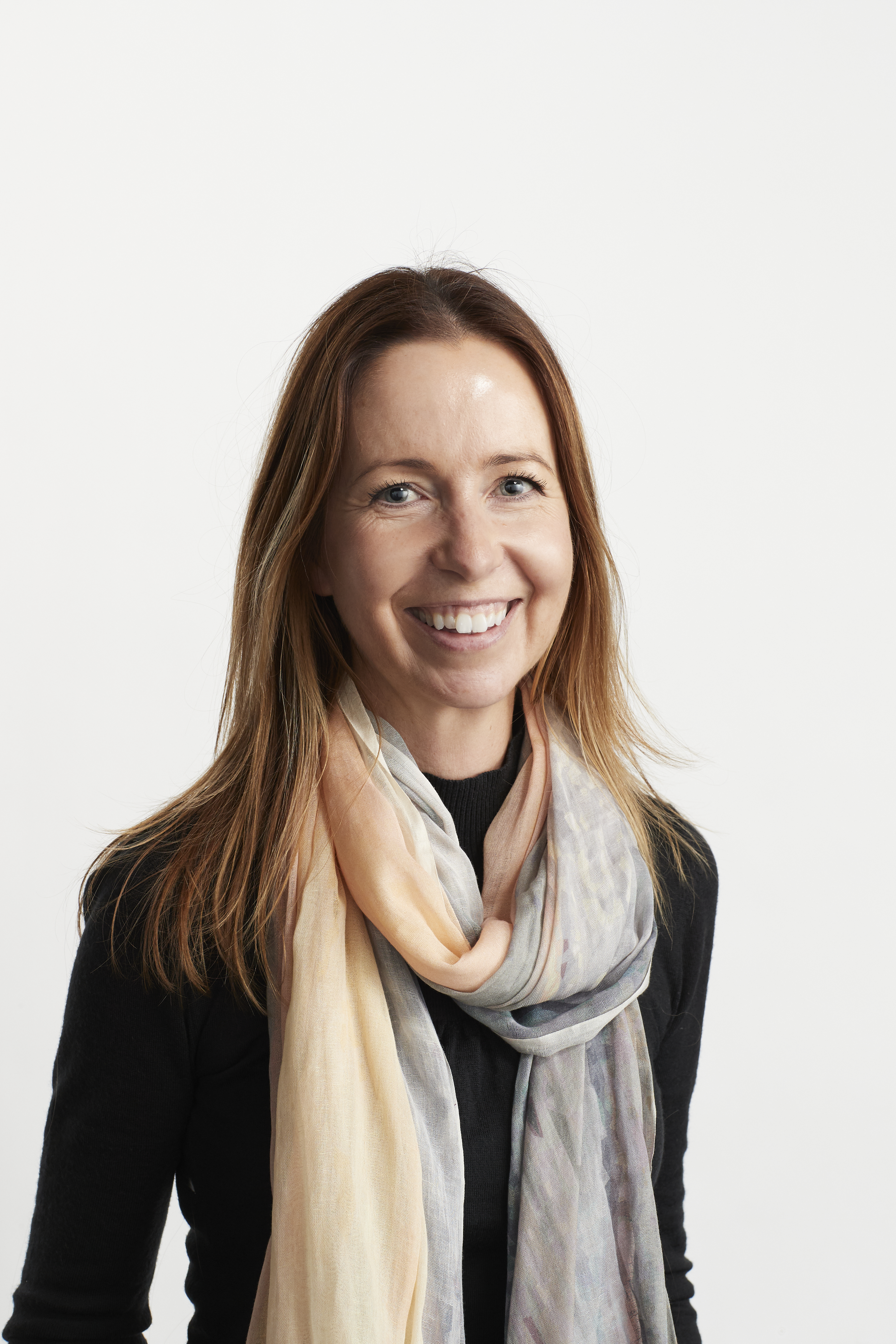
Nobel laureate Professor Donna Strickland speaking at UNSW Sydney.
Photo: Ken Leanfore
The laser physicist reflects on her breakthrough research, the need to rebuild public trust in science and why collaboration is key to progress.
In 2018, Canadian physicist Professor Donna Strickland became the first woman in more than 50 years to be awarded the Nobel Prize in Physics. She received the honour for her pioneering work in developing a technique known as chirped pulse amplification (CPA), becoming only the third woman in history to receive the Nobel Prize in Physics.
Last night at UNSW Sydney, Prof. Strickland spoke to an audience about her career in laser physics, encouraging young scientists to pursue their passions and highlighting the need for greater public trust in science.
In conversation with ABC’s Life Matters host Tegan Taylor, she shared that her love for science began in childhood, nurtured by a family that deeply valued education.
Early influences and breakthroughs
Prof. Strickland’s early fascination with science was sparked by her father’s curiosity about lasers, and nurtured by her mother, who encouraged her to forge her own path.
While undertaking her PhD at the University of Rochester in the United States, Prof. Strickland worked with her supervisor, and future Nobel co-laureate, Gérard Mourou, to develop CPA, a method that dramatically boosted the intensity of laser pulses, revolutionising laser physics.
CPA allows ultra-short laser pulses to be amplified to extremely high intensities without damaging the amplifying material. The technology has since been adopted globally, with applications ranging from laser eye surgery to scientific research, telecommunications, defence and fundamental physics.
“We had to do it fast,” Prof. Strickland recalled. “Because now that everyone’s working on this, it’ll get done so quickly. And so that’s why we had to deal with either borrowed parts or donated parts or delays.”
Prof. Strickland said that seeing the technology adopted commercially was one of the proudest moments of her career.
Championing public trust in science
A 5am phone call from the Nobel Committee announcing her win was just the beginning of a whirlwind of public recognition for Prof. Strickland. Suddenly thrust into the global spotlight, she embraced the opportunity to promote scientific literacy and share her passion for restoring public trust in science.
Reflecting on her time as president of the Optical Society in 2013, Prof. Strickland said visiting students across the world revealed stark differences in how science was perceived globally.
“I noticed how much higher regard there is for science in Asia than in North America,” she said. “When a Japanese gentleman won a [Nobel Prize], he had six to eight Japanese media around him at all times, like he was a rock star.”
Meanwhile, she said, there was almost no media attention for the American or Canadian laureates.
Prof. Strickland said her concerns deepened during the COVID-19 pandemic, which she believes highlighted a broader erosion of public trust in science. To address this, she helped establish a network focused on science communication and public engagement.
At one public event, she was approached by someone who said they had lost faith in science, pointing to unmet expectations around quantum computing.
“They said, ‘You said that we’d have quantum computing in 25 years, and it’s been 25 years, and we don’t. Why should we trust you?’,” Prof. Strickland recalled.
Prof. Strickland sees a key challenge in science communication as striking the right balance – avoiding both overhyping and under-promising, especially when it comes to emerging technologies.
She explained that when scientists say that something is 25 years away, it typically means there is no known technological barrier but the timeline is uncertain. However, the public often interprets comments like this as a promise.

“I think one of the things we do wrong is overhype, or with AI, it’s not just overhyping, it’s over-scaring,” she said. “We shouldn’t do either of those things. We need to be careful about how we communicate the implications of science.”
She believes part of the solution lies in changing how science is taught – shifting the focus from simply presenting facts to explaining how those facts are discovered. Given that science is about answering questions we don’t yet know the answers to, it’s natural for scientists to change their minds as new data comes in. Prof. Strickland argues that doesn’t mean the process is flawed and is instead how progress happens.
By fostering a better understanding of how science works, Prof. Strickland hopes to rebuild public confidence and encourage more informed, evidence-based debate.
Collaboration between industry, government and academics
Throughout her talk, Prof. Strickland emphasised the importance of collaboration and government support for research.
She called for governments around the world to be more interested in science and to foster stronger collaboration between academia, industry and the public sector.
Prof. Strickland pointed to South Korea and Denmark, where coordinated national efforts have successfully aligned innovation with long-term investment.
“I think countries like Canada and Australia have to start looking at these other countries that seem to have really figured out how to really work together as a whole team to make things move forward.”
Prof. Strickland also highlighted the current geopolitical shifts as an opportunity for countries like Australia and Canada to attract global research talent.
“It is an opportunity for the rest of us, and we have to jump at that,” she said.
“I think science will be done, the question is where ... This is our chance to really say, ‘We’re open to doing science, come work here’.”
This event was co-presented by the UNSW Centre for Ideas, UNSW Science, UNSW Engineering and the Australian Institute of Physics, as part of the International Year of Quantum Science and Technology.
Media enquiries
For enquiries about this story please contact Yolande Hutchinson:
Tel: 0420 845 023
Email: y.hutchinson@unsw.edu.au