


World-leading nuclear experts convened at UNSW Sydney in a first-of-its-kind discussion on the future of nuclear technologies in Australia and globally.
In the wake of the 2025 federal election, nuclear power appeared to take a back seat in Australia’s energy future as voters voiced concerns about its safety, regulation and economic impact.
But this week, a conference at UNSW Sydney reinvigorated the highly debated topic, with some experts urging the public to think again.
The Nuclear Futures: Shaping Dialogue in a Changing World conference was organised by the UNSW Nuclear Innovation Centre (UNIC) in partnership with the OECD Nuclear Energy Agency (NEA). The two-day summit examined the key issues facing nuclear power and the energy industry more broadly, with a particular focus on Australia.
UNSW Vice-Chancellor and President Professor Attila Brungs said the conference marked a significant opportunity to build social and economic prosperity globally.
“Our mission is to foster collaborations with key stakeholders, to drive innovation, and to create a strong talent pipeline by developing and nurturing future expertise and leaders in this field,” Prof. Brungs said.
“It is the responsibility of us all to ensure the development and application of nuclear science and technology is well regulated, safe and solves societal challenges in areas as broad as health, the environment, food security and energy.”

The future of nuclear in Australia
More than 200 early-career researchers, industry leaders, academics and government officials attended the conference, where they heard about the most pressing issues facing the nuclear sector.
Key issues examined included:
how Australia could respond to the growing demand for trained nuclear professionals
how the nation could determine its place in the global nuclear fuel cycle and supply chain
how nuclear developments in Australia could contribute to global climate change mitigation
how to advance social licence, earn trust and build consensus among the public.
Associate Professor Edward Obbard, Director of the UNIC and host of the conference, said connecting Australia’s nuclear, science and engineering community with their international counterparts marked an exciting opportunity to centre Australia in the sector.
“Australia is already connected to the rest of the world, whether that’s through geopolitics or the uranium supply chain,” A/Prof. Obbard said.
“We’re at the front end of a fuel cycle, which is being pledged by multiple governments to triple in the next 25 years. The greatest impact that Australia could have on decarbonisation would be to supply the uranium to triple global nuclear capacity.”
The conference produced a policy brief outlining what a nuclear workforce in Australia and worldwide would look like, highlighting opportunities for international student education in nuclear engineering in Australia and extensive career opportunities overseas for Australian-trained graduates.
There were 63 selected delegates from 31 countries attending the conference, establishing long-term links to Australia and potential career opportunities in the Australian nuclear sector.
New undergraduate honours degree in nuclear engineering
The conference coincided with the official launch of Australia’s first comprehensive university degree in nuclear engineering – Bachelor of Engineering (Honours) (Nuclear Engineering).
A/Prof. Obbard said demand for skilled nuclear professionals was at an all-time high.
“There's an insatiable demand, spanning industries such as medicine, aerospace, advanced manufacturing, government, policy, mining and defence,” he said.
“The workforce needs of AUKUS Pillar 1 are huge, which means as a nation we urgently need to build up our nuclear talent to maintain the civilian workforce at the same time.”
The Nuclear Engineering degree is designed to equip graduates with the skills required to meet the growing workforce demands of the nuclear sector, with a focus on project-based learning alongside industry training. It is open for enrolment with students commencing studies in 2026.
The multibillion-dollar AUKUS deal will require approximately 20,000 skilled workers. A/Prof. Obbard said this degree would help to meet that demand.
“Our program is structured around a nuclear mindset, which refers to a list of attributes that the Australian Submarine Agency has published,” A/Prof. Obbard said.
“The list includes key skills that the Australian government has determined necessary for the AUKUS workforce, with a particular focus on nuclear safety, high personal integrity and lifelong learning.”
It is the responsibility of us all to ensure the development and application of nuclear science and technology is well regulated, safe and solves societal challenges in areas as broad as health, the environment, food security and energy.


Associate Professor Edward Obbard opening the Nuclear Futures conference. Photo: Maja Baska 2025

Delegates at the Nuclear Futures conference at UNSW. Photo: Maja Baska 2025

More than 200 early-career researchers, industry leaders, academics and government officials attended the conference. Photo: Maja Baska 2025

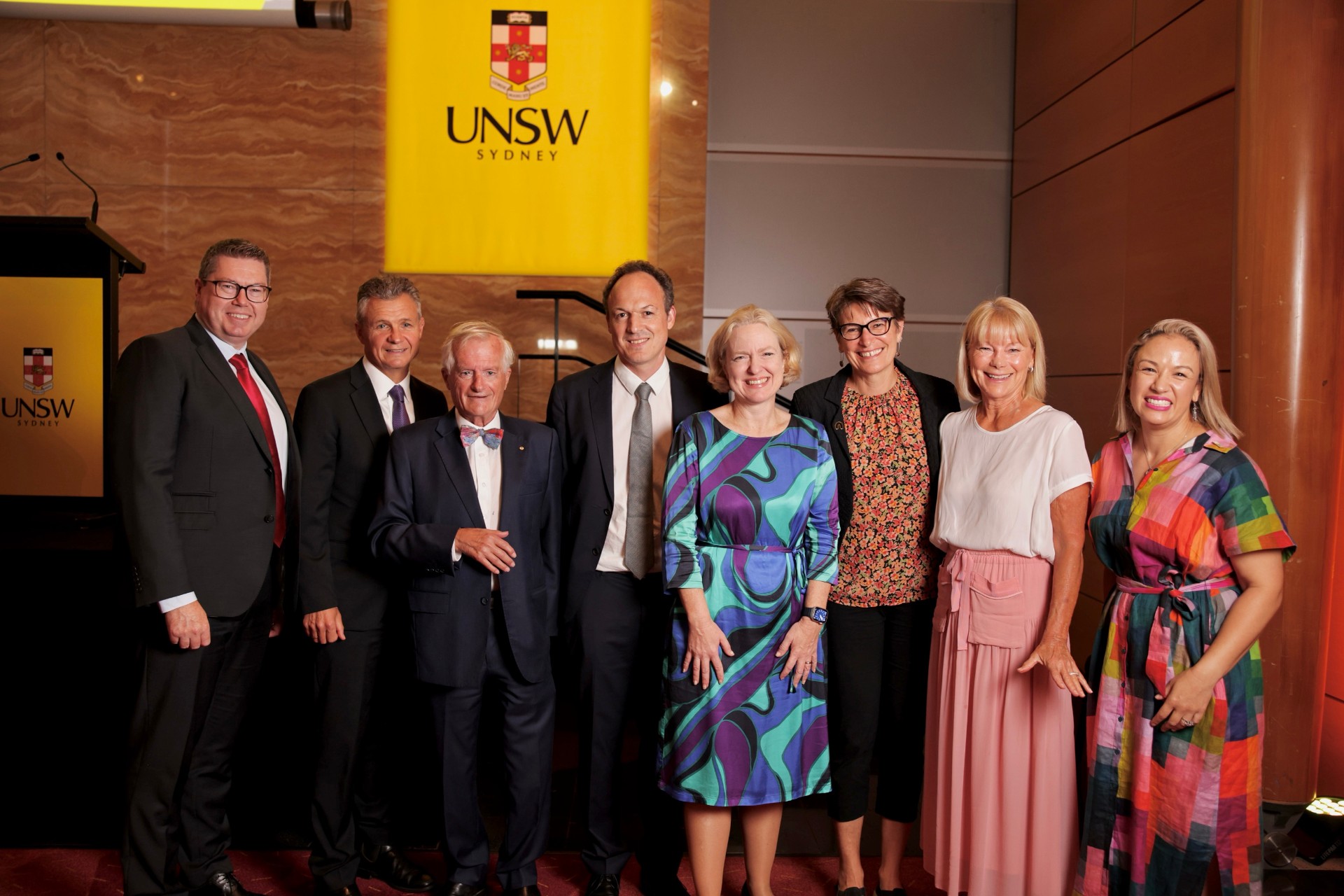
Chief Nuclear and Capability Officer, Australian Submarine Corporation, Alex Walsh, former Chief Scientific Advisor to UK Ministry of Defence, Sir Robin Grimes, Chief Engineer of Engineers Australia, Katherine Richards, Executive Director of S&D PLuS, Ian Langford, Associate Dean for Researcher Development at the University of Manchester, UK, Scott Heath, and National Nuclear skills and workforce strategic consultant, EDF UK, Lynne Matthews at the Nuclear Futures conference. Photo: Maja Baska 2025
Media enquiries
For enquiries about this story and interview requests please contact Maddie Heywood:
Tel: (02) 9385 2864
Email: media@unsw.edu.au