Two UNSW academics elected Fellows of ATSE
2025-09-24T09:00:00+10:00

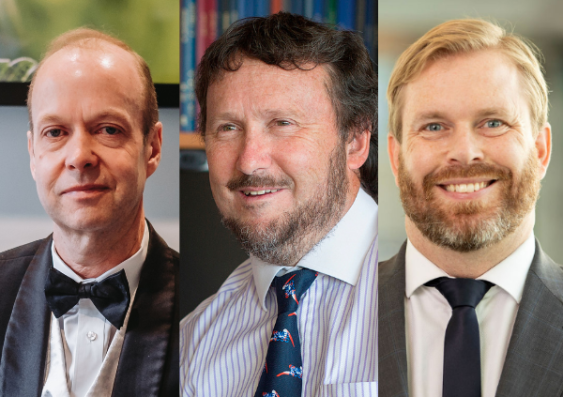
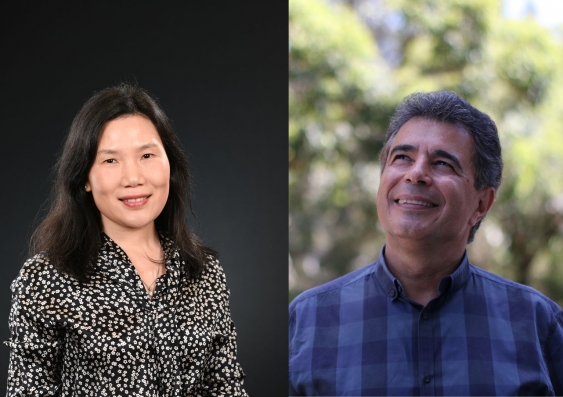
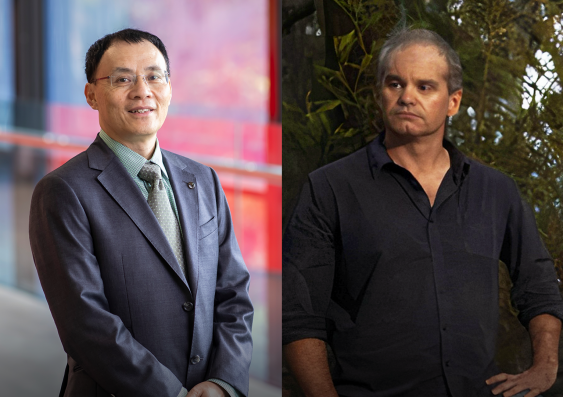
Professors Maurice Pagnucco and Yansong Shen are among 35 leading innovators to become Fellows of ATSE.
Photo: UNSW Sydney
UNSW Sydney Professors Maurice Pagnucco and Yansong Shen are named 2025 Fellows of the Australian Academy of Technological Sciences and Engineering.
Two leading researchers from the Faculty of Engineering have been recognised for their work in advancing the field of artificial intelligence and creating sustainable technologies.
Professor Maurice Pagnucco and Professor Yansong Shen are among 35 leading innovators who have become Fellows of the Australian Academy of Technological Sciences and Engineering (ATSE), following outstanding achievement in the fields of applied science and engineering.
Dean of Engineering Professor Julien Epps congratulated both academics on their election to ATSE.
“This is a tremendous achievement and well-deserved recognition for Professors Pagnucco and Shen,” Prof. Epps said. “Prof. Pagnucco is advancing artificial intelligence that is both ethical and trustworthy, while Prof. Shen is a leader in developing sustainable solutions for green metals and solar panel recycling.
“We’re proud to see their contributions honoured at the national level and look forward to the continued influence they will have on industry, society and the next generation of engineers.”
ATSE President Dr Katherine Woodthorpe said the new Fellows represented the breadth and depth of world-class Australian innovation.
“Our expert Fellows are world leaders – and are working on the game-changing tech and innovations that are helping to solve the most pressing and complex challenges.”
Professor Maurice Pagnucco FTSE
Prof. Pagnucco is an expert in artificial intelligence whose work focuses on how machines can reason, learn and make decisions. His research covers areas such as robotics, machine ethics and explainable AI. His fascination with computers began as a teenager, when he saved up pocket money from working at his uncle’s bakery in Penrith to buy a Commodore 64 from his neighbour, who owned a toy store.
“I taught myself to program and was fascinated by what computers could do and, perhaps more importantly, what they could not do,” he said.
That early curiosity grew during his university studies and PhD, supported by mentors and leading researchers who influenced his path into AI.
“This is an incredible honour to be recognised by my peers for contributions to technology and engineering,” Prof. Pagnucco said.
“Looking at the list of ATSE Fellows over the years, you easily recognise people who have made outstanding contributions to the country and positioned us as leaders in imagining and developing the future. I look forward to joining them in maintaining Australia’s pursuit of excellence in technology and engineering to make Australia a better place for all and an example for other countries to follow.”
I taught myself to program and was fascinated by what computers could do and, perhaps more importantly, what they could not do.

Prof. Pagnucco has made important contributions to AI by showing how machines can store knowledge and use it to reason, which is a core challenge in computer science. He has worked on projects that apply AI to real-world problems, from developing robots that can safely and efficiently dismantle e-waste through to art exhibitions exploring human interaction with technology including a pioneering interactive cinema production.
His research also looks at how to create fairer and more transparent AI systems, especially when dealing with uncertainty and complex situations. A major part of his work explores how AI can be trustworthy and ethical.
Prof. Pagnucco has earned recognition for leadership and for bringing people together across academia, industry and government. He has extensive experience in leading strategic information and communication technology (ICT) initiatives, developing effective industry and government networks, and enhancing tertiary education through pioneering initiatives in experiential learning and career development.
“While we tend to have a strong sense of community, Australia faces issues of size and distance compared to the rest of the world. By working together through organisations like ATSE we can better advocate for the technology sector in Australia and internationally. Moreover, we can build networks to support the next generation of Australian talent,” he said.
Professor Yansong Shen FTSE
Prof. Shen is a leading expert in using computer modelling to understand and improve the chemical processes that produce metals. For more than 25 years, he has specialised in low-cost green ironmaking, translating fundamental research into technologies with real-world industry benefits.
“I was inspired by the challenge of turning complex science into practical solutions for society,” Prof. Shen said.
“Early exposure to the energy and metallurgical industries showed me how process engineering underpins modern life and drives sustainability. The possibility of reimagining traditional processes, such as ironmaking and resource recovery, through rigorous modelling and innovation motivated me to pursue a career at the interface of science, engineering and industry impact.”
Prof. Shen’s pioneering work has reshaped operations at some of the world’s largest steel producers and raw materials suppliers, including Rio Tinto, Baowu and BlueScope. His advances in blast furnace modelling have been critical in supporting the global steel industry’s decarbonisation efforts and securing the continued export of Australia’s iron ore and fuels.
“The ATSE Fellowship affirms my lifelong commitment to bridging fundamental research and industrial innovation in green metals,” he said.
I was inspired by the challenge of turning complex science into practical solutions for society.

Prof. Shen is also addressing one of the fastest-growing sustainability challenges: how to recycle millions of solar panels as they reach the end of their life. Building on his expertise in metallurgy, he has created a world-first full-component recycling system that diverts all solar panel waste from landfill, recovering valuable materials for use in new panels and other manufacturing.
As Director of the Australian Research Council Research Hub for Photovoltaic Solar Panel Recycling and Sustainability, Prof. Shen leads a global collaboration with more than 20 industry partners across the solar supply chain. His work is helping to build a sustainable, circular economy for renewable energy technologies.
“By engaging industry partners from global leaders to SMEs, and mentoring young engineers, I aim to ensure innovations will not stay in the lab but scale up into industry practice, helping the sector remain competitive while nurturing the next generation of problem-solvers for Australia’s sustainable future.”
Media enquiries
For enquiries about this story and interview requests please contact Yolande Hutchinson:
Tel: 0420 845 023
Email: y.hutchinson@unsw.edu.au