UNSW experts awarded Eureka Prizes for sustainability and medical research
2026-09-04T12:58:00+10:00

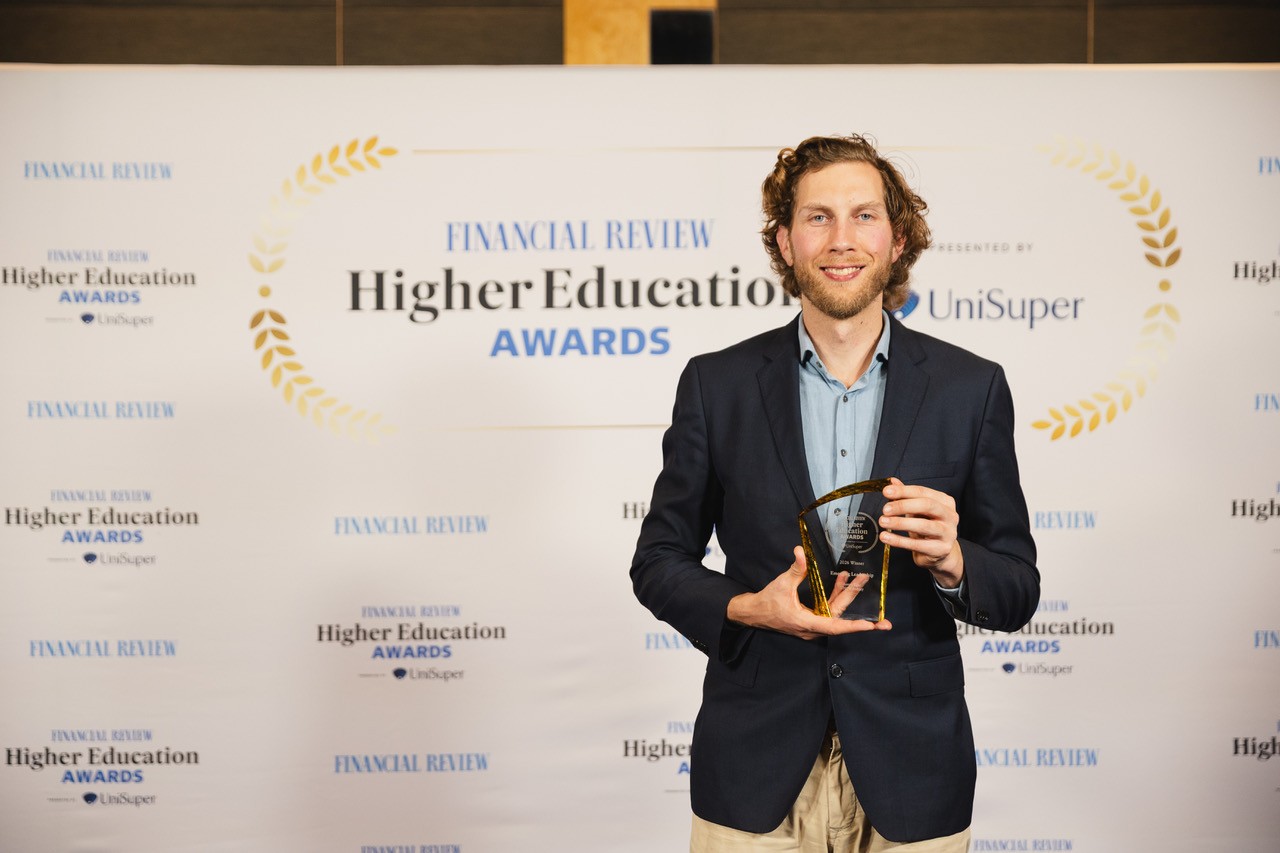
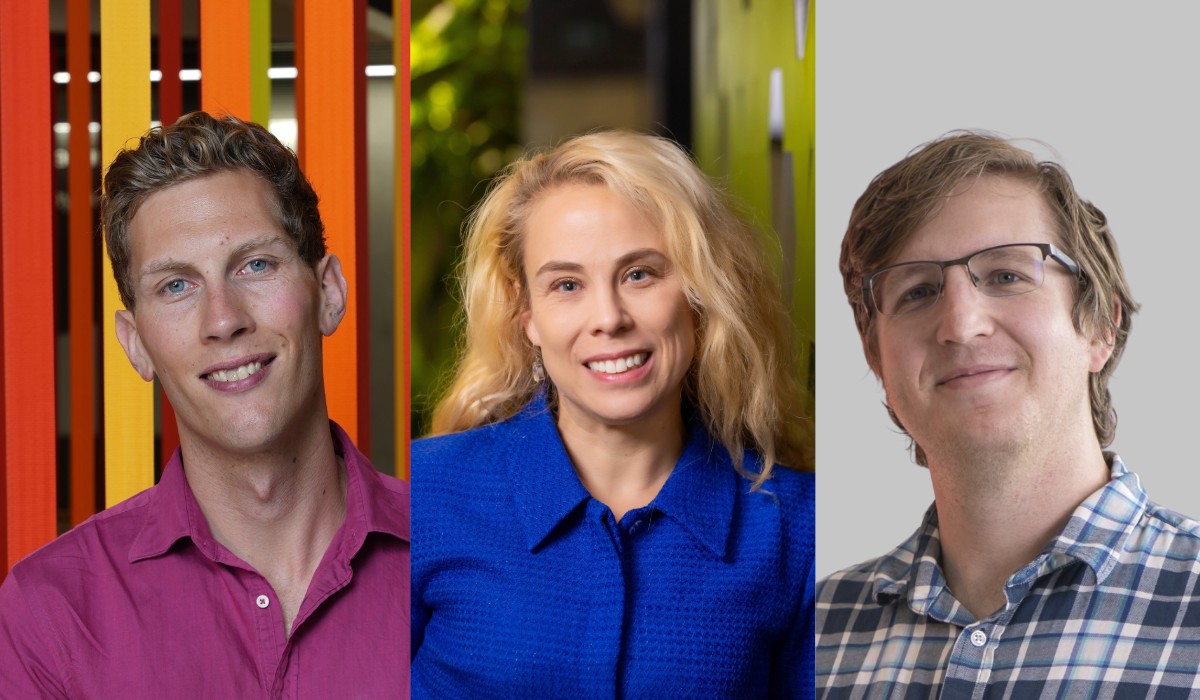
2026 Australian Museum Eureka Prizes winners Dr Aidan Cashin and Professor Yansong Shen.
Photo: UNSW Sydney

UNSW Sydney academics have been recognised for their exceptional contributions to sustainability and medical research.
UNSW researchers Professor Yansong Shen and Dr Aidan Cashin have been awarded 2026 Australian Museum Eureka Prizes.
Prof. Shen from UNSW Engineering was recognised for his work creating a low-cost recycling system for solar panels, while early career researcher Dr Aidan Cashin from UNSW Medicine & Health was honoured for his research on chronic pain.
They were among six UNSW finalists for the annual national science prizes which recognise excellence in research and innovation, leadership and science engagement.
UNSW Deputy Vice-Chancellor, Research & Enterprise, Professor Bronwyn Fox said the Eureka Prizes were an important opportunity to celebrate the people behind some of Australia's most exciting research.
"It’s wonderful to have our researchers recognised for the tremendous impact their work is having in their fields and beyond. Through their research they are helping to build a more sustainable, resilient and healthier future,” Prof. Fox said.
“These awards reflect years of curiosity, hard work, determination and collaboration, and I would like to congratulate all the winners and finalists on this well-deserved achievement.”
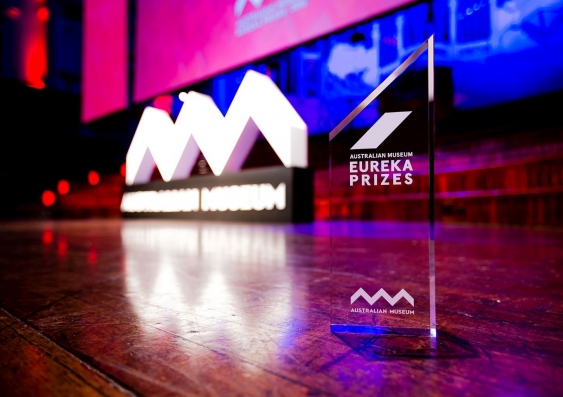
The 36th annual awards were presented at Sydney Town Hall on Thursday night and recognised 58 finalists across 19 categories.
UNSW’s 2026 Eureka Prize winners
Professor Yansong Shen
Eureka Prize for Sustainability Research

Solar panels will play a vital role in achieving global net zero targets, but as millions reach the end of their lifespan, better recycling solutions are needed to prevent valuable materials from going to waste.
Prof. Shen, Director of The Australian Research Council (ARC) Hub for Photovoltaic Solar Panel Recycling and Sustainability is developing a much-needed circular solar economy. He created a low-cost, scalable and portable recycling system that diverts solar panel waste from landfill and provides a supply of valuable materials, such as silver and copper, for new panels and other purposes.
Prof. Shen said his background as a metallurgist, a specialist in extracting and processing metals, led him to see the untapped potential in ageing solar panels.
“I did not just see them as a clean energy device, but as urban mines with different valuable materials like silver, copper, glass and silicon which could be re-used," he said.

“But it’s difficult to separate these materials out, so we had to do the research and develop new computational particle tools and a numerical-lab-pilot (NLP) strategy to achieve this.”
“Unlike conventional laboratory-scale trial and error which needs hundreds of different prototypes and millions of physical experiments, this NLP strategy enables faster and guided technology design and commercialisation, empowering industry partners to launch efficiently rather than relying solely on standard university patent licensing."
With an estimated 60-78 million tonnes of panels requiring recycling by 2050, this end-to-end technology will provide vital support for more sustainable solar waste management.
Media enquiries
For media enquiries please contact Kate Burke:
Tel: +61 2 9348 2538
Email: kate.burke@unsw.edu.au


Prof. Shen said he was truly honoured to receive the Eureka Prize for Sustainability Research.
“I would like to thank my research team, UNSW SCoPE Lab for Green Metals and our many collaborators and sponsors. It took people with many different expertise to make this idea a reality, and we wouldn’t be here without them. I’d also like to acknowledge the other teams in this category; we are all doing amazing work.”
Dr Aidan Cashin
Eureka Prize for Outstanding Early Career Researcher

Chronic pain affects one in five people worldwide and has long been viewed as a condition to manage, rather than one people can recover from. Dr Cashin is working to change that.
His research has helped to determine which chronic pain treatments help, which ones may cause harm, and why some people heal while others do not.
“Changing how we understand chronic pain opens the door to entirely new ways of treating it and helps us to improve care for the many millions of people affected by it,” said Dr Cashin, Deputy Director of the Centre for Pain IMPACT at Neuroscience Australia and a Scientia Fellow with UNSW’s School of Population Health.
Dr Cashin co-developed a rehabilitation program that improves recovery, with benefits that last up to a decade. His research is now shaping clinical practice, digital health solutions and international clinical trials.
“One of the most rewarding parts of my work has been seeing discoveries translate into new treatments that are now improving care in clinics and through digital health initiatives,” he said.
Dr Cashin said he was honoured to receive the prize and be recognised amongst such a higher calibre of researchers.
“This award reflects the collective efforts of the researchers, consumers and clinical partners I work with. I’m deeply grateful for their support, guidance and dedication.”
Winners of UNSW sponsored awards
UNSW sponsored two awards this year: the Eureka Prize for Scientific Research and the Eureka Prize for Societal Impact in Science.
Prof. Georgina Long from The University of Sydney was awarded the Eureka Prize for Scientific Research for her work to transform melanoma care by pioneering neoadjuvant immunotherapy, given before surgery, and leading international drug development.
The Societal Impact in Science prize was awarded to the OurFutures Vaping Program team, which empowers adolescents to avoid vaping through evidence-based digital lessons co-designed with students and teachers. The program was trialled in 40 schools and reduced the odds of vaping by 65% after one year.