Meet the six UNSW finalists for the 2026 Eureka Prizes
2026-07-29T09:00:00+10:00

Photo: UNSW

UNSW Sydney academics have been recognised for their exceptional contributions to research and the broader community.
A world-first paint to protect homes from bushfires and a program reintroducing locally extinct marsupials to the desert are among six UNSW projects named as finalists, for the 2026 Australian Museum Eureka Prizes.
Researchers from the faculties of Science, Engineering and Medicine & Health have been recognised by the national science prizes, which honour excellence in the fields of research and innovation, leadership and science engagement.
The annual prizes – presented in partnership with leading scientific institutions, government organisations, universities and corporations – raise the profile of science in the community by celebrating outstanding achievements.
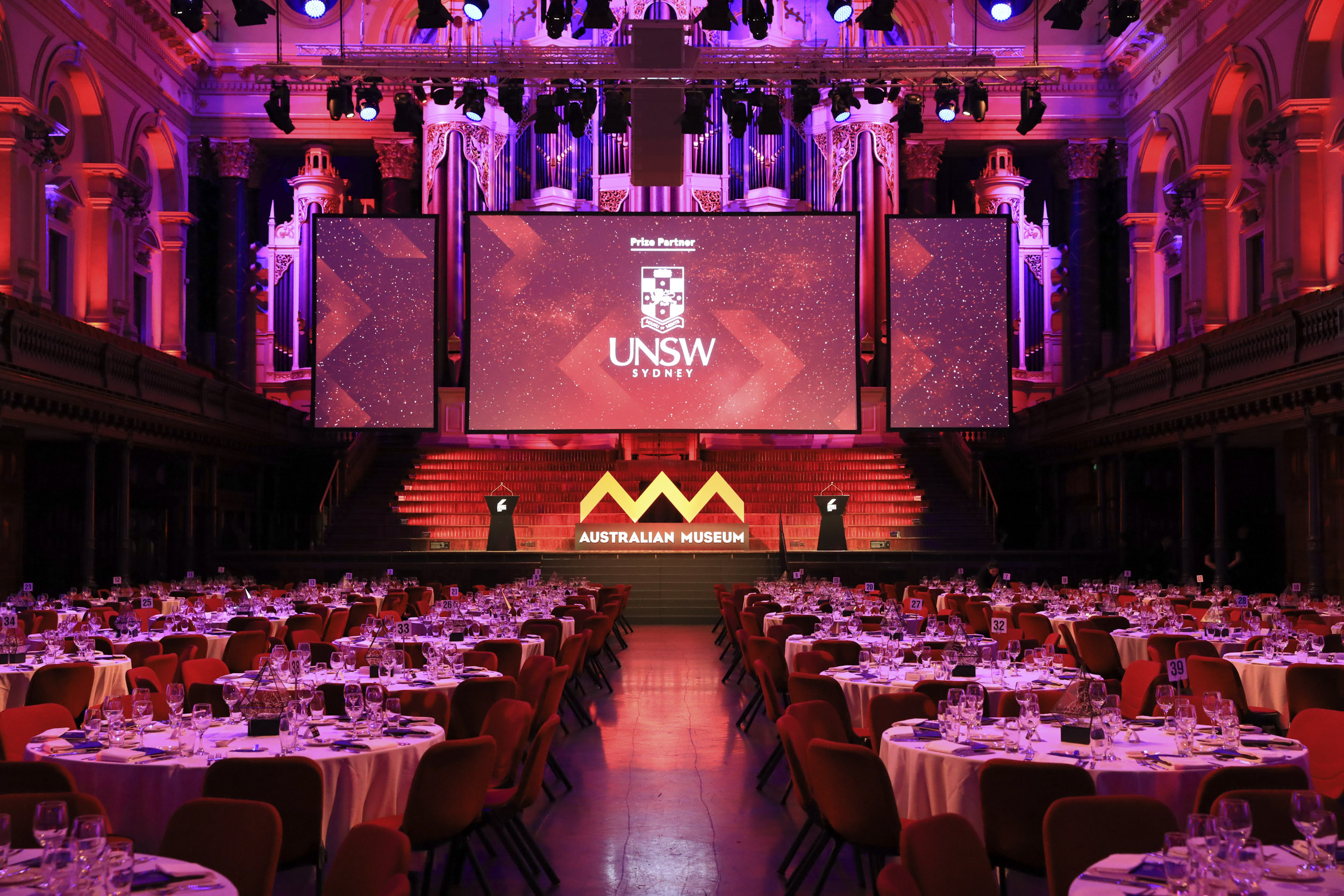
The 2026 winners will be announced on Thursday 3 September, at an awards ceremony at Sydney Town Hall.
UNSW is sponsoring two of the 19 prizes to be awarded on the night: the UNSW Eureka Prize for Scientific Research and UNSW Eureka Prize for Societal Impact in Science.
The UNSW finalists are:
Media enquiries
For enquiries and interview requests please contact Kate Burke:
Tel: +61 2 9348 2538
Email: kate.burke@unsw.edu.au


Wild Deserts Program team
NSW Department of Climate Change, Energy, the Environment and Water Eureka Prize for Environmental Research
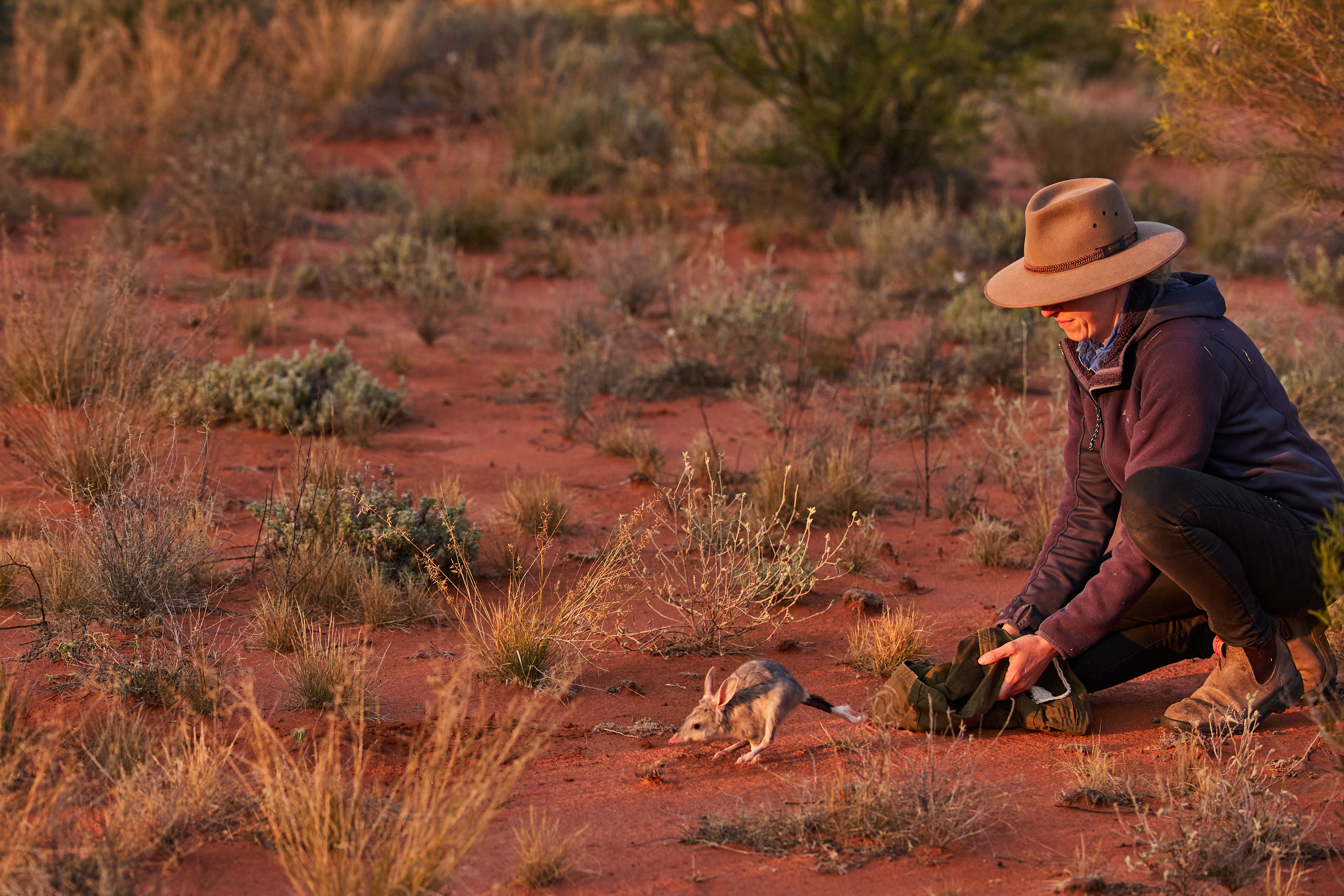
The Wild Deserts Program has successfully reintroduced six locally extinct animal species to Sturt National Park in far-northwestern New South Wales, returning threatened marsupials to the region for the first time in more than 100 years.
The greater bilby, golden bandicoot, western quoll, crest-tailed mulgara, Shark Bay bandicoot and burrowing bettong have been reintroduced as part of the program, led by UNSW’s Centre for Ecosystem Science and Ecological Horizons, in collaboration with NSW National Parks and Wildlife Service and Taronga Conservation Society.
The team reintroduces mammals in a staged approach, starting in fenced ‘safe havens’, then transitioning them to a ‘Wild Training Zone’ with controlled levels of invasive predators, like feral cats.
“This allows the native species to become more aware of predators, and gives them time to adapt to the conditions, so they can thrive,” said team lead Professor Richard Kingsford.
More than 700 animals have been released and are breeding in this zone, and broader ecosystem benefits have also been identified.
“It is wonderful to see this important work recognised, and to be part of such a great team working to improve Australia’s record on mammal extinctions,” Prof. Kingsford said.
The team also includes UNSW’s Dr Reece Pedler, Dr Rebecca West, Prof. Katherine Moseby, Prof. David Keith, Prof. Mike Letnic and Sharon Ryall, and Ecological Horizons’ Director Dr John Read.

SMaRT@UNSW team
Eureka Prize for Sustainability Research
The UNSW Centre for Sustainable Materials Research and Technology, SMaRT@UNSW, is transforming problematic waste into valuable materials and products through the science of microrecycling.
Using small, modular recycling and manufacturing systems known as MICROfactories, the team reforms difficult-to-recycle materials – including glass, textiles, plastics, electronic waste and battery waste – into products and resources such as Green Ceramic tiles, recycled plastic filament, transformed metal alloys and battery materials.
SMaRT@UNSW Director Scientia Professor Veena Sahajwalla said the decentralised and scalable MICROfactorie technologies help reduce landfill, emissions and reliance on imported virgin materials by enabling waste to be processed and remanufactured closer to where it is generated.
“At SMaRT@UNSW, we believe waste is one of our greatest untapped resources. By working with communities, industry, government and research partners, we're translating innovative science into practical solutions that support a more circular economy and create meaningful environmental, social and economic impact,” Prof. Sahajwalla said.
“I’m delighted to see this important work recognised. Creating a more sustainable future depends on rethinking waste as a valuable resource and unlocking its potential to become the next generation of sustainable materials and products.”
The team includes Prof. Sahajwalla, Dr Rumana Hossain, Dr Rasoul Khayyam Nekouei, Dr Heriyanto, Dr Samane Maroufi, Dr Montajar Sarkar, Dr Mohsen Hajian Foroushani, A/Prof. Farshid Pahlevani, Dr Irshad Mansuri and Nik Nikolovski.

Dr Aidan Cashin
Macquarie University Eureka Prize for Outstanding Early Career Researcher
Dr Cashin is an early career researcher whose work is reshaping how chronic pain is understood and treated.
One in five Australians live with chronic pain, like back pain, and the majority are unable to access appropriate services and treatment.
“For too long, chronic pain has been seen as something people simply have to live with. My goal is to change that by making recovery possible for more people,” said Dr Cashin, Deputy Director of the Centre for Pain IMPACT at Neuroscience Australia and a Scientia Fellow with UNSW’s School of Population Health.
Dr Cashin has helped to determine which chronic pain treatments work, and which may cause harm, and has co-developed a rehabilitation program that improves recovery, with benefits that last up to 10 years. His research is now shaping clinical practice, digital health solutions and international clinical trials.
“Research only makes a difference when it reaches the people who need it, so it's been incredibly rewarding to work with patients, clinicians and industry to translate evidence into better care,” Dr Cashin said.
“Every person with chronic pain deserves access to treatments that are effective, evidence-based and designed to support lasting recovery.”

Professor Guan Yeoh
UNSW Eureka Prize for Societal Impact in Science
A world-first fire-retardant paint is being used to protect homes and communities from fires, thanks to the work of Prof. Yeoh and his team of engineers at UNSW’s School of Mechanical and Manufacturing Engineering.
Alongside Flame Security International, they developed FSA FIRECOAT, a non-toxic paint which swells when heated to form a dense protective barrier that shields surfaces from fire. It was the first paint to achieve the Bushfire Attack Level (BAL) 40 rating, meaning it’s been tested and approved for areas prone to extreme fire conditions.
“Our goal was to reimagine a common household product to better protect homes from fire. We elevated the paint by supercharging it with special additives, and in a eureka moment, it worked,” said Prof. Yeoh.
That paint is already being used on homes in Australia, Canada and the United States, and there has been interest in introducing it to Europe.
“When we started, we thought it would be a big achievement to protect even one house from burning down. If we could get a community to adopt it, that would be even better. Now, we’ve sold enough paint to protect thousands of homes across multiple countries, which is incredible,” Prof. Yeoh said.
“I feel very honoured and privileged that the Eureka Prizes has recognised this innovation, and that this product is being increasingly used to safeguard homes and help to limit the spread of fires.”

Scientia Professor Xiaojing Hao
UNSW Eureka Prize for Scientific Research
Prof. Hao is working to make solar panels more efficient, durable and affordable, by developing new types of tandem solar cells – when two or more solar cells are stacked on top of each other.
These tandem cells are key to delivering higher-performing panels, but researchers have yet to determine what materials work best when layered with the traditional silicon cells used for solar panels.
That’s where Prof. Hao and her team at UNSW's School of Photovoltaic and Renewable Energy Engineering come in. Using her diagnostic platform, they have found and fixed defects which cause energy loss in four leading materials – kesterite, antimony chalcogenide, peroskite and chalcopyrite – resulting in world records for solar cell efficiency.
“By tackling defects that waste captured sunlight, we can make tandem solar cells more efficient, durable, sustainable and affordable,” said Prof. Hao.
“While it’s still too early to know which material will ultimately become the preferred top cell, it’s essential to develop multiple high-performing options to give industry greater flexibility to build the next generation of affordable solar technology.
“Our research breakthroughs will help fast track the development of this technology, which is expected to be worth more than $10 billion by 2030.”

Professor Yansong Shen
Eureka Prize for Sustainability Research
With many of Australia’s 3.5 million solar panels to reach the end of their lifespan in the next decade, Prof. Shen is developing a much-needed circular solar economy.
Prof. Shen has created a low-cost recycling system that diverts solar panel waste from landfill and provides a supply of valuable materials, such as silver and copper, for new panels and other purposes.
“Solar panels have a vital role to play in helping us reach global net zero targets,” said Prof. Shen, Director of The Australian Research Council (ARC) Hub for Photovoltaic Solar Panel Recycling and Sustainability.
“However, we need to move away from sending panels to landfill when they’ve reached their end and instead move towards recycling them with a circular economy where materials are recovered and reused.”
Prof. Shen’s work has established collaborations with more than 20 local and international industry partners across the supply chain, and the results have been published, patented and effectively translated to industry.