UNSW researcher named ATSE Fellow for advancing responsible AI
2026-09-30T15:43:00+10:00

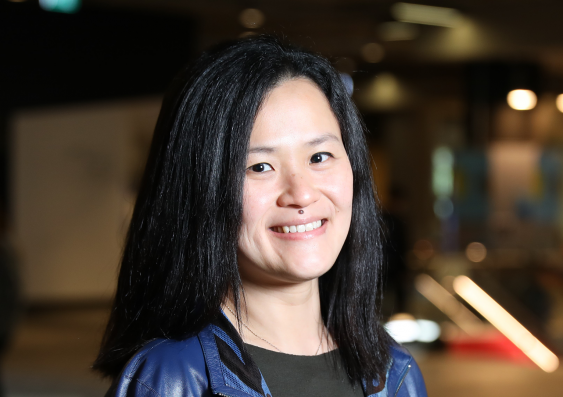
Professor Flora Salim

UNSW Sydney Professor Flora Salim has been elected one of 34 Fellows of the Australian Academy of Technological Sciences and Engineering for 2026.
Leading AI researcher and Professor of Computer Science and Engineering Flora Salim has been recognised by the Australian Academy of Technological Sciences and Engineering for her outstanding work, especially in human-centric AI.
Prof. Salim is among 34 innovators elected for her considerable achievements in applied science and engineering across industry leadership, policymaking, research and commercialisation.
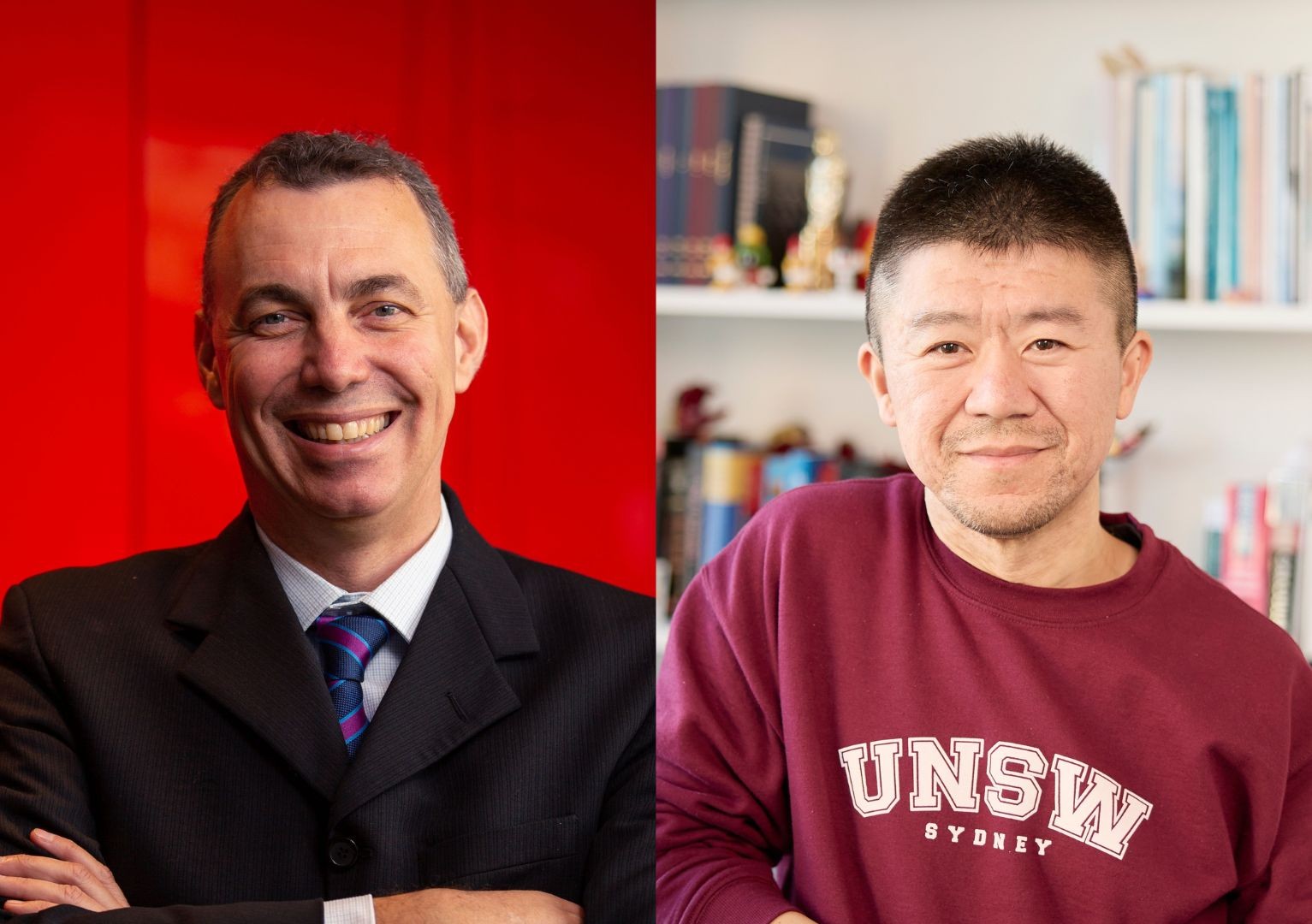
UNSW Dean of Engineering Professor Julien Epps congratulated Prof. Salim on her election to ATSE.
“This is well-deserved recognition for Professor Salim, whose body of work, especially with artificial intelligence and machine learning, is advancing developments in this critical and rapidly changing technology,” Prof. Epps said.
“Her influence both in Australia and abroad is wide-reaching and shaping the way societies use AI in responsible and effective ways. I am proud to work with her and congratulate her on this achievement.”
Professor Salim, who is also the Deputy Director (Engagement) of the UNSW AI Institute, is highly regarded as an authority on artificial intelligence, machine learning and spatio-temporal data analytics.
“I am honoured to be recognised by my peers among such a distinguished group of scientists and engineers,” Prof. Salim said.
“I am passionate about enabling technological systems to support and progress societies and improve the way we live. Thus, I’ve long been motivated by the need to design and develop computational, artificial intelligence and machine learning approaches that are human-centric and robust, and truly beneficial.”
Applying AI to real-world data and complex systems
Prof. Salim said she enjoyed working with real-world data and complex systems.
“I became attracted to ubiquitous computing and AI research, as a field, as the huge potential of the impact of the technology became apparent. Even when I started my degree, AI tech drove my curiosity further as a keen problem solver.”
Prof. Salim's research focuses on fundamental AI methods, models and systems for complex long-term reasoning over real-world observations. This is the AI most prone to dynamic, noisy and changing data distributions.
“For more than 15 years I have built robust models for real-world contexts. My work has translated into tangible impact, such as a granted US patent and features in productivity software and intelligent assistants in a global software, algorithms and aligned language models for time-series and sensors, and predictive monitoring for the built environment and transport systems.
“I am excited about the power of AI foundation models that can solve specific domain problems.
I believe, if we put our heads and efforts together, as a nation, we can build strong sovereign capabilities here, down under.

“One recent work that I can share, for example, is our collaboration with Google on a foundation model for Continuous Glucose Monitoring (CGM) – called GlucoFM, recently accepted at NeurIPS 2026, led by my student Zechen Li who’s interning at Google Research, and will be released soon by Google, [which] can have a revolutionary impact on understanding metabolic response and risk assessments at scale.”
She said her team had been working to improve small-model capabilities that can be trained using more efficient approaches.
“I believe, if we put our heads and efforts together, as a nation, we can build strong sovereign capabilities here, down under.”
This year she and her team were awarded $3.2 million by the Australian Defence Force to build systems that can adapt to rapidly changing conditions, handling multimodal inputs and novel tasks and operating in some of the most challenging environments faced by Defence teams.
ATSE 2026 Fellows include UNSW alumni
ATSE President Dr Cathy Foley congratulated the 34 new Fellows.
“Election to ATSE is one of the highest honours and recognition of achievement in Australian technology and engineering, and is also a testament to the Fellows’ impact, leadership, and expertise.
“Fellowship is also a responsibility. Our Fellows are highly engaged and last year volunteered a combined 4000 hours of critical and valuable input into national conversations, expert advice to government and support for educational and STEM workforce programs.”
Among the list of 34 Fellows appointed this year were UNSW alumni including:
- Well-known scientist and media personality, Dr Karl Kruszelnicki
- Chairman and CEO of Resmed, Michael Farrell
- Chair of the Climate Change Authority, Grant King
- Chief Technology Officer and Co-Founder of SpeeDx, Dr Elisa Mokany
- Chief Engineer, Engineers Australia, Katherine Richards
- Founder and Executive Chair, Denison Gas, Dr Xingjin Wang
- Senior Executive, University of Strathclyde, Professor Graham Wren
- Research Director, CSIRO, Trustworthy AI innovator, Dr Liming Zhu
- Professor, University of Sydney, Professor Fariba Dehghani.
Media enquiries
For interview requests please contact Emma Blake
Tel: +61 2 9385 2864
Email: emma.blake@unsw.edu.au