
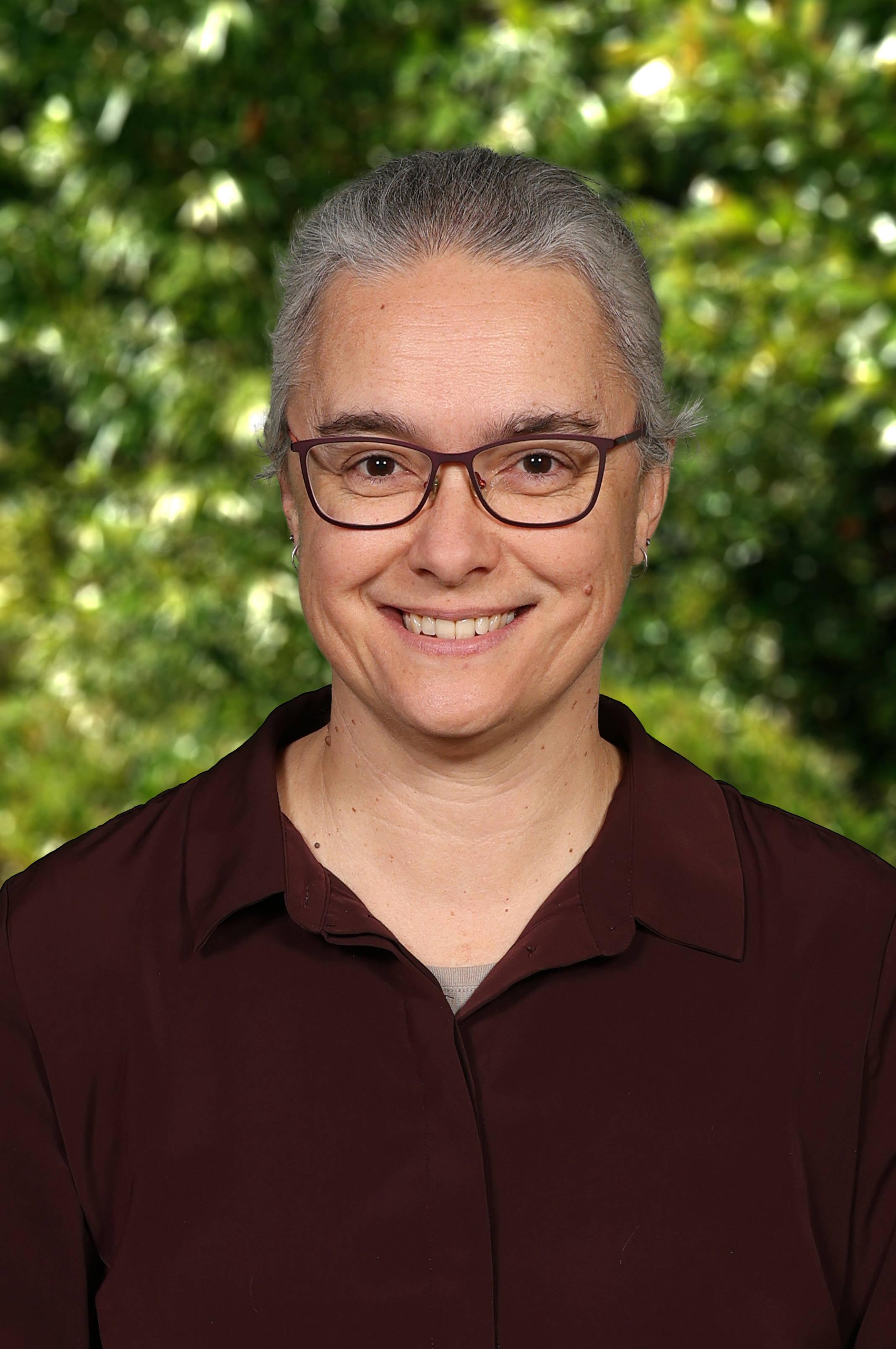
Dr Bronwyn Thomas

Dr Bronwyn Thomas

Postdoctoral Fellow
  • Doctor of Philosophy, Applied Physics: University of Sydney (2008)
  • Bachelor of Advanced Science (Honours, Theoretical Chemistry): University of Sydney (1998)
  • Master of Teaching (Secondary): University of Newcastle (2021)
Engineering
Mechanical and Manufacturing Engineering

I am a computational materials scientist with an interest in atomic-scale defects and radiation damage in ceramics and metals.

I completed an honours degree in Advanced Science at the University of Sydney, attaining a University Medal in theoretical chemistry for my thesis on simulating laser-induced densification of silica glass for optical fibre technology. On graduating I was employed by ANSTO (Materials Science and Engineering), performing experimental and computational studies on the durability of nuclear wasteform ceramics. 

I obtained my PhD in Applied Physics at the University of Sydney (2008) while working for ANSTO, simulating defects and radiation damage in synroc-type titanate materials. Much of this work was published and presented at international conferences, including an invited presentation at the International Conference on Radiation Effects in Insulators (Caen, France, 2007).

Since leaving ANSTO to raise a family, I have obtained further qualifications in professional editing and proofreading and in secondary school teaching (College Medal, Master of Teaching, University of Newcastle), and have been employed in these fields as well as taking on small research projects (University of Sydney, Curtin University) on a part-time basis.

I also enjoy music-making (piano, percussion, brass), reading, running, puzzles and planning holidays.

Location
Ainsworth Building (J17)
  • Journal articles | 2021
    Thomas BS; Marks NA, 2021, 'Estimating the Case Fatality Ratio for COVID-19 using a Time-Shifted Distribution Analysis.', Epidemiol Infect, pp. 1 - 34, http://dx.doi.org/10.1017/S0950268821001709
    Journal articles | 2021
    Thomas BS; Marks NA, 2021, 'Estimating the case fatality ratio for COVID-19 using a time-shifted distribution analysis', Epidemiology and Infection, 149, pp. e197, http://dx.doi.org/10.1017/S0950268821001436
    Journal articles | 2008
    Lumpkin GR; Smith KL; Blackford MG; Thomas BS; Whittle KR; Marks NA; Zaluzec NJ, 2008, 'Experimental and atomistic modeling study of ion irradiation damage in thin crystals of the TiO2 polymorphs', PHYSICAL REVIEW B, 77, http://dx.doi.org/10.1103/PhysRevB.77.214201
    Journal articles | 2007
    Thomas BS; Marks NA; Begg BD, 2007, 'Defects and threshold displacement energies in SrTiO3 perovskite using atomistic computer simulations', Nuclear Instruments and Methods in Physics Research Section B Beam Interactions with Materials and Atoms, 254, pp. 211 - 218, http://dx.doi.org/10.1016/j.nimb.2006.11.069
    Journal articles | 2007
    Thomas BS; Marks NA, 2007, 'Comment on "Use of a variable-charge interatomic potential for atomistic simulations of bulk, oxygen vacancies, and surfaces of rutile Ti O2"', Physical Review B Condensed Matter and Materials Physics, 76, http://dx.doi.org/10.1103/PhysRevB.76.167401
    Journal articles | 2006
    Thomas BS; Marks NA; Harrowell P, 2006, 'Inversion of defect interactions due to ordering in Sr1-3x 2 Lax TiO3 perovskites: An atomistic simulation study', Physical Review B Condensed Matter and Materials Physics, 74, http://dx.doi.org/10.1103/PhysRevB.74.214109
    Journal articles | 2005
    Thomas BS; Marks NA; Corrales LR; Devanathan R, 2005, 'Threshold displacement energies in rutile TiO2: A molecular dynamics simulation study', Nuclear Instruments and Methods in Physics Research Section B Beam Interactions with Materials and Atoms, 239, pp. 191 - 201, http://dx.doi.org/10.1016/j.nimb.2005.04.065
    Journal articles | 2004
    Matear RJ; Elliott B, 2004, 'Enhancement of oceanic uptake of anthropogenic CO2 by macronutrient fertilization', Journal of Geophysical Research: Oceans, 109, http://dx.doi.org/10.1029/2000jc000321
    Journal articles | 2004
    Thomas BS; Marks NA; Begg BD, 2004, 'Empirical variable-charge models for titanium oxides: A study in transferability', Physical Review B Condensed Matter and Materials Physics, 69, pp. 1 - 144122, http://dx.doi.org/10.1103/PhysRevB.69.144122
    Journal articles | 2003
    Thomas BS; Zhang Y, 2003, 'A kinetic model of the oxidative dissolution of brannerite, UTi 2O6', Radiochimica Acta, 91, pp. 463 - 472, http://dx.doi.org/10.1524/ract.91.8.463.20007
    Journal articles | 2003
    Zhang Y; Thomas BS; Lumpkin GR; Blackford M; Zhang Z; Colella M; Aly Z, 2003, 'Dissolution of synthetic brannerite in acidic and alkaline fluids', Journal of Nuclear Materials, 321, pp. 1 - 7, http://dx.doi.org/10.1016/S0022-3115(03)00203-4
    Journal articles | 2001
    Wootton A; Thomas B; Harrowell P, 2001, 'Radiation-induced densification in amorphous silica: A computer simulation study', Journal of Chemical Physics, 115, pp. 3336 - 3341, http://dx.doi.org/10.1063/1.1387039
    Journal articles | 2001
    Zhang Y; Hart KP; Bourcier WL; Day RA; Colella M; Thomas B; Aly Z; Jostsons A, 2001, 'Kinetics of uranium release from Synroc phases', Journal of Nuclear Materials, 289, pp. 254 - 262, http://dx.doi.org/10.1016/S0022-3115(01)00423-8
  • Preprints | 2020
    Thomas BS; Marks NA, 2020, Estimating the Case Fatality Ratio for COVID-19 using a Time-Shifted Distribution Analysis, http://dx.doi.org/10.1101/2020.10.25.20216671
    Conference Papers | 2010
    Lumpkin GR; Smith KL; Whittle KR; Thomas BS; Marks NA, 2010, 'Mechanisms of radiation damage and properties of nuclear materials', in Materials Research Society Symposium Proceedings, pp. 19 - 26
    Conference Papers | 2009
    Lumpkin GR; Smith KL; Blackord MG; Thomas BS; Whittle KR; Attard DJ; Zaluzec NJ; Marks NA, 2009, 'Experimental and atomistic modelling study of ion irradiation damage in thin crystals of the TiO2 polymorphs', in Materials Research Society Symposium Proceedings, pp. 213 - 218
    Conference Papers | 2008
    Lumpkin GR; Smith KL; Blackford MG; Thomas BS; Whittle KR; Marks NA; Zaluzec NJ, 2008, 'Experimental and atomistic modeling study of ion irradiation damage in thin crystals of the TiO2 polymorphs', in Physical Review B Condensed Matter and Materials Physics, http://dx.doi.org/10.1103/PhysRevB.77.214201
    Conference Papers | 2008
    Marks NA; Thomas BS; Smith KL; Lumpkin GR, 2008, 'Thermal spike recrystallisation: Molecular dynamics simulation of radiation damage in polymorphs of titania', in Nuclear Instruments and Methods in Physics Research Section B Beam Interactions with Materials and Atoms, pp. 2665 - 2670, http://dx.doi.org/10.1016/j.nimb.2008.03.098
    Conference Papers | 2005
    Thomas BS; Marks NA; Begg BD, 2005, 'Developing pair potentials for simulating radiation damage in complex oxides', in Nuclear Instruments and Methods in Physics Research Section B Beam Interactions with Materials and Atoms, pp. 288 - 292, http://dx.doi.org/10.1016/j.nimb.2004.10.058
    Conference Papers | 2003
    Wootton A; Harrowell P; Thomas B, 2003, '193nm photosensitivity in silica and local laser-induced femtosecond heating and cooling', in Optics Infobase Conference Papers
    Conference Papers | 2001
    Zhang Y; Hart KP; Blackford MG; Thomas BS; Aly Z; Lumpkin GR; Stewart MW; McGlinn PJ; Brownscombe A, 2001, 'Durabilities of pyrochlore-rich titanate ceramics designed for immobilization of surplus plutonium', in Materials Research Society Symposium Proceedings, pp. 325 - 332
    Conference Papers | 2001
    Zhang Y; Hart KP; Thomas BS; Aly Z; Li H; Carter M, 2001, 'Dissolution of synthetic brannerite at 90°C', in Materials Research Society Symposium Proceedings, pp. 341 - 345

At UNSW Sydney, my research comprises atomic-scale modeling of hydrogen embrittlement, as part of an ARC discovery project between UNSW Sydney and the University of Sydney. This project aims to study the behaviour of hydrogen and existing defects in simplified steel-related alloys, particularly relating to metal deformation mechanisms. I will be performing ab initio calculations of hydrogen incorporation and defects in simple alloys, as well as developing machine learning models to simulate larger-scale defect interactions and deformation processes. This will aid in understanding hydrogen embrittlement mechanisms at the atomic scale, which in turn will help in development of steels with improved properties for hydrogen-related technologies.

As part of the Nuclear Innovation Centre I am also interested in broader nuclear-related research involving defects and radiation damage in various materials.