
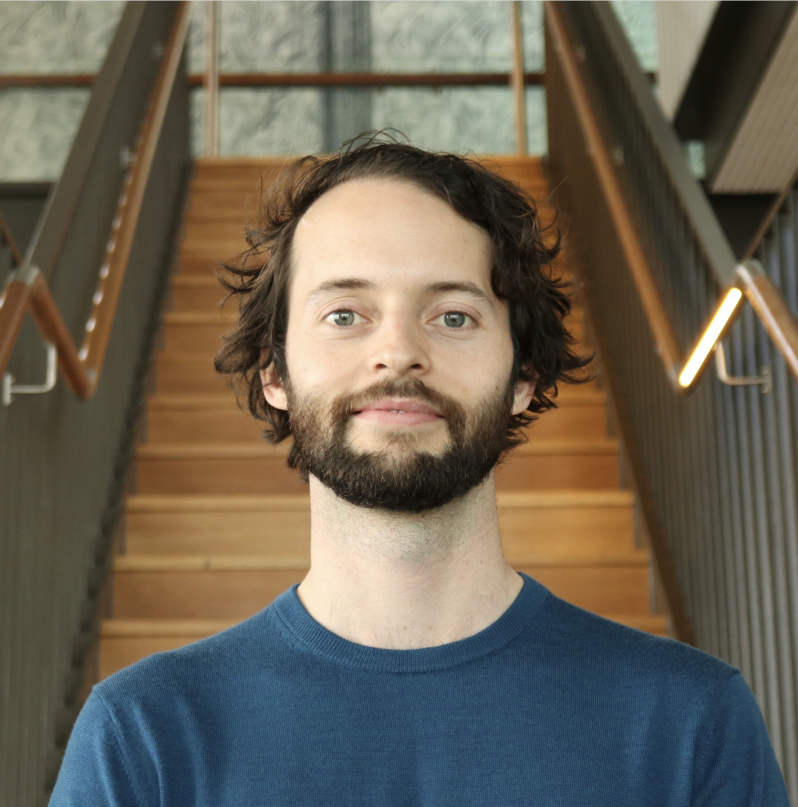
Dr Etienne Masle-Farquhar
Conjoint Senior Lecturer
2015 PhB Science
2015 Hons (1st Class)
2021 PhD (UNSW Dean's Award)
Medicine & Health
School of Clinical Medicine
Dr. Etienne Masle-Farquhar is a Lab Head & Faculty Member at the Garvan Institute in Sydney, a Conjoint Senior Lecturer at UNSW and Principal Investigator of the Exceptional Responders Program.
At Garvan, the Masle-Farquhar Laboratory is a team of 8 people specialising in Arthritis and Tissue Immunogenomics. The lab's rapidly expanding, unique biobank includes synovial fluid, tissue, bone marrow and other samples from over 300 individuals (and ongoing) from >10 hospitals across Australia, who donated inflamed tissues collected during their hospital procedures - primarily from major forms of arthritis (rheumatoid, psoriatic, spondyloarthritis, osteoarthritis, gout), as well as primary cold agglutinin disease (pCAD) and giant cell arteritis (CGA). Using bespoke mouse models, and via collaboration with the new Garvan Biologics Platform, the Masle-Farquhar Lab is designing and producing novel biologic therapies for pre-clinical assessments and/or clinical trials.
During his early training, Etienne obtained Hons (1st Class; Alexander McTaggart Scholarship) at the ANU, with A/Prof Anselm Enders and Prof Stefan Broer. He completed his PhD with Prof Chris Goodnow (2025 Crafoord Prize Winner) and A/Prof Joanne Reed, with a UNSW Dean's Award for Outstanding Thesis on his study of shared genetic mechanisms of autoimmune diseases and haematological malignancies. Etienne then completed a first postdoc with A/Prof Owen Siggs, studying Acquired Errors of Immunity, immune syndromes caused by monogenic acquired mutations. And a second postdoc with Prof Joseph Powell, a world-leader in single-cell genetics and eQTL. Etienne’s interests include monogenic immune diseases caused by germline or acquired variants in STAT3, KMT2D, CARD11, UBA1 – and more recently, a major focus on studying and treating major forms of arthritis and their comorbidities.
Supported by NSW OHMR, NHMRC and other grants, the Masle-Farquhar Lab is investigating disease mechanisms and testing novel treatments for arthritis, inflammatory and hematological diseases.
E-mail
Location
Garvan Institute of Medical Research
- Publications
- Media
- Grants
- Awards
- Research Activities
- Engagement
- Teaching and Supervision
2026: NHMRC Investigator Grant (EL1) ($688,405); Chief Investigator: 'Blood and bone: pathogenic leukocytes and acquired mutations within arthritic joints'.
2026: UBC Research Grant ($89,034); Chief Investigator B: 'The use of predictive biomarkers to determine treatment response in patients with psoriatic arthritis'.
2025: Perpetual IMPACT Grant ($119,928); Chief Investigator: 'Precision tracking and targeting of aberrant T cells in Rheumatoid and Psoriatic Arthritis'.
2025: Australia and New Zealand Society of Immunology (ASI) Breakthrough Award ($50,000): 'Understanding synovial inflammation in osteoarthritis and identifying prognostic biomarkers for pain and loss of mobility'.
2025: Arthritis Australia Fellowship; Chief Investigator A: 'Leukocytes, acquired mutations and biomarkers in osteoarthritis.'
2025: St Vincent's Clinic Research Foundation (SVCRF) Grant ($50,000); Chief Investigator C: 'Cellular and molecular drivers of osteoarthritis: from Bedside to Bench'.
2024: NSW Office for Health and Medical Research (OHMR) Grant ($500,000): Chief Investigator A: 'Blood and bone: single-cell genomics to reveal disease mechanisms, inform treatment selection and monitoring of inflammatory arthritides.'
2024: AIFA Early Career Research Grant ($10,000); Chief Investigator A: 'Revealing the B cell intrinsic effects of pathogenic KMT2D mutations in Kabuki syndrome (KS) and Cold Agglutinin Disease (CAD)'.
2024: Exceptional Responders Seed Grant ($50,000); Chief Investigator A: 'Studying synovial inflammation and identifying novel biomarkers in osteoarthritis'.
2024: St Vincent's Clinic Research Foundation (SVCRF) Grant ($50,000); Chief Investigator A: 'Multiomic study of synovial fluid to reveal molecular and cellular triggers of arthritic flares'.
2024: NHMRC Ideas Grant ($1,094,640); Associate Investigator: 'Harnessing pathogenic immune cells to develop a new diagnostic for non-responders and refractory conditions in Celiac Disease'.
2024: Australia and New Zealand Society of Immunology (ASI) Career Advancement Award: 'Genomic and single-cell study of acquired variants in Cold Agglutinin Disease'.
2022: Triple I Sphere Grant ($75,000); Chief Investigator B: 'Elucidating Cellular and Molecular drivers of Rheumatoid Arthritis disease flares'.
2021: Millenium Science Spatial Pioneers Fellowship; Chief Investigator: 'Spatial transcriptomics to elucidate mechanisms driving Inclusion Body Myositis'.
2018-ongoing: Philanthropic support (Inclusion Body Myositis; Rheumatoid Arthritis; Systemic Sclerosis).
2018-ongoing: >15 travel awards to present at international and national conferences.
2025: Faculty & Laboratory Head Appointment, Garvan Institute of Medical Research.
2024: Breakthrough Award, Australia and New Zealand Society of Immunology (ASI).
2023: Publication of the Quarter, UNSW St Vincent's Clinical School; Travel Award, Federation of Clinical Immunology Societies (FOCIS) Annual General Meeting, Boston, USA.
2022: Triple I Sphere Grant to study Rheumatoid Arthris Flares; ICIS-Pfizer Junior Investigator Award; Travel Award for the B cell-T cell Keystone 2022, Hannover, Germany; Travel Award for the ASI Annual General Meeting, Melbourne, Australia.
2021: Dean’s Award for Outstanding Thesis, UNSW, Sydney; Oral Presentation Prize, Federation of Immunological Societies of Asia-Oceania (FIMSA), FIMSA Annual Meeting, Seoul, Korea; Travel Award, FIMSA Annual Meeting 2021, Seoul, Korea; Best Postdoc Oral Presentation, St Vincent’s Campus Postdoc Symposium, Sydney, Australia.
2020: Best Student Oral Presentation, St Vincent’s Campus Research Symposium, Sydney, Australia.
2019: Travel Award, 2nd Human & Translational Immunology Conference, Kos Island, Greece; Travel Award, 2019 ThymE Conference, Weizmann Institute of Science, Rehovot, Israel; Travel Award, World Congress on Inflammation, Sydney, Australia.
2018: Stuart Furler Travel Award, Garvan Institute of Medical Research; Travel Award, Australian and New Zealand Society of Immunology (ASI) Annual Scientific Meeting.
2017: Shortlist for 2017 Writing NSW Writer & Scientist Grant, “Is winter coming? Immunology as a game of thrones”; 3rd place, 3 Minute Thesis (3MT), Garvan Institute of Medical Research.
2016: Australian Postgraduate Award (APA) scholarship, for full duration of PhD undertaken at the Garvan Institute of Medical Research; Chancellor’s Letter of Commendation for Outstanding Academic Performance in 2015, Australian National University, Canberra.
2015: Awarded the Alexander McTaggart Memorial Scholarship, Australian National University, Canberra, Australia.
2011: French Baccalauréat Mention Très Bien (equivalent ATAR: 98).
2009: "Dux" of Telopea Park School, Canberra, Australia: Best Overall Academic Performance over the course of Secondary Education.
Our Laboratory studies molecular and cellular mechanisms and novel treatments for major forms of arthritis (RA, PsA, SpA, Gout, OA), and other diseases including primary cold agglutinin disease (pCAD) and giant cell arteritis (GCA). We leverage a national collaborative network and our unique Biobank of inflamed tissues and blood from hundreds of individuals with autoimmune, inflammatory and/or hematological conditions - with a major emphasis on arthritis and its comorbidities.
Student, research assistant and postdoc submissions are encouraged.
Please email lab head Dr Etienne Masle-Farquhar (e.masle-farquhar@garvan.org.au) a CV and transcripts, and a cover letter or shorter description of your motivations for applying. Our well-funded Laboratory of 8 people is closely integrated into the exciting environment of the Garvan Institute and the Translational Genomics Program.
The Lab's areas of expertise:
- Close clinical partnerships and unique collections of inflamed tissues, to study human diseases directly in human tissues.
- Cutting-edge immunogenomics methods, including single-cell sequencing, high parameter flow and microscopy, to reveal molecular and cellular mechanisms of disease.
- Preclinical mouse models to test new mechanisms and rapidly assess pre-clinical efficacy of our novel treatments.
- Cytokine and immunology expertise, with an emphasis on germline and particularly somatic (=acquired) mutations that drive autoimmune, inflammatory and hematological diseases.
- Interplay between stress ligands and cytotoxic T cells within tissues.
- Cross-talk between immune and non-immune cells in driving variable levels of pain and tissue damage.
Hons/PhD/postdoc Projects.
Postdocs are encouraged to suggest new or modified projects. PhD projects are subject to modifications.
- RA Flares & Inflammation. Single-cell, genomics and cytotoxicity study in synovial fluid aspirates and inflamed tissue, of expanded, persistent CD8 effector T cell clones, which we hypothesise drive unpredictable flares and joint damage in rheumatoid arthritis (RA).
- PsA pharmacogenomics. Large-scale single-cell mRNA and eQTL study, paired with detailed clinical monitoring, to identify genetic biomarkers that stratify individuals with psoriatic athritis (PsA), for optimal predicted responses to major biologics.
- CHIP-driven Gout Flares. Single-cell, flow cytometry and clinical study of acquired mutations in Gout. Study focusing on CHIP-mutant cells in sequential flare aspirates and blood collections.
- Immune-Neuron Interactions in Pain. High-parameter flow, microscopy and single-cell sequencing study of immune-neuronal interactions in inflamed joints, and their impact on pain and stiffness, with an emphasis on OA and RA.
- Pre-clinical testing of new Biologics. Study in partnership with the new Garvan Biologics Platform, which provides end-to-end design, production and QC of novel antibodies and small molecule inhibitors. Study testing novel biologic therapies in mouse models of arthritis, amongst others.
- Pathogenic B cells causing pCAD. Single-cell genomics to dissect cell-intrinsic and -extrinsic effects of acquired CARD11 and KMT2D mutations in pathogenic VH4-34+ B cells in primary Cold Agglutinin Disease (pCAD), using BENTA and Kabuki Syndrome as germline disease controls.
- Muscle-infiltrating CD8 T cells. Study of CD8 T cell infiltration and disease mechanisms in Inclusion Body Myositis.
Podcast Medical Minds: https://www.garvan.org.au/news-resources/podcasts/arthritis-uncovering-pathways-to-better-treatment
Podcast Research Bytes: https:/open.spotify.com/episode/4AAs2JXlfqkdkUKgDCeZ7S
Arthritis Australia Champion
Mental Health First Aider & Wellbeing Ambassador, Garvan Institute
My Research Supervision
In 2025, the Masle-Farquhar laboratory included:
1 x project coordinator
2 x research assistants
2 x Honours students
1 x PhD student with 1 x PhD starting in June 2026
1 x clinical trials coordinator
2 x research interns