
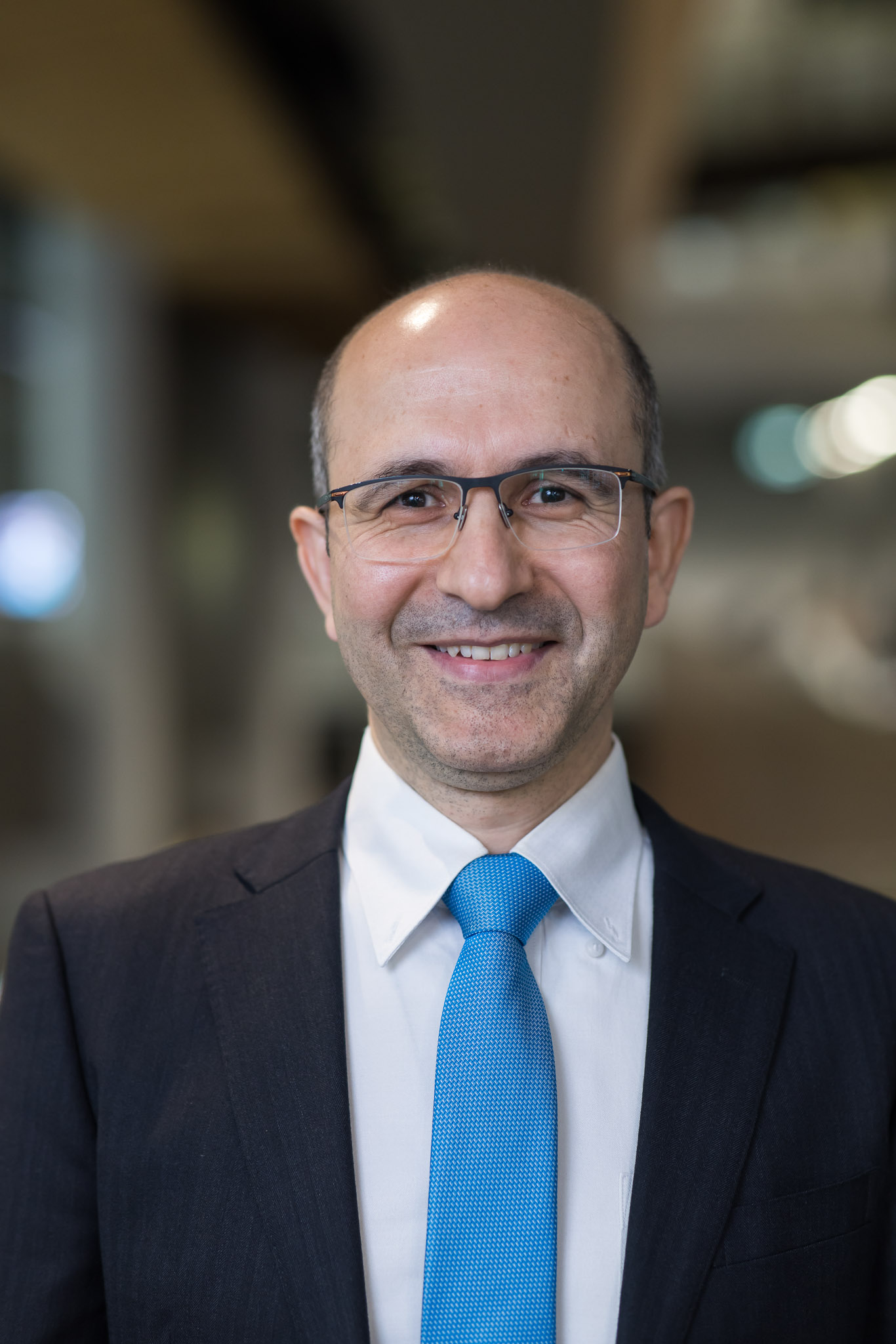
Associate Professor Farshid Pahlevani
Associate Professor Farshid Pahlevani is a process metallurgist and materials scientist advancing green metals, manufacturing resilience and future-ready industrial materials. His research helps metals, mining and manufacturing industries improve performance, reduce energy use and emissions, extend component life, and strengthen supply-chain resilience through industry-ready materials and process innovations.
His work is grounded in process metallurgy, materials performance, steel and alloy manufacturing, surface engineering, high-temperature materials processing and industrial implementation. A key feature of his research is the qualification of strategic domestic feedstocks, including secondary, recovered and by-product materials, for use in real industrial systems. This positions these materials not only as environmental resources, but as inputs that can support sovereign manufacturing capability, lower-carbon production and a more resilient Australian industrial base.
Since joining UNSW Sydney in 2015, Farshid has built a strongly industry-facing research portfolio with more than 160 UNSW-recorded research outputs, multiple international patents, substantial government and industry research funding, and technologies that have been licensed, commercially trialled or implemented with partners across the metals, mining and manufacturing sectors, including Molycop, Bradken, Bisalloy, Schlumberger, Nippon Steel and Aavid Thermalloy. His achievements have been recognised through national and international awards, including being named one of Australia’s Most Innovative Engineers in 2020.
Farshid is also Associate Dean for Lifelong Learning in the UNSW Faculty of Science, where he is building new approaches to professional learning, microcredentials, industry education and public-facing science education. In this role, he is developing scalable lifelong learning pathways that connect UNSW Science expertise with the needs of professionals, teachers, industry, government and the wider community. He is also leading the development of a UNSW Science Teacher Professional Learning initiative in collaboration with the NSW Department of Education to strengthen STEM teacher capability and support curriculum implementation across NSW.
Through his research, education and engagement, Farshid aims to position UNSW as a leader in green metals, future-ready manufacturing, strategic industrial materials and the translation of science into practical industrial and public benefit.
- Publications
- Media
- Grants
- Awards
- Research Activities
- Engagement
- Teaching and Supervision
2023 - Nominate for demonstration excellence award for UNSW vice-chancellor award
2022 - Honourable mention for the Post Graduate Council Faculty of Science HDR Supervisors Award
2021 - Nominated for Henry Marion Howe Medal
2020 - Named as one of the Australia's most innovative engineers
2013 - Licencing award for licensing the liquid forging, an in-house development, to AAVID THERMOALLOY Company, SIMTech, Singapore.
2012 - Nominated for Sawamura award and Guimaraes award for the best paper by ISIJ international journal Japan
2011 - Best industrial oriented research of the year in SIMTech, Singapore
2010 - Best research of the year in Iron and Steel Institute of Japan (ISIJ)
2009 - Hata-no award for young researcher, Tohoku University
2007 - National project for developing new method in Al casting part in Japan
2004 - Awarded Japanese government scholarship (Monbukagakusho) for my PhD
Farshid leads research in Green Metals and Manufacturing Resilience, developing future-ready industrial materials, process innovations and strategic feedstock pathways to support Australia’s transition to lower-carbon, more resilient and globally competitive manufacturing.
His research is grounded in process metallurgy and materials performance, with expertise spanning steel and alloy manufacturing, surface engineering, component-life extension, high-temperature materials processing, metal–ceramic interactions, heat treatment, casting and industrial process design. Rather than focusing only on recycling, his work examines how secondary, recovered and by-product materials can be qualified as strategic domestic industrial inputsthat improve performance, reduce reliance on imported or virgin feedstocks, and support sovereign manufacturing capability.
A defining feature of his research is translation. Projects are developed with industry and end users so that new materials and processes can move from laboratory discovery to pilot trials, commercial adoption and measurable economic and environmental benefit. His research has contributed to improved wear performance, longer component life, lower energy demand and practical process improvements in metals, mining and manufacturing applications.
His research activities include:
- Green metals and low-carbon manufacturing: developing materials and process solutions that support lower-emission metals and manufacturing industries.
- Manufacturing resilience and component-life extension: improving durability, wear performance, heat-treatment response and reliability of industrial components.
- Strategic domestic feedstocks: qualifying secondary, recovered and by-product materials as reliable industrial inputs for Australian manufacturing.
- Industrial materials performance: connecting microstructure, processing conditions and service performance in metals, alloys and engineered materials.
- Surface engineering and functional treatments: developing surface-modification pathways that improve performance in demanding industrial environments.
- Industrial qualification and scale-up: working with industry to validate materials, processes and feedstocks for real manufacturing conditions.
- Research translation: co-developing technologies with partners in metals, mining, manufacturing, recycling and environmental sectors.
- Future manufacturing capability: linking research, industry education and lifelong learning to support the workforce needs of green metals and advanced manufacturing.