
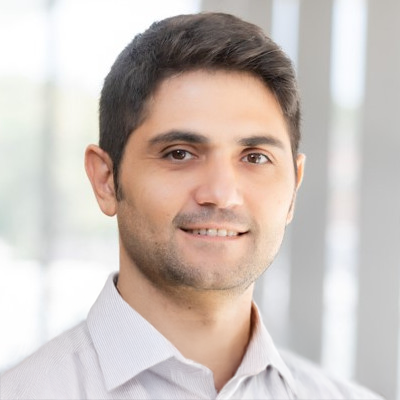
Dr Ismail Devecioglu
Research Associate
Medicine & Health
School of Biomedical Sciences
Dr. Ismail Devecioglu is a neuroscientist and biomedical engineer specializing in the somatosensory system. He earned his Master’s and PhD in Biomedical Engineering, with a research focus on the peripheral physiology of touch and intracortical tactile feedback mechanisms.
From 2017 to 2023, he served as an Assistant Professor in Türkiye, where he led research on sensory substitution systems for proprioceptive feedback in upper-limb prosthetics. In 2023, he joined the University of New South Wales (UNSW Sydney) as a Postdoctoral Research Fellow and holds a conjoint researcher position at Neuroscience Research Australia (NeuRA).
Dr. Devecioglu’s current research investigates the physiology of touch and its role in motor control, including balance and locomotion. He also develops neural interfaces designed to restore sensory feedback in prosthetic devices. He supervises higher-degree research students from diverse backgrounds in biomedical sciences and engineering.
E-mail
- Publications
- Media
- Grants
- Awards
- Research Activities
- Engagement
- Teaching and Supervision
- AI-Enabled, Portable, and Versatile Ultrasound System for Movement, Sensory Physiology and Pain Research / University of New South Wales/Research Infrastructure Scheme (RIS) / $55,750
- IEEE World Haptics 2025 - Best Work-in-Progress Paper Award - Slipperiness perception upon stepping and standing on a surface when barefoot or shod
My research focuses on the sense of touch, encompassing several complementary areas:
Friction Perception (Fingertip): Understanding the slipperiness of an object is critical for skilled object manipulation, for example, when holding a glass of water. If we do not apply sufficient grip force, the object may slip; if we apply too much, the object may break or cause muscular fatigue in prolonged tasks. Therefore, grip force must be optimally regulated. We investigate how humans perceive surface slipperiness and how tactile afferents encode slip-related information to inform motor system to adjust grip. Our research methods include microneurography (recording from single tactile afferents innervating the fingertips of human participants), psychophysical testing, and tissue mechanics analysis using video-based deformation tracking and finite element modeling of skin mechanics.
Friction Perception (Feet): Surface slipperiness is also critical for stable gait and slip prevention. While slip perception has been studied extensively, the perception of slipperiness at the foot sole without an actual slip remains poorly understood. We use psychophysical and behavioral methods to investigate how people perceive surface slipperiness when barefoot or wearing shoes. Our findings have implications for gait adaptation, balance control, fall prevention, footwear design, and sensory augmentation technologies.
Vibrotactile Acuity of the Foot and Sensory Aids: Humans exhibit exceptional dexterity with their hands due to high tactile receptor density. Although similar types of afferents are present in the foot sole, their density is lower, and the biomechanics differ substantially. To inform the design of tactile augmentation systems for the feet (particularly in individuals with neurological conditions), we study humans’ detection, discrimination, and localization abilities on the foot sole using psychophysical approaches, as well as the response properties of tactile afferents recorded via microneurography.
Biomechanics of Skin: We use lumped-element models, finite element modeling and image-based analysis to investigate how skin deforms and responds to mechanical stimuli or interactions with surfaces of varying texture and frictional properties.
Sensory Substitution: I am also interested in the development and evaluation of sensory substitution systems, with a focus on their efficiency, cognitive load, and the formation of input–output associations during prolonged use. I welcome collaborations in this area, particularly in system design and psychophysical testing.
My Research Supervision
2 PhD students, 1 SBMS Honours Student, and 4 Biomedical Engineering Students (Thesis A, B, and C).
My Teaching
I am a trained educator with extensive experience in teaching and curriculum development in the biomedical and engineering sciences. During my appointment as Assistant Professor at Tekirdağ Namık Kemal University (2017-2023), I led tutorials, lectures, and laboratory sessions across multiple years of the Biomedical Engineering program. I developed new lecture materials, assessment tasks, and rubrics, and created a final-year elective course on Rehabilitative Brain-Machine Interfaces. I also served as the sole editor of a biomedical engineering textbook, coordinating 18 chapters authored by more than 40 academics and contributing two chapters myself. This was an experience that strengthened my ability to design cohesive, multidisciplinary teaching materials. Each year I supervised 10-15 undergraduate research students through project design, grant preparation, implementation, and presentation. Many of these student projects were externally recognised: 10 received nationwide funding, and two reached the finals of national technology competitions. I also adapted complex lecture materials involving mathematics and programming for online delivery during the COVID-19 pandemic, helping to develop question banks, digital project submissions, and other online teaching resources. Earlier in my career as a Research Assistant (2011-2017), I gained foundational experience in student engagement through laboratory demonstrations and marking of reports. At UNSW, I have contributed to NEUR3101-Muscle and Motor Control practicals as a demonstrator across different experiments, and I was invited as a guest lecturer for MFAC1525-Ageing & Endings (medicine) and BIOM9660-Bionics and Neuromodulation (engineering). These cumulative experiences reflect my capability and enthusiasm to teach, assess, and design educational materials across tutorials, lectures, and practical classes in neuroscience, physiology, and biomedical sciences.