
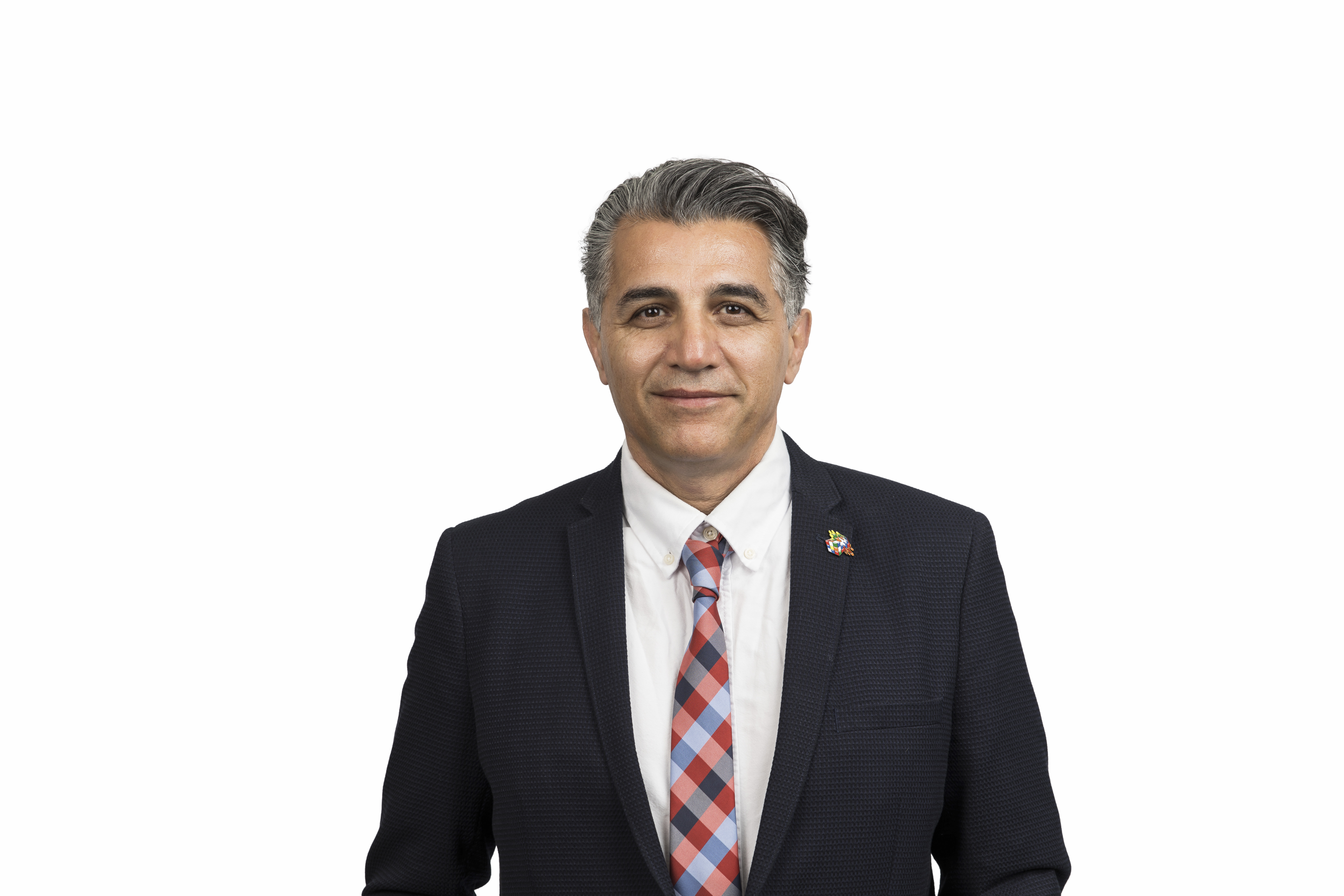
Dr Javad Foroughi
Dr. Foroughi received his B.S. and M.S. degrees in Engineering (Polymer Materials Science) in 1997 and his Ph.D. in Materials Engineering from the School of Mechanical, Materials, Mechatronic, and Biomedical Engineering at the University of Wollongong, Australia, in 2010. He is a Senior Research Fellow at the University of New South Wales and a recipient of the Australian Research Council (ARC) DECRA Fellowship. Dr. Foroughi is also a visiting professor at the Department of Cardiothoracic, Transplantation, and Vascular Surgery at Hannover Medical School, Germany. Previously, he was a visiting professor at the Department of Thoracic and Cardiovascular Surgery at the University of Essen, Germany (2020–2023).
Dr Foroughi is a Senior Research Fellow in the School of Mechanical and Manufacturing Engineering at UNSW Sydney and a Chief Investigator in the ARC Research Hub for Connected Sensors for Health. He is also a Visiting Professor in the Department of Thoracic and Cardiovascular Surgery at Hannover Medical School, Germany. He was awarded the prestigious Australian Research Council (ARC) Discovery Early Career Researcher Award (DECRA) Fellowship in recognition of his outstanding research achievements.
Dr Foroughi is an internationally recognised researcher in smart materials, artificial muscles, soft robotics, and wearable technologies. His research integrates materials science, biomedical engineering, robotics, and advanced manufacturing to develop next-generation implantable and wearable medical devices for cardiovascular medicine and personalised healthcare. His current research focuses on artificial heart muscles, soft robotic cardiac assistance, wearable and implantable biomedical devices, flexible and wearable sensors, smart textiles, self-powered sensing technologies, and energy harvesting systems.
He is widely recognised for pioneering the field of fibre-based artificial muscles and is the inventor of torsional carbon nanotube artificial muscles, first reported in Science in 2011. His research has established new directions in artificial muscle technologies and their translation into soft robotic systems, implantable medical devices, and wearable healthcare technologies.
Dr Foroughi has published more than 250 peer-reviewed journal papers, including five publications in Science, and has received more than 14,000 citations with an h-index of 51. He has consistently been recognised among the Stanford/Elsevier World's Top 2% Scientists. His research excellence has been recognised through numerous national and international awards, including the IEEE Consumer Electronics Magazine Best Impacts Joint Award, the R&D 100 Gold Award for Market Disruptor Product, and recognition as an Emerging Research Fellow by the Illawarra Health and Medical Research Institute (IHMRI).
He has secured more than A$12.5 million in competitive research funding from the Australian Research Council, the National Health and Medical Research Council, industry, universities, and government agencies. He has extensive experience leading multidisciplinary research programs and collaborating with clinicians, engineers, and industry partners to translate advanced technologies into real-world healthcare solutions.
Professor Foroughi has successfully supervised more than 25 higher degree research (HDR) students to completion, as well as over 100 Honours and Master's research students and six postdoctoral researchers and research assistants. He continues to mentor the next generation of researchers in smart materials, artificial muscles, soft robotics, biomedical engineering, and wearable technologies. His long-term vision is to establish electrically actuated artificial muscles as a transformative platform for implantable bioinspired medical devices that restore physiological function in patients with cardiovascular disease and, ultimately, enable next-generation therapies for other mechanically impaired organs.
- Publications
- Media
- Grants
- Awards
- Research Activities
- Engagement
- Teaching and Supervision
Lead/ Chief Investigator for over $12 million competitive research grants: NSW Health Collaborative Grants 2025, Cardiovascular Senior and Early-Mid Career Researcher Grants 2024, ARC research hub for connected sensors for health 2021, NSW TechVouchers 2017, Global Challenges 2016, ARC- Discovery Early Career Researcher Award (DECRA) Fellowship 2013
NSW Cardiovascular Collaborative Grants (2025-2028)
Cardiovascular Senior and Early-Mid Career Researcher Grants (2025-2028)
ARC- Discovery Early Career Researcher Award Fellowship, (2013-2016),
Top Cited Article; Wearable Electronic Textiles from Nanostructured Piezoelectric Fibers has been recognized as a top cited paper in Advanced Materials Technologies 2020 – 2021 (WILEY)
Editor's Choice Articles : “Actuator Materials: Review on Recent Advances and Future Outlook for Smart Textiles” has been selected as the Editor's Choice Articles 2019 (MDPI – Fibers)
Best of Advanced Materials Technologies for “Wearable Electronic Textiles from Nanostructured Piezoelectric Fibers”; 2020 (WILEY)
Best Impacts, Joint Award by the IEEE Consumer Electronics Magazine 2017 for the article "Smart Fabrics and Networked Clothing”,
Emerging Research Fellow, Emerging Research Fellow , Illawarra Health and Medical Research Institute (IHMRI) September 2016 – present,
R&D 100 Awards & Technology competition (USA) with title: Artificial muscles from fishing line (HeliAct Muscles), Gold Award for the Market Disruptor Product at the 53rd annual R&D 100 Awards 2015,
Winner (first place) of University of Wollongong Pitch competition (Next Generation of Textile Scaffolds for Nerve Reconstruction ) in 2014,
Visiting Research Fellow, Alan G MacDiarmid NanoTech Institute, University of Texas at Dallas, United States (May 2011- July 2011),
Visiting Research Fellow, The National Creative Research Initiative Centre for Bio-Artificial Muscle, Hanyang University –Seoul, South Korea (September 2010- November 210),
Visiting Research Fellow, Alan G MacDiarmid NanoTech Institute, University of Texas at Dallas, United States (September 2009 – December 2009),
Asia Nanotech Camp Fellowship (2009, Taiwan),
Commercialisation Training Scheme Scholarship, University of Wollongong (2009),
Australian Research Scholarship from Australian Research Network for Advanced Materials (2008),
Trailblazer Award finalist- University of Wollongong (2008),
PhD Scholarship from University of Wollongong (2006),
First place in BSc degree at Polymers Department.
My research focuses on developing next-generation artificial muscles, soft robotic systems, and smart materials that enable new approaches to healthcare and implantable medical technologies. By integrating materials science, biomechanics, robotics, computational modelling, and advanced manufacturing, I develop bioinspired systems that replicate the mechanical functions of biological tissues and organs.
A major focus of my research is the development of electrically actuated artificial heart muscles and soft robotic cardiac assistance systems for patients with heart failure. This work aims to establish a new generation of non-blood-contact implantable devices capable of restoring physiological cardiac function through biomimetic mechanical assistance. Beyond cardiovascular medicine, the underlying technologies provide a platform for future implantable devices targeting peripheral vascular disease, gastrointestinal disorders, and other mechanically impaired organs.
My research also advances wearable and flexible technologies, including smart textiles, flexible sensors, self-powered sensing systems, wearable energy harvesting, and intelligent human–machine interfaces for continuous health monitoring and personalised healthcare. These technologies combine multifunctional materials with innovative device architectures to create lightweight, flexible, and autonomous systems that operate in real-world environments.
A central theme across my research is translating fundamental discoveries in smart materials into practical engineering solutions with clinical and societal impact. Through close collaboration with clinicians, biomedical engineers, and industry partners, my research seeks to accelerate the development of next-generation implantable and wearable medical technologies that improve patient outcomes and quality of life.
Actively engaged with local and international industry partners for the scalable manufacturing of smart materials, including collaborations with NSW Health, Ocius Technology, CardioBionic, Eczanes Pharmaceuticals, Lincoln Agritech Ltd., and Geofabrics.
My Teaching
Thesis Project MMAN4951
Thesis Project MMAN9452
Thesis Project MMAN9453
New Course in T1 2027:
MTRN4242 –Wearable & Flexible Robotics
Elective Course for Engineering Undergraduate and Postgraduate Students