
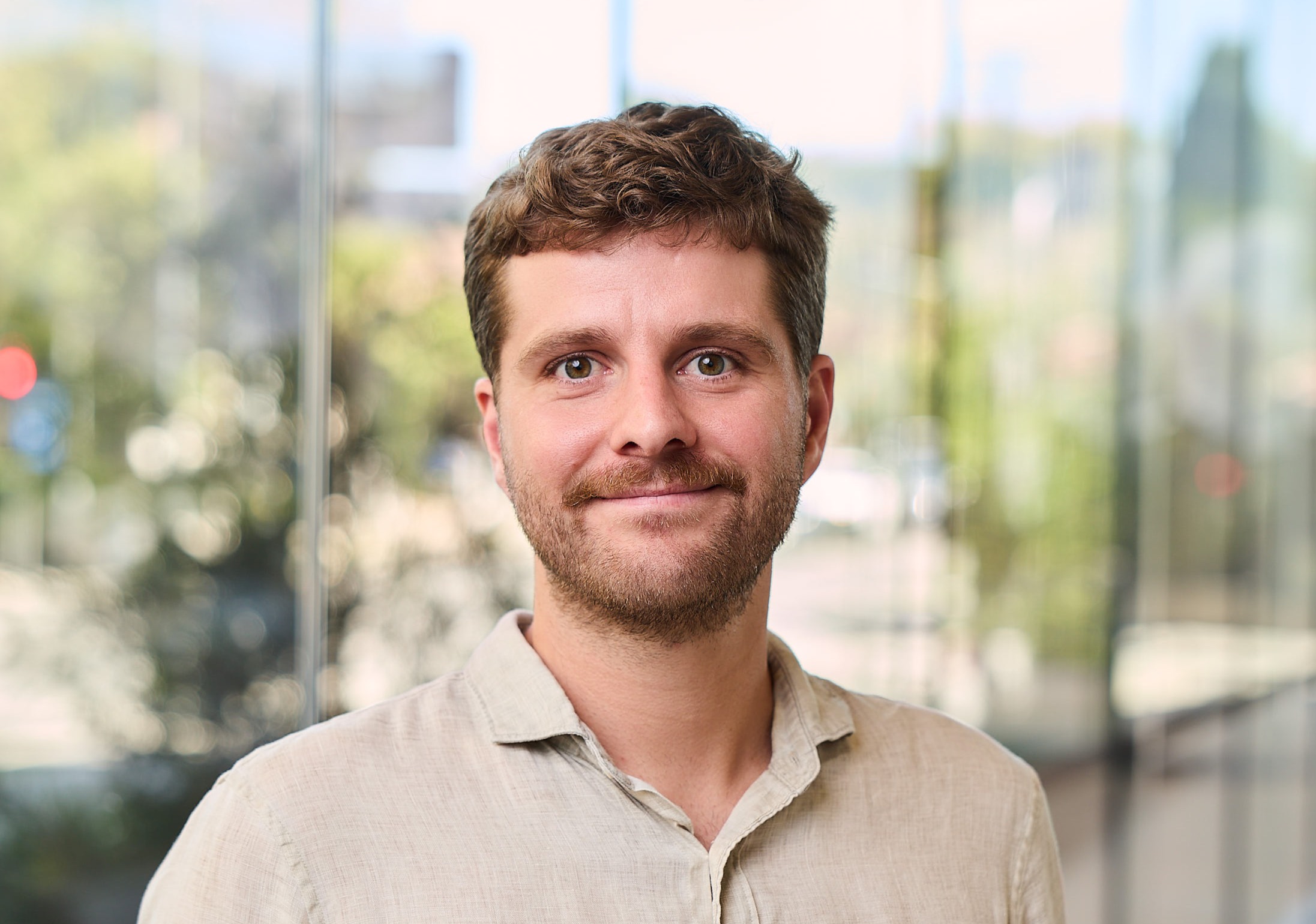
Dr Rhys Mantell
Postdoctoral Fellow
Doctor of Philosophy (PhD) - UNSW (2025)
Master of Public Health (MPH) - UNSW (2020)
Bachelor of Economics - University of Queensland (2016)
Medicine & Health
School of Population Health
Dr Rhys Mantell is a postdoctoral research fellow within the Justice Health Research Program (JHRP) at the School of Population Health, UNSW Sydney.
His doctoral research, conducted within the NHMRC-funded ASCAPE project, focused on the co-design and evaluation of digital health tools - particularly game-based cognitive assessments - for older people in prison. This work explored how interactive digital tools can be designed for, and with, people "ageing at the margins," with a strong emphasis on trauma-informed, user-accepted and culturally appropriate design. He was recently the recipient of an RM Gibson Grant (funded by the AAG Research Trust and Dementia Australia) to extend the ASCAPE project to more broadly support older Australians ageing at the margins.
Rhys works closely with Dr Jane Hwang on an emerging program of research exploring reintegration and recovery for people leaving Australian prisons. This includes qualitative and mixed-methods studies examining the emotional, relational, and structural dimensions of post-release life. He was recently awarded a seed grant to investigate how older people define and navigate emotional healing after prison, and how services can better support this process.
A key interest of Rhys' is philosophy of science and its application to health and social research. His doctoral work drew extensively on critical realist methodology to unpack complex, multi-level phenomena in justice health. He is increasingly interested in phenomenological and embodied approaches to understanding craving, trauma, and recovery, and in the relationship between contemplative practice and human flourishing.
Rhys has also contributed to multiple large-scale national evaluations and policy projects across ageing, mental health, and justice health sectors during his time at Deloitte Consulting and Australian Healthcare Associates (AHA).
He is committed to philosophically grounded, interdisciplinary research that takes seriously both the complexity of human experience and the urgency of turning knowledge into action.
Research interests
- Digital health tools and game-based cognitive assessment for marginalised populations
- Novel screening approaches to detect dementia in underserved cohorts
- Reintegration, recovery, and post-release outcomes
- Trauma recovery, emotional wellbeing, and the lived experience of craving
- Philosophy of science, phenomenology, and qualitative methodology
- Embodied and contemplative approaches to health and recovery
- Justice health policy, service design, and reform
E-mail
- Publications
- Media
- Grants
- Awards
- Research Activities
- Engagement
- Teaching and Supervision
Postgraduate Scholarship, Australian National Health and Medical Research Council (2021-2025)- A serious game approach to cognitive assessment in marginalised populations.
Seed Grant, UNSW School of Population Health (2025) - Unpacking strengths-based emotional healing and trauma recovery for older Australians with recent experience of incarceration.
RM Gibson Program, AAG Research Trust and Dementia Australia Research Foundation (2025-2027) - ASCAPE at the Margins: User evaluation of a game-based cognitive assessment for older marginalised Australians
Commissioned Research
Australian Association of Gerontology (2021-2022) - $30,000. Prison Leavers Project: care and support needs after leaving prison in old age - Preparation of a Background Paper, Position Paper for Government and "Things To Consider" for aged care providers.
Projects
- PhD: A serious game approach to understand and detect cognitive impairment issues in marginalised populations. Part of the NHMRC Ideas grant (2021-2023) ASCAPE: Audio delivered screening for cognition and age-related health in older prisoners.
- ReINVEST: Reducing impulsive behaviour in male, repeat-violent offenders
- Leaving prison in later life; HEADLITEs
-
Unpacking strengths-based emotional healing and trauma recovery for older Australians with a recent experience of incarceration
My Teaching
Past
Teaching assistant for PHCM9761-PH Aspects of Mental Health (T2) - 2021 and 2022