
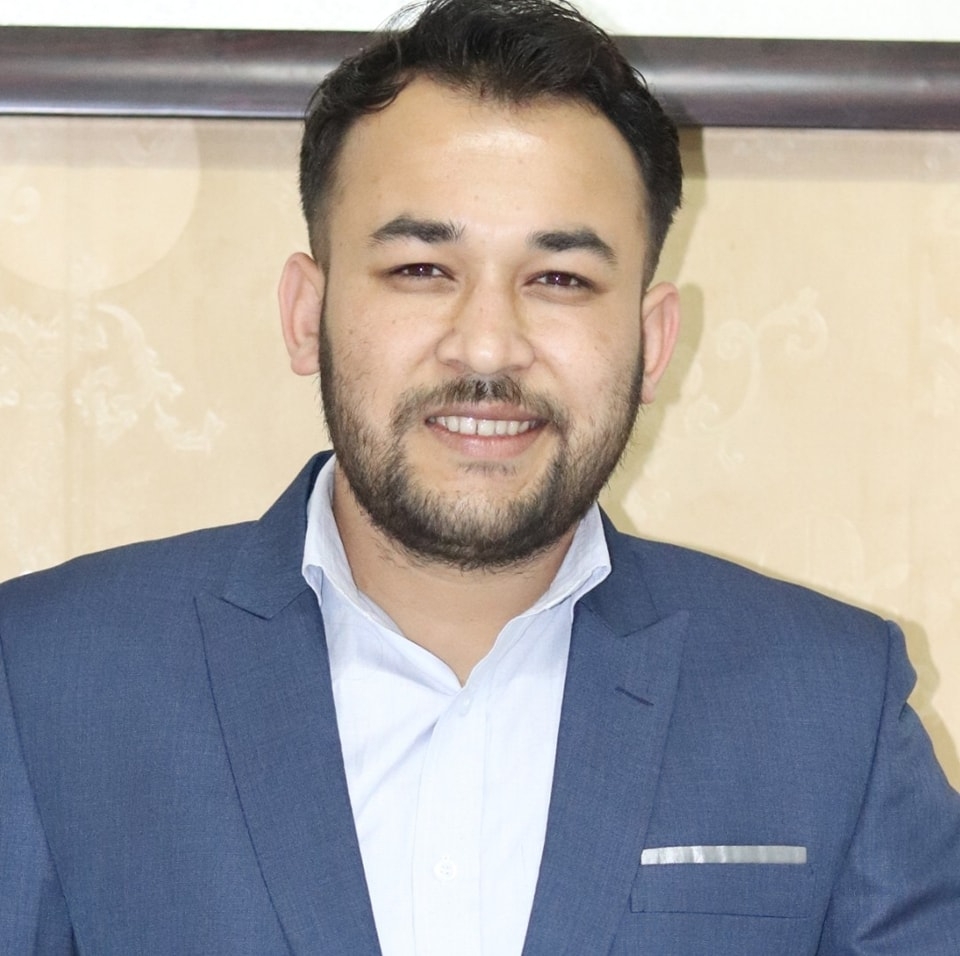
Mr Suraj Shah

Casual Academic
Engineering
Civil and Environmental Engineering

Suraj Shah is a PhD candidate in Civil and Environmental Engineering at UNSW Sydney, specialising in hydrological remote sensing, statistical hydrology, and climate-sensitive water modelling. His research develops improved satellite-based precipitation merging methods and snow-dominated hydrological models for data-scarce, mountainous regions, with the broader goal of strengthening flood prediction and climate-impact assessment. He works at the intersection of Earth observation, statistical inference, and process-based modelling, and is driven by a simple standard: methods should not merely perform well, they should withstand scrutiny.

Phone
+61402887479
  • Journal articles | 2026
    Shah S; Liu Y; Kim S; Sharma A, 2026, 'Constrained negentropy optimisation (CoNE-opt): Using independent components to merge satellite data products', Remote Sensing of Environment, 334, http://dx.doi.org/10.1016/j.rse.2025.115170
    Journal articles | 2026
    Shah S; Liu Y; Kim S; Sharma A, 2026, 'Corrigendum to “Constrained negentropy optimisation (CoNE-opt): Using independent components to merge satellite data products [Remote Sensing of Environment, 334 (2026) 115170]', Remote Sensing of Environment, 335, http://dx.doi.org/10.1016/j.rse.2026.115298
    Journal articles | 2026
    Shah S; Liu Y; Kim S; Sharma A, 2026, 'RainMerge: a two-stage framework for gauge-independent merging of multiple rainfall products', Journal of Hydrology, 672, http://dx.doi.org/10.1016/j.jhydrol.2026.135390
    Journal articles | 2025
    Guragain S; Shah S; Albano R; Kim S; Hammad M; Asif M, 2025, 'Quantifying the Added Values of a Merged Precipitation Product in Streamflow Prediction over the Central Himalayas', Remote Sensing, 17, http://dx.doi.org/10.3390/rs17132170
    Journal articles | 2024
    Shah S; Liu Y; Kim S; Sharma A, 2024, 'Advancing High-Mountain Precipitation Reconstruction Through Merging of Multiple Data Sources: Triple Collocation Versus Signal-to-Noise Ratio Optimization', IEEE Transactions on Geoscience and Remote Sensing, 62, http://dx.doi.org/10.1109/TGRS.2024.3494812
    Journal articles | 2023
    Ahmed N; Lü H; Ahmed S; Adeyeri OE; Ali S; Hussain R; Shah S, 2023, 'Transboundary River Water Availability to Ravi Riverfront under Changing Climate: A Step towards Sustainable Development', Sustainability Switzerland, 15, http://dx.doi.org/10.3390/su15043526
    Journal articles | 2023
    Ahmed N; Zhu L; Wang G; Adeyeri OE; Shah S; Ali S; Marhaento H; Munir S, 2023, 'Occurrence and Distribution of Long-Term Variability in Precipitation Classes in the Source Region of the Yangtze River', Sustainability Switzerland, 15, http://dx.doi.org/10.3390/su15075834
    Journal articles | 2022
    Habiyakare T; Zhang N; Feng CH; Ndayisenga F; Kayiranga A; Sindikubwabo C; Muhirwa F; Shah S, 2022, 'The implementation of genetic algorithm for the identification of DNAPL sources', Groundwater for Sustainable Development, 16, http://dx.doi.org/10.1016/j.gsd.2021.100707
    Journal articles | 2022
    Rasheed MW; Tang J; Sarwar A; Shah S; Saddique N; Khan MU; Imran Khan M; Nawaz S; Shamshiri RR; Aziz M; Sultan M, 2022, 'Soil Moisture Measuring Techniques and Factors Affecting the Moisture Dynamics: A Comprehensive Review', Sustainability Switzerland, 14, http://dx.doi.org/10.3390/su141811538
    Journal articles | 2022
    Shah S; Tiwari A; Song X; Talchabahdel R; Habiyakare T; Adhikari A, 2022, 'Drought index predictability for historical and future periods across the Southern plain of Nepal Himalaya', Environmental Monitoring and Assessment, 194, http://dx.doi.org/10.1007/s10661-022-10275-6
    Journal articles | 2022
    Talchabhadel R; Shah S; Aryal B, 2022, 'Evaluation of the Spatiotemporal Distribution of Precipitation Using 28 Precipitation Indices and 4 IMERG Datasets over Nepal', Remote Sensing, 14, http://dx.doi.org/10.3390/rs14235954
    Journal articles | 2021
    Shah S; Duan Z; Song X; Li R; Mao H; Liu J; Ma T; Wang M, 2021, 'Evaluating the added value of multi-variable calibration of SWAT with remotely sensed evapotranspiration data for improving hydrological modeling', Journal of Hydrology, 603, http://dx.doi.org/10.1016/j.jhydrol.2021.127046
  • Other | 2026
    Sharma A; Shah S; Liu Y; Kim S, 2026, RainMerge: Open-Source Software for Unified Merging of Satellite and Gauge Precipitation Data, http://dx.doi.org/10.5194/egusphere-egu26-21357
    Other | 2025
    Kim S; Shah S; Liu Y; Sharma A, 2025, Improving Precipitation Merging: A Generalized Two-Stage Framework Using the Signal-to-Noise Ratio Optimization (SNR-opt), http://dx.doi.org/10.5194/egusphere-egu25-530
    Other | 2025
    Shah S; Liu Y; Kim S; Sharma A; Fischer S, 2025, Shifting Mountain Flood Regimes under Global Warming, http://dx.doi.org/10.5194/egusphere-egu25-526

My research focuses on improving hydrological information in data-scarce and complex regions through satellite remote sensing, statistical hydrology, and hydrological modelling. A central theme of my work is the development of robust data-merging methods for precipitation and other geophysical variables, including frameworks such as CoNE-opt and RainMerge that address limitations in conventional product-merging approaches.

I am also interested in how improved hydroclimatic datasets can strengthen hydrological prediction, particularly for mountainous and snow-influenced basins. More broadly, my research aims to develop methods that are statistically rigorous, physically interpretable, and useful for water-resource assessment and climate-impact studies.

I am involved in a collaborative project supporting the Water Authority of Fiji to strengthen hydrological information systems and turbidity forecasting in data-scarce catchments. My contribution includes developing a cloud-based Hydrological Information System for data access and visualisation, and applying SWAT modelling to assess how land-use change may influence river turbidity and sediment dynamics in Fiji, particularly in the Waimanu and Sigatoka River catchments.

This engagement links hydrological research with operational water-resource and water-quality management, using remote sensing, catchment modelling, and decision-support tools to inform practical planning and monitoring.