
Bachelor of Engineering (Honours)

- Commencing Terms
- Term 1, 2 & 3
- Delivery Mode
- Face-to-face (includes blended)
- Campus
-
Kensington
- Codes
- UAC code 425000
- Program code 3707
- CRICOS code 056835E


-
2026 Indicative first year full fee
- $8,000*
-
2026 Indicative full fee to complete degree
- $37,500*
-
2026 Indicative first year full fee
- $61,500*
-
2026 Indicative full fee to complete degree
- $265,500*
 Entry Requirements
 Fees
Fees
Fees
Fees

-
 Flexible first year
-
Project-based learning
-
Industry training

UNSW is introducing a new academic calendar from 2028.
We're moving to a new Flex-Semester Academic Calendar from 2028. While your degree structure and requirements will remain the same, the duration of your studies may vary depending on when you commence your degree prior to 2028.
Find out what this means for you.
Admissions update for international students
Some programs are at capacity for 2026 intakes and new applications are closed to New Overseas Student Commencement (NOSC). Applications to all 2027 intakes are open.
Click to find our latest updates for international student admissions.
- Overview
- Entry requirements
- What will I study?
- Future careers
- Double degrees
- How to apply
- Fees & Scholarships
Bachelor of Engineering (Honours) overview
The UNSW Bachelor of Engineering (Honours) is a four-year accredited engineering degree designed to equip you for a career as a professional engineer. You’ll harness your creativity, collaboration and critical thinking skills to design solutions for a better world and tackle complex technical and environmental challenges.
If you already know your preferred field, you can start directly in your chosen specialisation. If you’re still exploring, you can begin with a flexible first year and try out different engineering disciplines, before deciding what will suit you best. All students complete common core courses in mathematics, natural sciences and computing to build a strong foundation.
This program offers more than 20 engineering specialisations, ranging from traditional areas such as civil, mechanical, electrical and software, to emerging areas like quantum or renewable energy. The type of engineer you’ll become often depends on the specialisation you’ll choose, and in this degree, a world of choice awaits.
| Our specialisations | |
**Quantum Engineering is provisionally accredited by Engineers Australia. Accreditation by Engineers Australia will be sought for the Biomedical Engineering and Nuclear Engineering streams.
You may also choose a minor in:
Why study engineering at UNSW?
Study at Australia’s #1 Engineering faculty
Not only is UNSW one of Australia’s top universities, but the UNSW Engineering Faculty is ranked #1 in Australia and #33 globally for Engineering and Technology. As well as this, 7 of UNSW's Engineering schools are ranked in the global top 50 with one school ranked in the global top 10 for Engineering subjects (QS World University Rankings by Subject, 2026).
Further rankings from QS World University Rankings by Subject, 2026:
- Ranked #1 in Australia for Civil and Structural Engineering
- Ranked #1 in Australia for Electrical Engineering
- Ranked #2 in Australia for Mechanical, Aeronautical and Manufacturing Engineering
- Ranked #1 in Australia and #3 globally for Mineral and Mining Engineering
- Ranked #4 in Australia for Chemical Engineering
- Ranked #1 in Australia and #13 globally for Petroleum Engineering
- Ranked #5 in Australia for Computer Science
No matter your field of interest or career aspirations, at UNSW Engineering, you’ll have the support of our globally recognised faculty backing you every step of the way.
Unlock your earning potential in a career that drives real change
Engineers work in various roles across different industries, from civil and mechanical engineering to chemical and biomedical engineering to environmental, computer and mining engineering – the possibilities are endless. The UNSW Bachelor of Engineering (Honours) takes a career-focused, hands-on approach, preparing you to graduate with the practical skills, professional recognition and industry knowledge to seamlessly transition into the workforce.
On top of this, UNSW graduates earn the highest median salaries among graduates of Go8 universities (QILT Graduate Outcomes Survey, 2023). UNSW is also known for its graduate employability, with UNSW awarded the Most Employable students for seven years in a row (Australian Financial Review (AFR) Top100 Future Leaders & Graduate Employers Awards, 2020–2026).
Connect with people who enrich and expand your thinking
At UNSW Engineering, we seek out and uplift diverse perspectives, backgrounds and experiences because we believe collaboration and innovation thrive through diversity. You’ll join a welcoming community of future-minded individuals looking to make a lasting impact. UNSW Engineering boasts 40 student societies, such as UNSW Queer Students in STEM (QSIS), Women in Engineering and the UNSW Engineering Society, Human Factors Club, just to name a few.
Connect with students, academics and industry through ChallENG
Our ChallENG program connects students with leading academics, researchers, companies and not-for-profits to develop innovative solutions to real-world problems. You’ll ideate, develop and test new ideas alongside a multidisciplinary team that brings their own unique expertise and perspectives. The program will prepare you for your future career by helping you develop technical and design skills and expanding your professional expertise.
Get first-hand industry experience while you study
From your first year, you’ll put theory into practice through hands-on, work-integrated learning. The Bachelor of Engineering (Honours) includes 60 days of industrial experience, plus additional Work Integrated Learning (WIL) opportunities that help you apply your learning in real workplaces and build valuable industry connections.
3707
056835E
Kensington
425000
192
Want to see more from UNSW Engineering?
Bachelor of Engineering (Honours) entry requirements
Please note that the ATAR will vary depending on the specialisation you choose to study. You can view the required ATAR by visiting the specific page of the specialisation.
-
- The 2026 Lowest Selection Rank (LSR) is the adjusted rank (ATAR plus adjustment factors) you would have needed to gain entry to this degree in 2026.
- The 2026 A levels score is based on four Advanced Level (A2) subjects. Entry scores are calculated from the best three or four A2 subjects (excluding repeated subjects) using the following values: A*=6, A=5, B=4, C=3, D=2, E=1. At most one Applied A Level subject may be included in the best four subjects used to calculate the aggregate.
- The 2026 IB Diploma is an indication of the IB you would have needed to gain entry to this degree in 2026. It is to be used as a guide only.
- The 2026 Lowest ATAR is the lowest ATAR (before adjustment factors were applied) to which an offer was made. Where <5 is listed, this indicates that less than 5 ATAR-based offers were made and so the score has not been published. N/A indicates no offers were made on the basis of ATAR.
*The Lowest ATAR to which an offer was made, for this program, is based on a UNSW Gateway Early Conditional Offer.
-
At UNSW, we are committed to ensuring prospective students have all the information they need in order to make informed decisions about their study options.
To assist you in gaining a better understanding of how Admissions works at UNSW, we have provided you with a summary of ATAR offers and the student profile.
We hope this information will help you identify the degree that is right for you.
Assumed knowledge
Mathematics Extension 1, Physics.
Adjustment Factors
We offer a range of adjustment factor schemes that reward students for academic performance and extra-curricular achievements. These schemes also take into account a range of personal and educational disadvantages that may have affected your studies.
HSC Plus
This scheme rewards students who perform well in Year 12 subjects that are relevant to their preferred UNSW degree.
Elite Athletes, Performers and Leaders (EAPL)
This program recognises achievements in the areas of sport, academia, leadership and music at an elite level.
Educational Access Scheme (EAS)
Factors such as illness, financial hardship, language difficulties or attending a particular school can mean you don't always get the best possible marks in Years 11 and 12. If one of these situations applies to you, submit an application for the Educational Access Scheme (EAS) via UAC. Eligible students can receive between 1 and 10 points towards their chosen UNSW degree.
Admission pathways
There's more than one way to get to UNSW. We offer a range of admission pathways that recognise different experiences, strengths and circumstances, helping you find the right way into university. Explore UNSW admission pathways to discover your options or speak with our Future Student Advisers for personalised support.
This scheme is open to students who attend Gateway schools, live in a low-socioeconomic area based on the IEO index of SEIFA criteria, are Aboriginal and/or Torres Strait Islander, or hold an eligible humanitarian or protection visa. This pathway provides early offers and early conditional offers with a reduced ATAR entry requirement for your preferred UNSW degree.
Entry programs for Indigenous Australians
We offer entry programs for Indigenous Australians, including the Indigenous Preparatory Program and the Indigenous Admission Scheme (IAS). The entry pathway program you apply for will depend on the degree you want to study.
University Preparation Program
This pre-university program is designed for high school leavers with an ATAR of 50 or above who have experienced educational disadvantage, as well as people aged 20 and over who are looking to return to education without an ATAR. Visit the entry requirements tab on our webpage to check your eligibility. You'll study specially-designed introduction university courses and discipline-specific courses in a supportive environment that will prepare you for a university degree.
You can access a direct pathway to this degree by studying a UNSW College Diploma. Our 12-month Diplomas mirror the first-year degree curriculum with additional support, preparing you for a smooth transition to uni. Upon successful completion of your Diploma, you can progress directly to second year of this degree, with no time lost.
English language requirements
You may be asked to provide evidence of your English proficiency to study at UNSW depending on your educational background and citizenship. English language skills are vitally important for coping with lectures, tutorials, assignments and examinations - this is why UNSW requires a minimum English language competency for enrolment.
If you’re completing an Australian Year 12 qualification (e.g. NSW HSC or equivalent), you do not need to provide anything extra to prove your proficiency. Your qualification will be used as evidence of your English proficiency.
If you do need to provide evidence of your English proficiency, this will be indicated in your application. You can prove this by providing evidence that you meet one or more of the following criteria:
- English language tests and university English courses
- Prior study in the medium of English
- Other qualifications
If you need to improve your English skills before you start your degree, UNSW College’s Academic English Programs are for you. The programs are suitable for various English levels and help you prepare for university studies and life in Australia.
For more details, visit the English Language Requirements page.
Entry requirements
International direct entry
Information for applicants with CBSE, HKDSE or Singapore A Levels Qualification
Calculating your CBSE Score:
Awarded by CBSE, average percentage marks across English or Hindi, and your best four remaining subjects. Where marks are given as a range, the mid-point for that range is used e.g. 75 to 80 = 77.5.
Calculating your HKDSE Score:
Entry requirements are based on the aggregate of the best 5 achieved category A subjects (category B and C subjects are not considered).
For subjects other than Citizenship and Social Development: level 5**=7 points, level 5*=6 points, level 5=5 points, level 4=4 points, level 3=3 points, level 2=2 points, level 1=1 point, Level U=0 point.
For subject Citizenship and Social Development: Attained=2 points, Unattained=0 point. Citizenship and Social Development will only be counted towards the aggregate if the 2 points awarded for Attained ranks among the student’s best five scoring subjects.
If Mathematics Compulsory Part and Extended Part (Module 1 or 2) are both presented, both scores can be counted.
Calculating your Singapore A Levels:
Due to significant changes to the GCE A-Level Curriculum and University Admissions Score (UAS) calculation effective 2026, UNSW assessment is currently under review.
Note: Entry requirements published on this page are correct as of the day of publication and may change without notice.
We do not accept secondary qualifications from this country. We may accept tertiary study results, please contact us for more information.
Please contact us for direct entry requirements.
Assumed knowledge
Adjustment Factors
We offer a range of adjustment factor schemes that reward students for academic performance and extra-curricular achievements. These schemes also take into account a range of personal and educational disadvantages that may have affected your studies.
HSC Plus
This scheme rewards students who perform well in Year 12 subjects that are relevant to their preferred UNSW degree.
Elite Athletes, Performers and Leaders (EAPL)
This program recognises achievements in the areas of sport, academia, leadership and music at an elite level.
Educational Access Scheme (EAS)
Factors such as illness, financial hardship, language difficulties or attending a particular school can mean you don't always get the best possible marks in Years 11 and 12. If one of these situations applies to you, submit an application for the Educational Access Scheme (EAS) via UAC. Eligible students can receive between 1 and 10 points towards their chosen UNSW degree.
Admission pathways
International Admissions Diversity Pathway
If you do not meet the academic entry requirement for this degree, you may be considered for admission through the International Admissions Diversity Pathway (IADP) which provides eligible applicants an additional 5 points towards their International ATAR* for admission assessment.
Applicants from International Student Award (ISA) eligible markets will automatically be included in our new International Admissions Diversity Pathway (IADP). No separate application is required.
For more information, including terms and conditions, visit our admissions webpage.
*Up to a maximum international ATAR of 99.95.
UNSW College
If you do not meet the requirements for direct entry into your chosen degree, you may be eligible for a pathway program with UNSW College. UNSW College provides alternative entry options using university-approved content so that you can start your UNSW journey with confidence.
English language requirements
You may be asked to provide evidence of your English proficiency to study at UNSW depending on whether you are from an English-speaking background or non-English speaking background. English language skills are vitally important for coping with lectures, tutorials, assignments and examinations - this is why UNSW requires a minimum English language competency for enrolment.
If English is not your first language, you’ll need to provide proof of your English proficiency before you can be given an offer to study at UNSW. You can do this by providing evidence that you meet one or more of the following criteria:
- English language tests and university English courses
- Prior study in the medium of English
- Other qualifications
If you need to improve your English skills before you start your degree, UNSW College’s Academic English Programs are for you. The programs are suitable for various English levels and help you prepare for university studies and life in Australia.
For more details, visit the English Language Requirements page.
Check the specific English language requirements for this program
What will I study in the Bachelor of Engineering (Honours)?
The Bachelor of Engineering (Honours) equips you with foundational knowledge in mathematics, natural sciences and computing, along with the practical and professional skills required for an accredited engineering degree. Over the course of four years, you’ll gain transferable skills in analysis, design, problem solving, collaboration and innovation, and you’ll build deep expertise in the engineering specialisation you choose — preparing you to take your career in many different directions after graduation.
You’ll either begin with a flexible first year, giving you the chance to explore different disciplines before choosing from more than 20 specialisations, or begin directly in your chosen specialisation, completing a set of common core courses that build your foundational engineering knowledge. Each specialisation is designed with input from industry and Engineers Australia, ensuring you graduate with skills aligned to professional standards and emerging technologies.
In addition to your chosen specialisation, you may also choose one of two optional minors – Nuclear Engineering or Humanitarian Engineering – to further expand your expertise. You’ll choose one of over 20 specialisations ranging from traditional areas of Engineering, including Civil, Mechanical and Electrical, to emerging areas like Quantum Engineering or Renewable Energy Engineering.
-
- Aerospace Engineering
- Biomedical Engineering
- Bioinformatics Engineering
- Chemical Engineering
- Chemical Product Engineering
- Civil Engineering
- Computer Engineering
- Electrical Engineering
- Environmental Engineering
- Geoenergy and Geostorage Engineering
- Mechanical and Manufacturing Engineering
- Mechanical Engineering
- Mining Engineering
- Nuclear Engineering
- Photovoltaics and Solar Energy
- Quantum Engineering
- Renewable Energy Engineering
- Robotics and Mechatronics Engineering
- Software Engineering
- Surveying
- Telecommunications
-
- Nuclear Engineering
- Humanitarian Engineering
- Drone Applications
Bachelor of Engineering (Honours) learning approach
The Bachelor of Engineering (Honours) combines theory, simulation and practical experience to help you develop as a creative and adaptable problem solver. You’ll learn through design-based learning, team projects and industry-connected experiences that reflect the challenges faced by professional engineers today.
As part of the degree, you’ll also complete 60 days of approved industrial training in Australia or overseas. This hands-on experience immerses you in a real-world engineering environment, allowing you to apply your technical knowledge, collaborate with professionals and build the practical skills and confidence to become career ready.
Bachelor of Engineering (Honours) program structure
The Bachelor of Engineering (Honours) program structure varies depending on the specialisation you choose and timetabling. As a guide, below we’ve outlined some of the courses you can expect to take each year.
First year
- Two introductory courses in Mathematics
- An introductory course in Physics
- An introductory course in Computing
You may also study an introductory course related to your specialisation of choice. These courses equip you with the skills required for the rest of your Engineering degree.
All students study DESN1000 Introduction to Engineering Design and Innovation. In this course, you’ll learn to think the way that engineers think, developing solutions with limited budget, time and resources.
Second year
- Courses from your selected engineering specialisation
- Core courses to give you fundamental knowledge in your area of interest
Third and fourth year
You’ll develop your knowledge further with advanced coursework and embedded Honours, building on the foundations gained in previous years. You’ll also deep dive into your engineering specialisation through a research project or thesis, and develop enhanced technical expertise and problem-solving skills through an in-depth project.
For detailed information on the full program structure for the Bachelor of Engineering (Honours) degree, please visit the handbook.
What career paths can I pursue after graduating with a Bachelor of Engineering (Honours) from UNSW?
UNSW Engineering graduates are among some of the most sought-after engineers in Australia and globally, recognised for their strong technical expertise, practical learning experience and problem-solving abilities. Your career opportunities will depend on your chosen engineering specialisation, with graduates employed across industries such as construction, energy, technology, health, transport, manufacturing, consulting and research.
The typical salary for an engineer is $105,000 and demand for engineers is projected to increase by 10.5% over the next five years (Seek, 2025). Now is an excellent time to study engineering at UNSW and prepare for a future-proof career.
Potential roles in engineering
Explore the potential industries and roles based on different engineering disciplines.
-
- Space industry
- Consulting
- National security
- Transportation
- Airlines
- Maritime construction
-
- Pharmaceutical and health
- Agrotech
- Banking and finance
- Computer security
- Bioinformatics
- Big data and digital services
- Consulting
-
- Pharmaceuticals
- Food and beverage
- Chemical processing
- Energy generation and storage
- Environmental services
- Minerals
- Water and wastewater treatment
-
- Chemical and materials engineer
- Chemist
- Food and wine scientist
- Production manager (manufacturing)
- Production or plant engineer
- Product tester
- Research and development manager
-
- Transport
- Traffic
- Infrastructure
- Manufacturing
- Government
- Mining
- Construction
- Defence
- Consulting
- Water supply
-
- Research laboratories
- Technology manufacturers
- IT and digital consulting firms
- Agrotech businesses
- Banking, finance and health and education industries
- VLSI design
- Embedded systems
-
- Electronics
- Quantum computing
- Networking
- Power distribution
- Robots and control
- Transport
- Infrastructure
- Health
- Mining
- Government
-
- Water
- Construction
- Energy
- Manufacturing
- Government
- Humanitarian engineering
- Sustainability
-
- Automotive industries
- Biomechanics
- Manufacturing
- Minerals and energy technology
- Robotics
- Construction
- Transport
-
- Product and process design
- Computer-aided design and manufacturing
- Quality improvement
- Technical and commercial analysis and decision making
- Strategic decision making
- Consulting
- Technical and organisational maintenance
- Supply chain management
-
- Automation
- Robotics
- Computer simulations and modelling
- Gaming
- Engineering design
- Propulsion systems
- Control systems
- Technology
-
- Drilling
- Project management
- Sustainability
- Quarry and tunnelling
- Community relations
- Management consulting
- Investment firms, finance, banking and government sectors
-
- Refining cell production technology
- Researching and developing multi-junction cells
- Concentrated solar power
- Multi-axis tracking
- Thin film technologies
- Grid-connection and integration
- Utility scale developments
- Independent system design
- Building integrated photovoltaics
-
- Private sector roles
- Large organisation like Microsoft and IBM
- Local start-ups like Q-CTRL and SQC
- Research institutes like CSIRO and DST
- Research and academia
- Government and defence
-
- Project manager
- Renewable energy engineer
- Protection engineer
- Energy consultant
- Solar and battery design engineer
-
- Software developer
- Computer applications engineer
- Software engineer
- Database designer
- Systems architect
-
- Engineering surveying
- Mining surveying
- Hydrographic surveying
- Cadastral surveying
- Geodetic surveying
- Photogrammetric surveying
-
- Telecommunications service providers
- Large private industrial groups
- Small to medium service and technology providers
Accreditations
Engineers Australia
The following specialisations within the Bachelor of Engineering (Honours) program and related double degree programs are fully accredited with Engineers Australia at the level of Professional Engineer. Graduates are recognised internationally through the Washington Accord.
Aerospace Engineering
Bioinformatics Engineering
Chemical Engineering
Chemical Product Engineering
Civil Engineering
Computer Engineering
Electrical Engineering
Environmental Engineering
Mechanical and Manufacturing Engineering
Mechanical Engineering
Mining Engineering
Photovoltaics and Solar Energy
Renewable Energy Engineering
Robotics and Mechatronics Engineering
Software Engineering
Surveying
Telecommunications
The following specialisation within the Bachelor of Engineering (Honours) program and related double degree programs is provisionally accredited with Engineers Australia at the level of Professional Engineer. Graduates are not recognised internationally through the Washington Accord until the specialisation successfully transitions to full accreditation status.
Quantum Engineering
The following specialisations within the Bachelor of Engineering (Honours) program and related double degree programs are seeking accreditation with Engineers Australia at the level of Professional Engineer. Graduates are not recognised with Engineers Australia until the specialisation successfully transitions to provisional accreditation status, and are not recognised internationally through the Washington Accord until the specialisation successfully transitions to full accreditation status.
Biomedical Engineering
Geoenergy and Geostorage Engineering
Nuclear Engineering
Australian Computer Society
The following specialisations within the Bachelor of Engineering (Honours) program and related double degree programs are accredited with the Australian Computer Society at the level of Professional.
Bioinformatics Engineering
Computer Engineering
Software Engineering
Institution of Chemical Engineers
The following degrees are accredited with IChemE as CEng (Requires Further Learning). Further learning can be demonstrated in several ways (for example, experiential learning), and does not necessarily mean that further formal academic studies are required.
- 3707 BE(Hons)(Chemical Engineering)
- 3761 BSc(AdvMath)(Hons)/BE(Hons)(Chemical Engineering)
- 3762 BAdvSci(Hons)/BE(Hons)(Chemical Engineering)
- 3764 BE(Hons)(Chemical Engineering)/BCom
- 3765 BE(Hons)(Chemical Engineering)/LLB
- 3766 BMus/BE(Hons)(Chemical Engineering)
- 3767 BE(Hons)(Chemical Engineering)/BSc
- 3768 BE(Hons)(Chemical Engineering)/MBiomedE
- 3769 BMus(Hons)/BE(Hons)(Chemical Engineering)
- 3773 BE(Hons)(Chemical Engineering)/BEngSc
- 3785 BE(Hons)(Chemical Engineering)/BSc(Computer Science)
- 3961 BE(Hons)(Chemical Engineering)/BA
Can I combine the Bachelor of Engineering (Honours) with another degree?
Yes! Pair another degree with the Bachelor of Engineering (Honours) to combine your talent and passion in two distinct subject areas. Despite the name, double degrees are not double the workload! You’ll study core courses in two years of expertise, graduating with two qualifications in less time than it takes to complete two consecutive degrees.
Double your knowledge, skills and career options with the Bachelor of Engineering (Hons) and:
- Advanced Mathematics (Hons)
- Advanced Science (Hons)
- Arts
- Commerce
- Computer Science
- Engineering Science
- Fine Arts
- Law
- Science
- Surveying*
- Master of Biomedical Engineering*
- Master of Electrical Engineering*
*Double degree is only available with some Bachelor of Engineering (Honours) specialisations. Please refer to the specific specialisation pages.
How to apply for the Bachelor of Engineering (Honours)
Applications for undergraduate study from domestic students (Australian citizens, Australian permanent residents, Australian permanent humanitarian visa holders and New Zealand citizens) are processed by the Universities Admissions Centre (UAC).
Visit the Apply section of the UAC website and you can nominate up to five degrees in order of preference, with the first being your most desired degree and university.
On-time applications for admission usually close at the end of September each year for Term 1 admission. Late applications can be submitted, but a late fee will apply. For study starting in Term 1, the majority of offers are made in December and January. For more information about application deadlines, please visit UAC website or our how to apply for undergraduate study page.
Ready to start your application?
For most international students, applications are submitted via our UNSW Applicant Portal service.* We encourage you to submit your completed application as early as possible to ensure it will be processed in time for your preferred term.
Undergraduate offers to international students are issued through grouped offer rounds. You can find the offer release schedules, application deadlines and frequently asked questions (FAQs) on the international admissions information page.
*If you are an international student studying an Australian qualification, go to the Universities Admission Centre (UAC) for application and UAC key dates. Note: If you are under 18 years of age, you need to make special arrangements. For details, visit the under 18 international students page.
Ready to start your application?
Bachelor of Engineering (Honours) fees and scholarships
Commonwealth Supported Place: Student Contribution
*The student contribution for a Commonwealth Supported Place is an indication only of the amount payable in Year 1 based on a standard full-time load of 48 credit points (1.0 EFTSL). The actual student contribution you will be liable for depends on the courses you select within your individual program of study and the calendar year in which you enrol. Actual fees are calculated upon enrolment. Student contribution amounts are subject to annual review by the university and may increase each year during your studies (subject to caps determined by the Australian Government), effective at the start of each calendar year.
The indicative fees listed here are based on an estimated average and are for tuition only - other fees and charges are not included.
*Fees are subject to annual review (or when required) by the University and may vary accordingly.
The indicative fees listed here are based on an estimated average using historical student enrolment patterns for each program, which may change every year. The amount you pay will vary depending on the calendar year you enrol, the courses you select and whether your study load is more or less than 1 Equivalent Full Time Student Load (8 courses per year).
Indicative fees are a guide for comparison only based on current conditions and available data. You should not rely on indicative fees. More information on fees can be found at the UNSW fees website.
Indicative first year fees are for tuition only. Indicative fees to complete the degree/program include tuition plus an estimate of study-related costs of approximately $1,000 per year and have been calculated based on percentage increase for every year of the degree/program, noting that actual fee increase may exceed the indicative figures listed here. Other fees and charges are not included. To find out more about other costs for international students, visit UNSW International.
Scholarships
At UNSW, we award over $83 million in scholarships each year. We pride ourselves on rewarding excellence and making university accessible to students from all walks of life. Whether you’re a domestic or international student, our range of scholarships, prizes and awards can support your journey.
Featured scholarships
Women in Engineering Scholarships
UNSW provides a wide range of Women in Engineering scholarships to support high-achieving female students throughout their degree.
Apply here and search for ‘Engineering’ in the keywords.
Engineering Rural Scholarship
The Faculty of Engineering Rural Scholarships Program aims to assist high achieving high school students from rural or isolated areas to study in the Faculty of Engineering at UNSW.
Apply here and search for ‘Engineering’ in the keywords.
Progress starts here – at a world-leading university

#19 Worldwide
UNSW is Australia’s #1 university, ranked among the top 20 universities globally
QS World University Rankings, 2027

Most Employable Graduates
Winner of the AFR Most Employable University Award seven years in a row
AFR Top100 Future Leaders & Graduate Employers Awards, 2020–2026

Australia's #1 for Innovation
Highest number of startups and spinouts from university-developed tech
SCOPR report, 2024
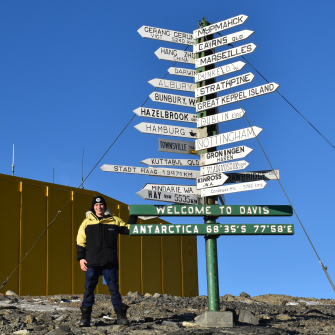
The engineering analytic and problem-solving mindset taught by UNSW Engineering is a highly desired skillset.


