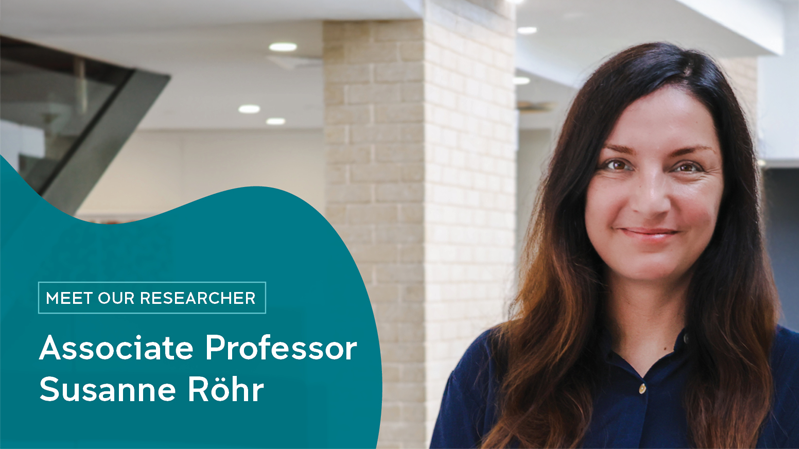
Associate Professor Susanne Roehr | Meet Our Researcher Series
Blog: The Brain Dialogues
Published on the 23 June 2025

Blog: The Brain Dialogues

Associate Professor Susanne Roehr’s research explores how systems—like healthcare, education, urban design, and social policy—shape our ability to live brain-healthy lives. She’s passionate about bridging the gap between what we know promotes cognitive health and what people can realistically achieve in their daily lives. From neighbourhood safety to time poverty, her work examines the barriers that prevent equitable access to dementia prevention strategies. Susanne ultimately hopes to help shift brain health from being seen as a personal responsibility—or a privilege—to a public good that’s accessible to all, regardless of background or circumstance.
I first stepped into research as an undergraduate student, taking on a data entry job to earn some extra money. While the work itself was repetitive, it introduced me to the world of research. Around the same time, I was interning at a geriatric day clinic, where I had my first meaningful encounters with people living with dementia.
One day, I brought in my guitar and played folk songs—an experience that left a lasting impression. I was amazed to see withdrawn patients light up, sing along, and recall lyrics from memory. That moment sparked my fascination with the brain—what can be lost, and what can still be reawakened.
From there, I progressed into more hands-on research roles, eventually leading neuropsychological assessments in a cohort study of ageing. This early curiosity deepened over time and inspired me to pursue a PhD focusing on early symptoms and risk factors for dementia.
The experience I had playing music with patients at a geriatric day clinic was certainly a defining moment—it opened my eyes to the emotional and cognitive depth that can remain even in advanced stages of dementia. Beyond that, my path into this field was shaped by a mix of personal and professional experiences. I grew up in East Germany, the former GDR, which gave me a strong awareness of how broader social systems influence health, choice, and opportunity. Over time, through clinical work, research, and travelling the world, I saw how cognitive decline impacts not just individuals, but entire families and communities, and that its burden is not shared equally. These insights made it clear to me that real progress in dementia prevention means looking beyond the individual to understand and address the wider determinants of brain health.
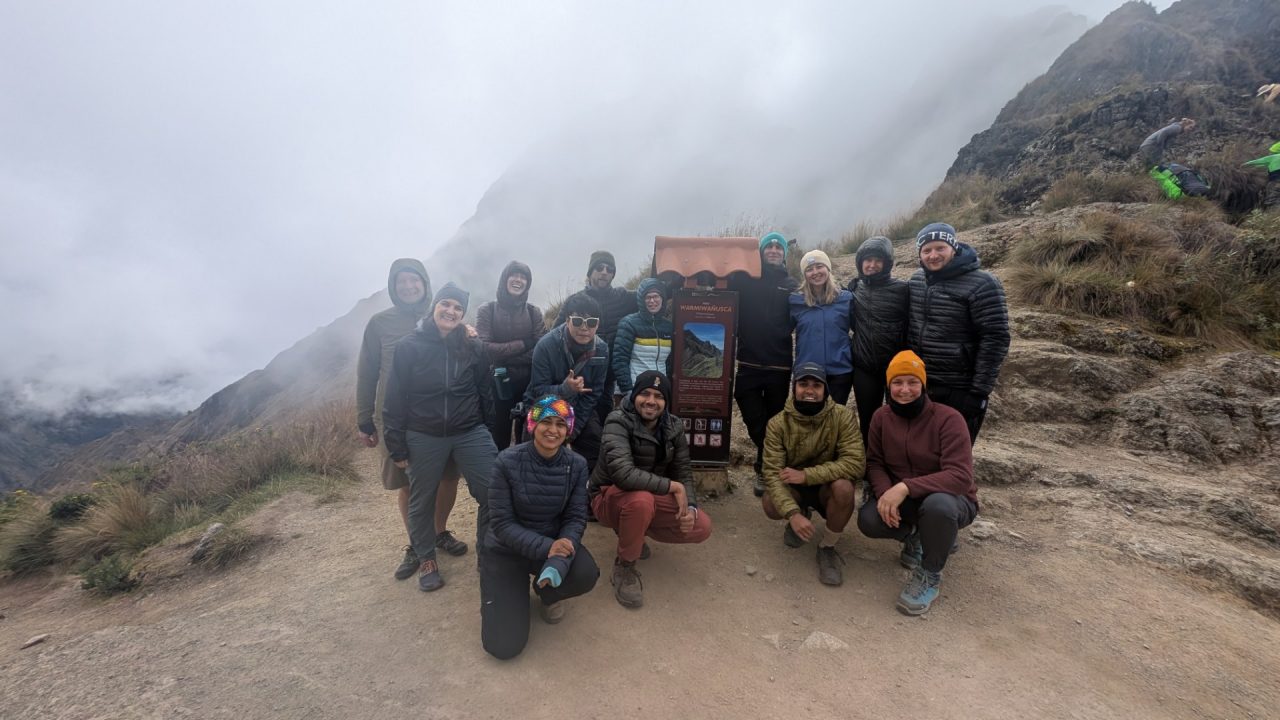
I try to live in line with the research evidence and practice what I preach. I prioritise regular outdoor activity—walking, hiking, swimming, and water sports—all of which help keep me physically active and mentally grounded. I also follow a mostly plant-based diet and am mindful of getting good-quality sleep. I’m naturally curious and love to try new things, especially travelling to unfamiliar places, which I believe helps keep my brain engaged and adaptable. I speak both German and English, and although I’ve studied other languages in the past, bilingualism is still a regular part of my life and offers known cognitive benefits. I also have a dog who keeps me active with daily walks. Like everyone, I have my guilty pleasures, but I see maintaining a lifestyle that prioritises brain health as an important form of self-care and a long-term investment in my cognitive wellbeing.
I’m focused on how broader systems—such as healthcare, education, urban design, and social policy—influence people’s ability to engage in behaviours that promote a healthy brain. While we know that lifestyle factors such as physical activity, healthy eating, quality sleep, cognitive stimulation, and social connection can reduce dementia risk, not everyone has equal access to these protective behaviours. Structural factors such as time poverty, neighbourhood safety, access to green space or healthy food, and cultural expectations all play a significant role. My work aims to better understand these systemic barriers so we can design interventions and policies that make brain-healthy choices more accessible, practical, and equitable across different communities.
There is a critical gap between what we know supports brain health and healthy lifestyles, and what people are actually able to do in their daily lives This is what my research addresses and why it’s so important. While public health recommendations often focus on individual lifestyle change, they rarely account for the broader social and structural barriers that shape behaviour.
Brain health shouldn't be a luxury available only to the privileged—it needs to be accessible to all. Too often, it’s framed through costly “biohacking” trends that aren’t realistic or affordable for most people. The intention with my research is to shift that narrative by promoting brain health as a public good—something achievable, scalable, and fair, regardless of a person’s background or circumstances.
What really drew me to CHeBA is its strong sense of purpose and international collaboration. There’s a shared commitment to advancing brain health in a way that’s not only scientifically rigorous but also meaningful for real-world impact. I’ve found the culture to be one of true intellectual generosity, with rich interdisciplinary exchange and a global outlook that makes for a dynamic and inspiring research environment. I also deeply value how CHeBA actively engages with communities and embraces diverse perspectives. It’s a place where I feel I can do work that truly aligns with my values—especially when it comes to promoting equity in brain health.
My ultimate hope is to help create a world where brain health is not a privilege, but a basic right—where everyone, regardless of background or circumstance, has a real opportunity to live a long, cognitively healthy life. I want to shift the focus away from individual responsibility and toward a broader understanding of how social and systemic factors shape our ability to engage in brain-healthy behaviours. These opportunities are not equally distributed, and we need to recognise that. If my research can contribute—even in a small way—to making dementia prevention more accessible and equitable, especially for those who’ve historically been underserved, I’ll consider it a meaningful impact.
Susanne Roehr is an Associate Professor at CHeBA, UNSW Sydney, specialising in epidemiology and social determinants of dementia. She holds a PhD and Venia Legendi from the University of Leipzig and was previously Associate Professor of Psychology at Massey University, New Zealand. Susanne’s research explores how social and systemic factors shape brain health and access to dementia prevention, with a focus on equity. She leads international collaborations and integrates diverse methods to inform policy and community engagement.

Much of our research relies on the generosity of philanthropic contributions.
If you are interested in supporting Susanne Roehr's work, or would like more information about making a donation to CHeBA, please contact h.hudson@unsw.edu.au.