Top honour awarded to UNSW palaeontologist Professor Suzanne Hand
2026-09-14T09:00:00+10:00

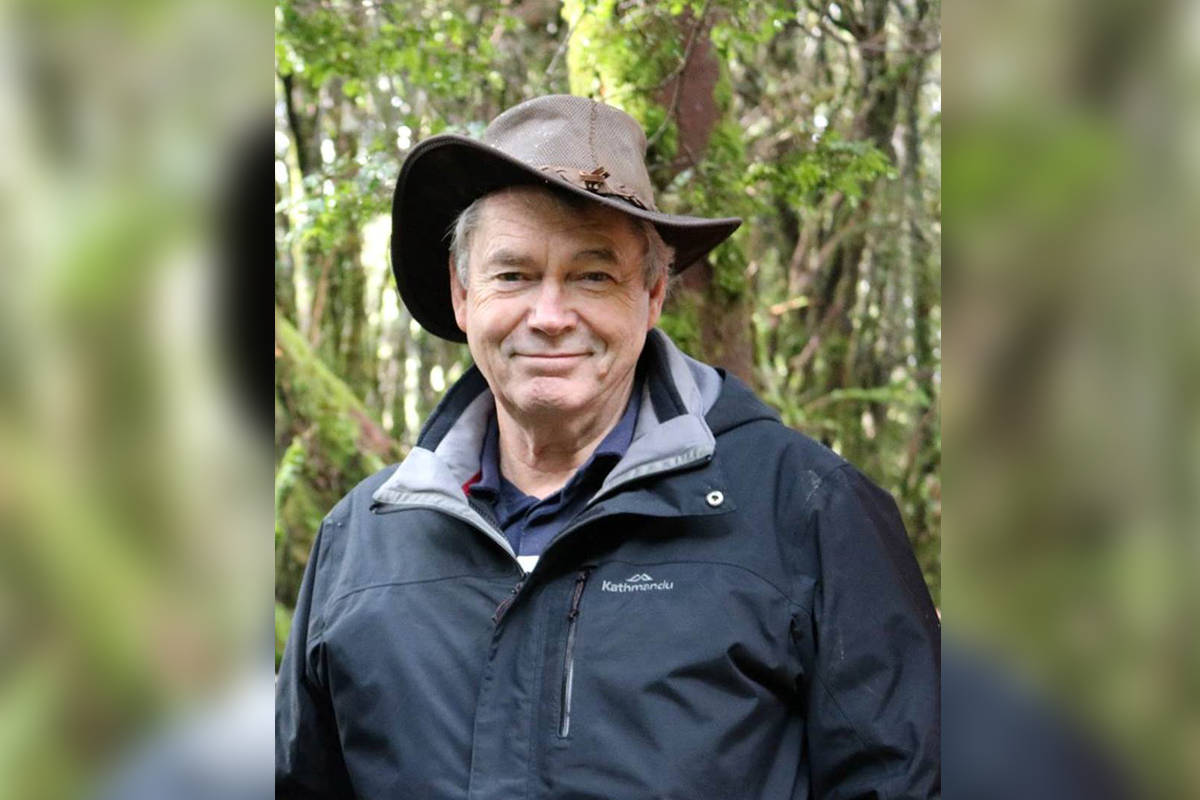
Emeritus Professor Suzanne Hand.
Photo: Nikki Archer

Emeritus Professor Suzanne Hand has received a lifetime achievement award, in recognition of her outstanding contribution to Australasian palaeontology.
UNSW Sydney Emeritus Professor Suzanne Hand never imagined she would become a palaeontologist, let alone one of the world’s preeminent experts on bat evolution.
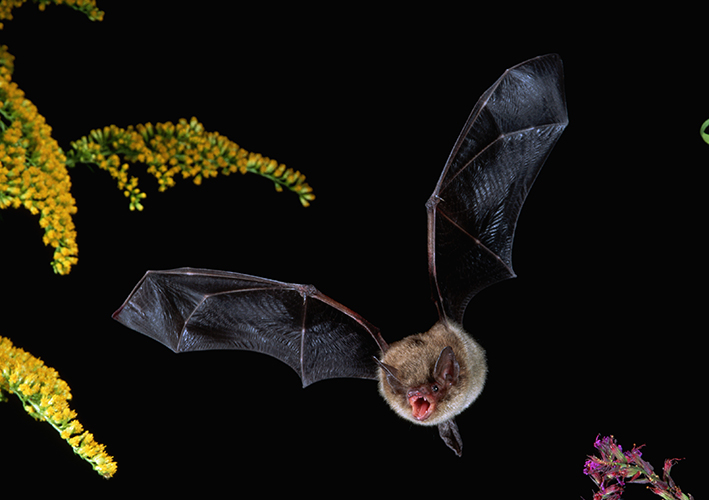
While fascinated by animals from a young age, she had never given much thought to the mammals of the sky. That was until one memorable moment during a field trip as a zoology student: her first up-close encounter with a bat.
“It was just the softest, sweetest little thing, almost like a mouse with wings, and I just fell in love,” says Prof. Hand, from the School of Biological, Earth & Environmental Sciences.
It was a love that would last a lifetime and set in train a career devoted to unearthing the secrets of bats, and other mammals.
“Bats make up 25% of Australia’s native mammal fauna, and about 22% of the world’s mammal fauna. More mammals hang upside down than have hooves, yet bats are often overlooked, despite playing an important ecological role,” says Prof. Hand.
More than four decades and 180 new fossil discoveries later, Prof. Hand has been awarded the 2026 Robert Etheridge Jr Medal – the highest honour from Australasian Palaeontologists and the Geological Society of Australia in recognition of her lifetime contribution to Australasian palaeontology.
Prof. Hand’s career has taken her from the caves of Borneo to the valleys of France, and involved many a day spent at the Riversleigh World Heritage Area in Queensland’s Boodjamulla National Park, one of the world’s most significant fossil sites.
Her discoveries and insights have been shared across more than 200 scientific publications and decades of teaching and mentorship, including the supervision of more than 80 research students.
“I’ve been able to work with amazing people from all over the world, and to travel to many different fossil sites, it’s been an amazing life. I’m deeply honoured to be recognised for this work,” Prof. Hand says.
Media enquiries
For enquiries please contact Kate Burke:
Tel: +61 2 9348 2538
Email: kate.burke@unsw.edu.au


Dean of UNSW Science, Scientia Professor Sven Rogge, says the award recognises Prof. Hand’s exceptional career and lasting impact on palaeontology
“Professor Hand has made an outstanding contribution to Australasian palaeontology through decades of research, discovery and scientific leadership.
“Her work on Australia's fossil record, particularly the evolution of bats and other mammals, has deepened our knowledge of how Australia's unique biodiversity has changed over millions of years.
“Through her mentorship of students, her commitment to international collaboration and her central role in the Riversleigh research program, she has inspired generations of researchers and advanced one of the world's most significant palaeontological research programs. This honour is a fitting recognition of her enduring contribution to science.”
The medal adds to her Fellowships of the Royal Zoological Society of New South Wales and the Royal Society of New South Wales, and her appointment as an Officer of Order of Australia for highly distinguished service to science and teaching.
The fossils that changed everything
Prof. Hand’s research initially focused on modern bats, but it wasn’t long before her interest shifted to mammals which lived in the millions of years gone by.
Australia’s bat fossil record was almost non-existent before the discovery of fossil deposits in Riversleigh in the late 1970s and 80s.

“Then all these bat fossils turned up, and I had experience with bats and bat taxonomy, so I thought ‘I’ll briefly do this project within my PhD’, but then it just went boom.
“Riversleigh was full of bat fossils, ranging back to 25 million years old, and they were just everywhere. I had the knowledge, and the opportunity, and I haven’t stopped since, there’s still more to uncover and describe.
“Riversleigh is an amazing site, and it’s filled a huge gap in Australia’s understanding of the evolution of its mammals.”
A lifetime of discovery
Fossils of more than 40 different extinct bat species have been found at the site. The ancient ancestors of the thylacine (Tasmanian tiger), sequences of marsupial lions, marsupial sloths and tree-climbing crocodiles are among some of the many other discoveries made there over the years by a team of palaeontologist – including Prof. Hand’s partner Professor Mike Archer.
One of Prof. Hand’s favourite discoveries at the site was a platypus skull which was more than 20 million years old.
“We found a Rolls Royce of fossils. There weren’t any other skulls of platypuses of that age, and it was just perfect. Mike was there for that too,” she says.
“We’ve had some fantastic opportunities together. We have four kids, which was a bit hard when we were both trying to establish our careers and go out in the field, but we just took them everywhere and they were amazing, it made for some incredible memories.”
Another career highlight was analysing a rare, near-perfectly preserved bat skull discovered in a French cave dating back about 50 million years, providing new evidence of echolocation in early bats.

And of course there are the three bats, and a magpie goose which are named in her honour, much to the delight of Prof. Hand: “I’ve got three old bats and an old duck named after me, it’s pretty special.”

Looking to the future
While her career has been spent uncovering the past, Prof. Hand remains optimistic about the future of palaeontology and the role it can play in understanding a changing world.
Bats, she says, are a powerful example. Beyond what they can reveal about evolution, they provide important insights into the health of modern ecosystems and how species have responded to environmental changes over time.
“They’re a bellwether species. They’re very sensitive to climate change, almost like the dark canary in the coal mine,” she says.
Prof. Hand says advances in technology are opening new opportunities for palaeontologists, allowing researchers to uncover details in fossils that previous generations could only imagine.
“Sometimes these fossils have been around for a very long time and we’ve just had to wait for the technology to arrive so we can see so much more,” she says.

But while technology has opened new doors for researchers, Prof. Hand says access to funding and fieldwork opportunities has become increasingly competitive.
After more than four decades in the discipline, however, she believes some fundamentals remain the same.
“It really does come down to opportunity, serendipity and time. Building a career, becoming a competent and well-known expert takes time.”
She remains optimistic about the future of the field and the next generation of researchers.
“The students of today are just amazing. You have to be resilient in this field, and they are lateral thinkers who think outside the box, so it’s exciting to watch where they’re going and what they’re doing.”