
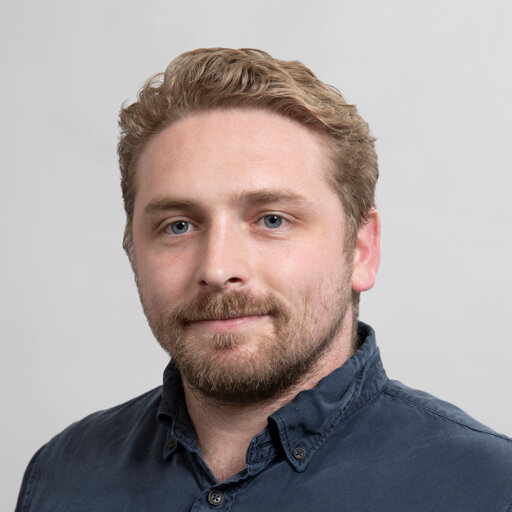
Dr Bryson Hawkins
Lecturer
Bachelor of Pharmacy, Hons (I) (The University of Sydney)
Doctor of Philosophy (The University of Sydney); Entitled: Experimental and Theoretical Charge Density Studies to Explore the Physical and Chemical Properties of Molecules
Medicine & Health
School of Health Sciences
Dr Bryson Hawkins is a Lecturer in Pharmaceutical Sciences in the School of Health Sciences (Pharmacy), Faculty of Medicine and Health, University of New South Wales.
Bryson, completed B.Pharm (Hons I) in 2017 at Sydney Pharmacy School (SPS), University of Sydney, before joining Royal North Shore Hospital (RNSH) as clinical pharmacist. In 2019 he returned to SPS for his doctoral training graduating in 2022. His PhD work employed high-resolution X-Ray Crystallography to investigate the weak interactions within polymorphic pharmaceutics, including co-crystals, aiming to decode the interaction networks to improve the physical and chemical properties of drug molecules.
Following his PhD, Bryson held an education-focused lecturer position in the SPS, before joining Prof. Kim Lewis' Antimicrobial Discovery Center (ADC), Northeastern University, Boston USA. As a Research Scientist at the ADC, Bryson worked in the drug discovery arm of the ADC focusing on the discovery and enhancement of antibiotics, like darobactin, which can treat infections caused by Gram-negative ESKAPE pathogens like Pseudomonas aeruginosa. To do this he used many techniques to cover the vast amount of chemical space seen in natural products. These included in silico modelling, genome mining, high-throughput screening, and targeted genetic modification of natural product producers.
E-mail
Location
Health Translational Hub, Level 6 North UNSW SYDNEY 2052
- Publications
- Media
- Grants
- Awards
- Research Activities
- Engagement
- Teaching and Supervision
High Performer PhD Stipend, The University of Sydney, Australia (2020-2022)
Dr Hawkins is a molecular biologist/natural products chemist who uses many tools for untapping the chemical space of natural products. His research interests include ultra-high throughput screening for drug discovery and development.
He uses a wide arsenal of approaches including microbiology, molecular biology, fluorescence-activated droplet sorting, chemical purification and charactersation, and, in silico / computational chemistry.