
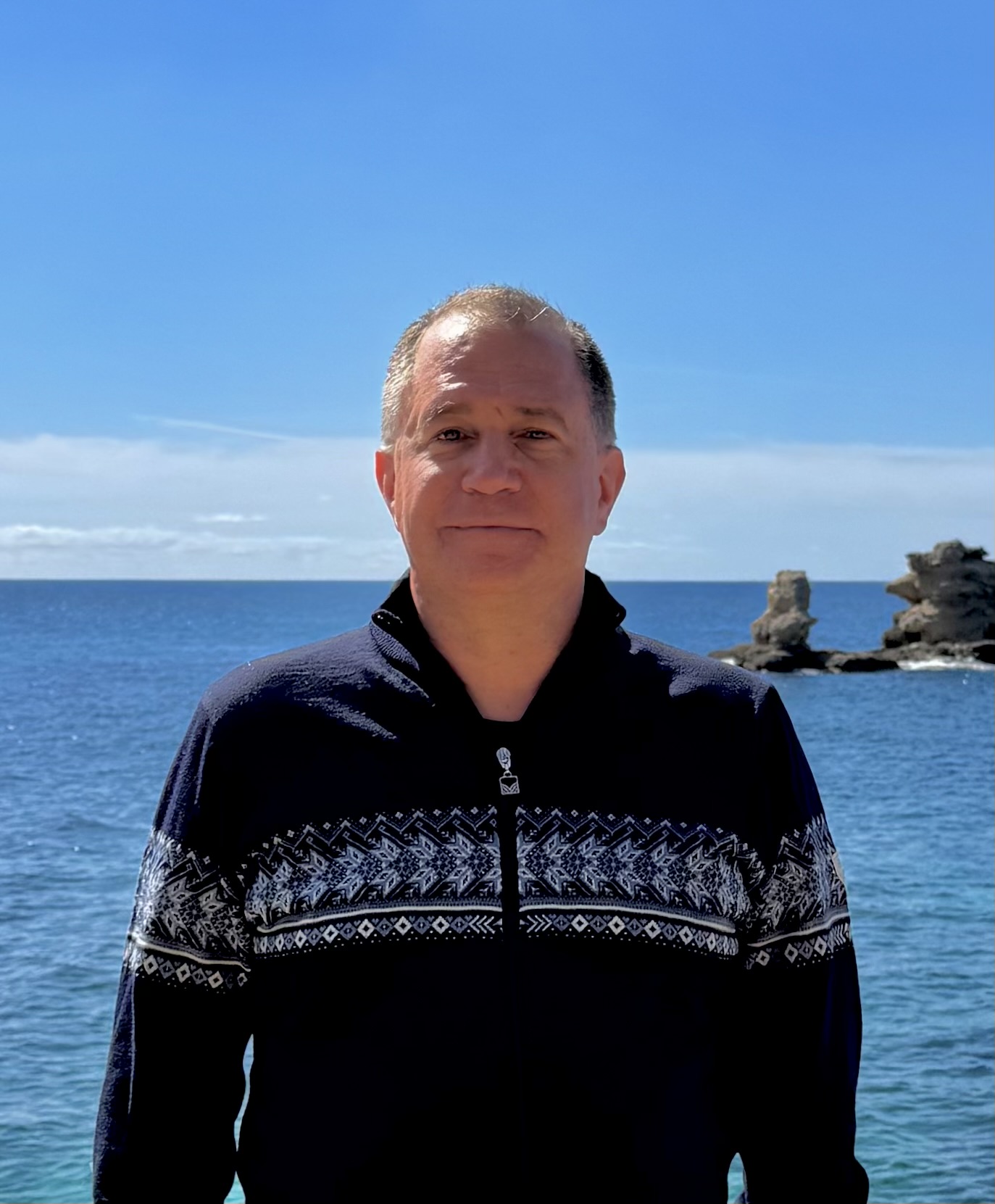
Professor Dimi Culcer
Dimi Culcer obtained his undergraduate degree and MPhys from Oxford University in 2000, and his PhD from the University of Texas at Austin in 2005. He worked as a postdoctoral research fellow first at Argonne National Laboratory between 2006-2008, and subsequently at the University of Maryland, College Park, 2008-2010. He became a faculty member at the University of Science and Technology of China in Hefei in 2010, where he was a member of the International Center for Quantum Design of Functional Materials. In 2013 he moved to UNSW and he has been here ever since.
- Publications
- Media
- Grants
- Awards
- Research Activities
- Engagement
- Teaching and Supervision
Future Fellowship (2019).
Orbitronics
Orbitronics is a newly developed field of physics concerned with the orbital angular momentum and orbital magnetic moment of Bloch electrons in solids. Our understanding of this form of angular momentum was a significant latecomer in condensed matter physics, with the full theory for the equilibrium picture only taking shape by approximately 2010. It has revealed that orbital angular momentum of electrons in solids is strongly connected to the topological properties of the electron wave functions, such as the Berry connection and Berry curvature, while the dynamics is associated with motion within the unit cell. The orbital angular momentum has some spectacular manifestations, including substantial contributions to the electron g-factor, which can overwhelm the contribution from the spin. At the same time our understanding of this orbital angular momentum is limited: we only know what it looks like in equilibrium in a clean system, while its generation and transport by external fields is only now being investigated, and we do not understand how it is influenced by disorder and boundaries. These topics are studied extensively in our group, and we have made substantial contributions to the understanding of non-equilibrium orbital angular momentum dynamics - we demonstrated that the way the orbital current had been calculated was incomplete, that the corrections sometimes overwhelm the original value, that disorder affects the final results dramatically, that orbital transport can be extremely strong even in spin-orbit coupled systems and can in fact overwhelm spin transport, and that the orbital current calculated according to the modern theory can be nonzero even in spherically symmetric systems. Our group has related the orbital angular momentum to a form of inter-band dynamics known as Zitterbewegung, has shown that in non-equilibrium systems it is associated with the establishment of a steady-state dipole, and that strong orbital angular momentum densities can be generated in spin-3/2 hole quantum wells. These findings, and our ongoing projects in this direction, are extremely relevant to experiments and to the development of devices, since virtually all the modern interest in the orbital angular momentum is connected to its non-equilibrium properties, which lead to the orbital torque used in spintronic devices to engineer magnetisation dynamics.
Topological quantum matter
In recent years a large number of physical phenomena have been ascribed to topological mechanisms, in which the curvature of the eigenspace of the system plays a vital role in determining the robust quantisation of response functions. These phenomena are so widespread nowadays that the 2016 Nobel Prize was awarded to three scientists who revealed their topological nature. My research projects in this area will focus on establishing the role of topological terms in the response functions of a series of newly discovered materials, including topological insulators, Weyl semimetals, transition metal dichalcogenides, topological antiferromagnets, and various forms of graphene, as well as comparing the relative sizes of topological and disorder contributions. These response functions encompass DC and AC responses at linear and non-linear orders, such as the anomalous Hall effect, the spin-Hall effect, the valley-Hall effect, current-induced spin polarisations, weak localisation, Zitterbewegung, spin-orbit torques, non-linear anomalous Hall and photovoltaic effects, and higher harmonic generation.
Quantum computing
Quantum computation focuses on using quantum bits to encode information. Unlike classical bits, which can be either 0 or 1, quantum bits exploit the superposition principle and can be in any combination of 0 and 1, which can make computation considerably faster and open new avenues that are inaccessible with classical bits. The two key problems facing the community at present are increasing the lifetimes of quantum bits (coherence), which determines how long quantum information can be stored, and devising ways to couple two or more bits so that complex operations can be performed in practice (entanglement). My research projects will focus on these two phenomena, devising novel strategies to beat decoherence mechanisms and to control interactions between quantum bits, with a focus on spin-3/2 hole qubits in semiconductors.