
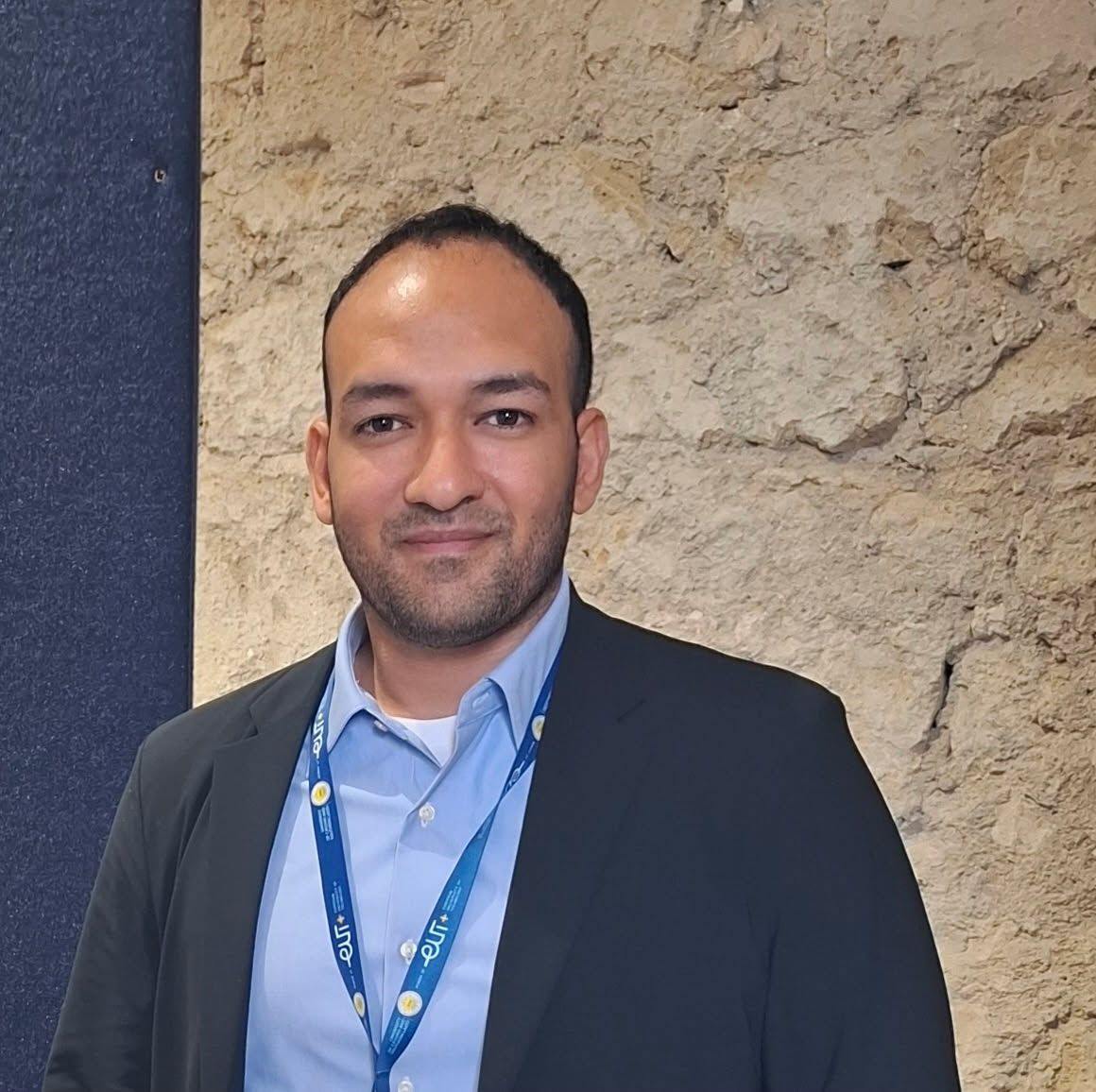
Mr Mohamed Mahmoud

Mr Mohamed Mahmoud

Research Associate

2022 - 2026 PhD Mechanical Engineering  - UNSW Sydney

2016 - 2019 M.Sc. Mechanical Engineering - Politecnico di Torino

Engineering
Mechanical and Manufacturing Engineering

Mohamed Mahmoud is a Research Associate in the School of Mechanical and Manufacturing Engineering at the University of New South Wales and a member of the Flow Noise Group. His research focuses on indoor air quality, ventilation design, and airborne infection risk modelling in built environments. Mohamed specialises in the use of Computational Fluid Dynamics (CFD) to simulate aerosol and CO₂ transport in indoor spaces, with a particular interest in classrooms, aged care facilities, and healthcare settings. His work includes advanced modelling of respiratory aerosol emissions as multiphase flows generated by human activities such as coughing, sneezing, and breathing. 

Location
Room 408 Ainsworth Building (J17) Kensington Campus
  • Book Chapters | 2021
    Hunkemöller JT; Mahmoud MMA, 2021, 'Fiber motion and fibrous material processes—modeling and simulation', in Advances in Modeling and Simulation in Textile Engineering, Elsevier, pp. 209 - 222, http://dx.doi.org/10.1016/b978-0-12-822977-4.00014-5
  • Journal articles | 2025
    Mahmoud MMA; Bahl P; de AFV; Maclntyre CR; Green D; Doolan C; de Silva C, 2025, 'An infection risk model for estimating infection probability and occupancy time: A CFD approach with aerosol measurements', Building and Environment, 279, http://dx.doi.org/10.1016/j.buildenv.2025.113035
    Journal articles | 2024
    Mahmoud MMA; Bahl P; V de A Aquino AF; Maclntyre CR; Bhattacharjee S; Green D; Cooper N; Doolan C; de Silva C; MacIntyre R, 2024, 'A numerical framework for the analysis of indoor air quality in a classroom', Journal of Building Engineering, 92, pp. 109659, http://dx.doi.org/10.1016/j.jobe.2024.109659
    Journal articles | 2023
    Green D; Cooper N; De Silva C; Bahl P; Bhattacharjee S; Mahmoud MMA; Doolan C; Raina Macintyre C, 2023, 'Demonstrating the most effective interventions to improve classroom air quality. What novel in situ tests of real-world conditions show is still missing in our guidance', Environmental Research Health, 1, http://dx.doi.org/10.1088/2752-5309/ace5c9

My Teaching

MMAN2700 Thermodynamics

AERO3630 Aerodynamics

MECH3610 Advanced Thermofluids