
Digital Health and AI (DHAI)

Our team is at the forefront of harnessing digital health and artificial intelligence to revolutionize healthcare systems globally. Our dedicated team drives impactful research and innovation aimed at creating more equitable, efficient, and patient-centred health outcomes. By bridging the gap between cutting-edge technology and practical healthcare needs, we strive to develop and implement solutions that improve care delivery, strengthen health systems, and empower health professionals across Australia and the Asia-Pacific.
What we do
We build and test digital health and AI tools, then work out how to get them into clinics, hospitals and health programs. The Digital Health & AI (DHAI) group sits in the School of Population Health, UNSW Medicine & Health. Our work runs from emergency departments in Sydney to disease surveillance across the Asia-Pacific.
Who we are
We are clinicians, data scientists, implementation researchers and educators. Most of our projects start with a problem a health service has already named: a crowded waiting room, an outbreak spotted too late, a patient lost between providers. We then ask whether a digital tool can help, build it with the people who will use it, and measure what changes.
Vision
To lead transformative digital health research and education that enhances equitable, efficient, and patient-centred healthcare systems globally.
Mission

Advance evidence-based digital health innovations through interdisciplinary research.

Integrate digital solutions across health systems to improve care delivery and outcomes.

Educate and empower current and future health professionals in digital health competencies.

Foster lifelong learning and capacity building in digital health across Australia and the Asia-Pacific.
Research strengths
Our interdisciplinary team focuses on understanding and leveraging digital methodologies to improve health outcomes by adopting methods-oriented research programs. Our work encompasses the entire breadth of digital components including:
- AI powered solutions for enhanced healthcare delivery
- Digital integration for health system strengthening and equitable access
- Capacity building and lifelong learning in digital health
- Development and evaluation of decision support systems, AI, and virtual care solutions
- Design and implementation of trustworthy and ethical AI in health
- Translation of medical technologies into clinical practice
- Predictive epidemic intelligence using machine learning and big data analytics
How we work
Every project pairs a method with a setting. We test a tool in the clinic or program where it will live, with the staff who will run it, and we publish the result either way. Our partners include health services (NSW Health, the South Western Sydney Local Health District), research institutes (the Kirby Institute, CSIRO), industry (Cogninet AI, UST) and universities in Australia, Switzerland and India.

Projects
Our projects sit under three themes. Each entry links to its own page. Funded projects name the funder; others are pilots or studies in development.
-

TRIBOT - Conversational AI for ED triage
This pioneering project, funded by an NHMRC IDEAS Grant, focuses on developing TRIBOT, an AI-powered conversational chatbot to streamline triage in emergency departments. TRIBOT integrates natural language processing with clinical triage protocols to enhance real-time decision-making and optimize patient flow, serving as a cutting-edge digital front-door strategy for acute care services.
Setting
NSW emergency departmentsFunder: NHMRC Ideas Grant

Project status
Ongoing

BREATHE - Breathlessness Rapid Evaluation and Therapy
The BREATHE study aims to integrate a clinical decision support system (BREATHE CDSS) in the electronic health record to better identify and manage patients with breathlessness in primary care. The pragmatic implementation trial will be a cluster randomised controlled 2-arm trial in 40 primary care sites. Practices will be recruited from urban and rural areas.
Setting
Primary care hospitalsFunder: 2021 MRFF Chronic Respiratory Conditions Grant
Project status
Ongoing

SPIRO-AID-AI decision support for spirometry
This trial led by collaborators in the United Kingdom will compare the performance of primary care clinicians in the interpretation of real-world spirometry with or without AI spirometry decision support software reports.
Setting
Primary care hospitalsFunder: National Institute for Health Research (NIHR) through an AI Award in Health and Care (Phase 3- Application: Grant number AI_AWARD02204)
Project status
Ongoing

EQUITRIAGE - Equity in multilingual AI triage
This project tests whether AI triage tools perform equally across languages and builds a benchmark for it.
Setting
Australia and SwitzerlandFunded by UNSW GRIP.
Project status
Ongoing
-

Active screening through digital health
New ways to find people with undiagnosed conditions using digital tools rather than waiting for them to present.
Setting
India
Project status
Funding application under review

Integrating informal healthcare providers via digital platforms
Digital platforms that link informal providers to the formal system, strengthening referral and follow-up.
Setting
India and other low-resource settings
Project status
Funding application under review
-

ImpleMATE
This project, funded by UNSW Research Infrastructure Scheme, is an AI-powered platform developed to accelerate the adoption of health innovations into clinical practice. Led by A/Prof. Taylor and Dr. Chan, ImpleMATE combines implementation and data sciences, leveraging advanced large language models and machine learning techniques, to automate the extraction and synthesis of healthcare implementation knowledge from various data sources. A core principle of the platform is trustworthy AI, ensuring that its algorithms are transparent, fair, and aligned with clinical standards and ethical guidelines. By incorporating robust governance, explainability, and validation processes, ImpleMATE offers real-time and reliable decision support, helping healthcare professionals quickly identify and apply effective strategies while safeguarding patient data. This fosters confidence in AI-assisted care and enhances the efficiency and integrity of evidence-based interventions.
Setting
UNSW Implementation Science, School of Population Health
Project status
Development

Learning health system
Developed as part of the national Precision Care Initiative which aims to integrate precision oncology into routine cancer care, funded by an MRFF Rapid Applied Research Translation grant. The LHS is designed to support clinical decision-making between genetics and oncology experts in a multi-disciplinary team (MDT). Leveraging advanced large language models, the system enables structured capture, synthesis, and retrieval of case-based clinical knowledge, allowing clinicians to access timely, data-driven insights. This approach promotes continuous learning and improves the delivery of precision oncology.
Setting
UNSW CRE Medicines Intelligence, School of Population Health
Project status
Analysis

DHAI entrepreneurship and commercialisation
Dr. Sunjaya's work includes co-founding BantingMed, a culturally appropriate digital diabetes prevention program, and leveraging the platform to improve outcomes for those with multimorbidity. He’s also actively involved with UNSW's Tyree Institute for Health Engineering to accelerate the translation of medical technologies into clinical practice. Some of the projects supported included those relating to heart disease, ophthalmology, orthopaedics and other fields.
Setting
Digital Health and AI Hub, School of Population Health
Project status
Recruiting


Impact
For us, impact means a tool in use, a decision made better, or a threat caught earlier. Here are some examples of the impact of our research so far.
In the emergency department
TRIBOT is the first NHMRC-funded trial of a conversational AI at the ED front door in Australia. It has produced a validated multilingual training set, a dual validation method (clinical and linguistic) that other groups can reuse, and a working partnership with the NSW Multicultural Health Communication Service.
In health systems
Our work on informal providers has shaped how [program or partner] approaches referral pathways in low-resource settings. ImpleMATE gives health services a method for moving evidence into practice in months rather than years.
In the workforce
- 500 students have completed PHCM9790 Digital Health and AI since 2022
- 20 professionals have completed the Masterclass in Digital Health and AI
- Group members hold fellowships with the Australasian Institute of Digital Health and Advance HE, and advise
By the numbers


People
The group brings together clinicians, data scientists, implementation researchers and educators. Each name links to a UNSW profile.
Leadership
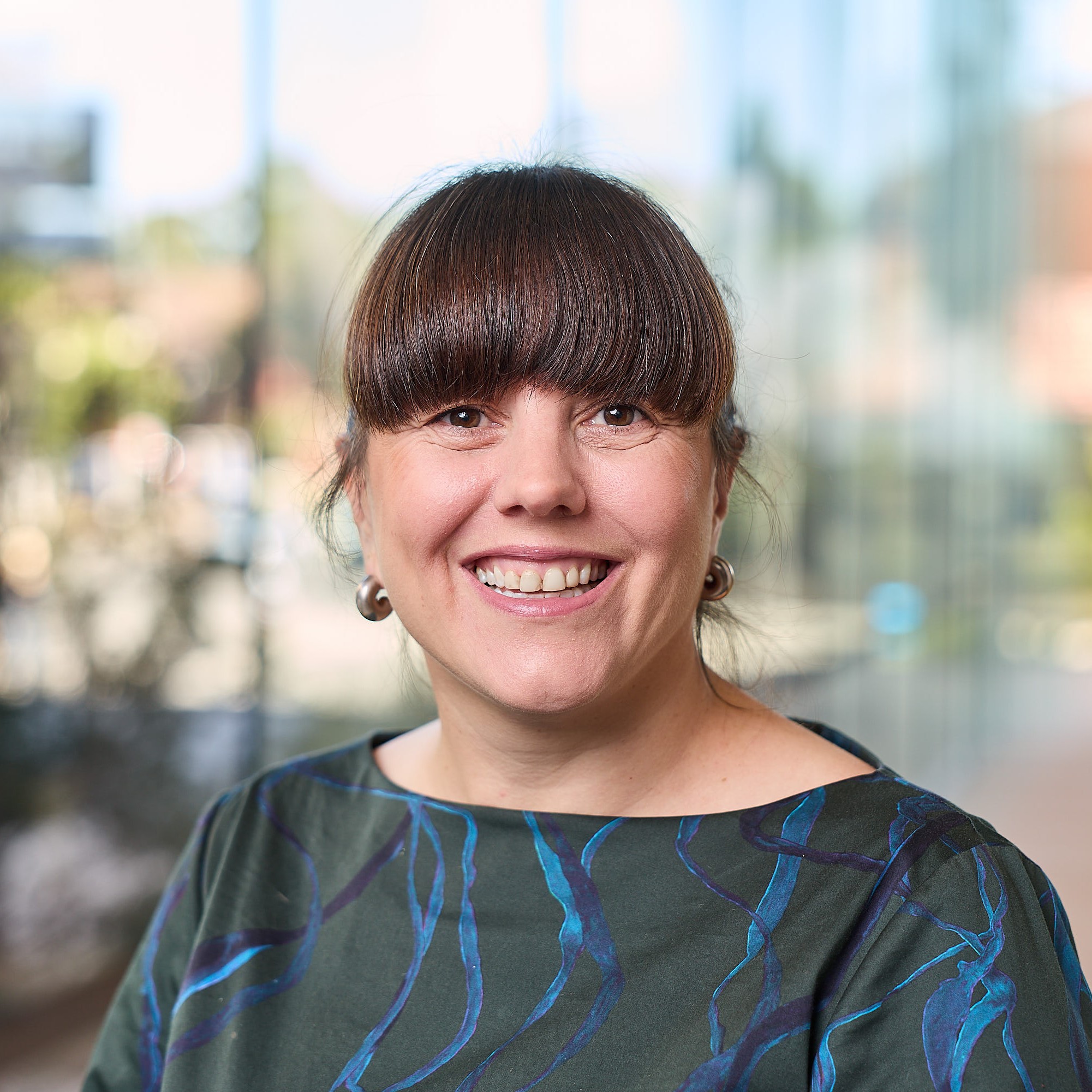
Dr. Padmanesan Narasimhan – Lead

Padma is a clinician and Senior Lecturer in the School of Population Health, and leads the DHAI group. His projects start with problems clinicians see on shift.
He is Chief Investigator A on TRIBOT, the NHMRC Ideas Grant trial of conversational AI for ED triage. He is Co-Investigator and India Lead on EPIWATCH, the AI outbreak detection platform. Earlier work on HIV care in India led to his continuing interest in how digital platforms can connect informal and formal health providers.
He convenes PHCM9790 Digital Health and AI and is a Fellow of the Australasian Institute of Digital Health and of Advance HE.
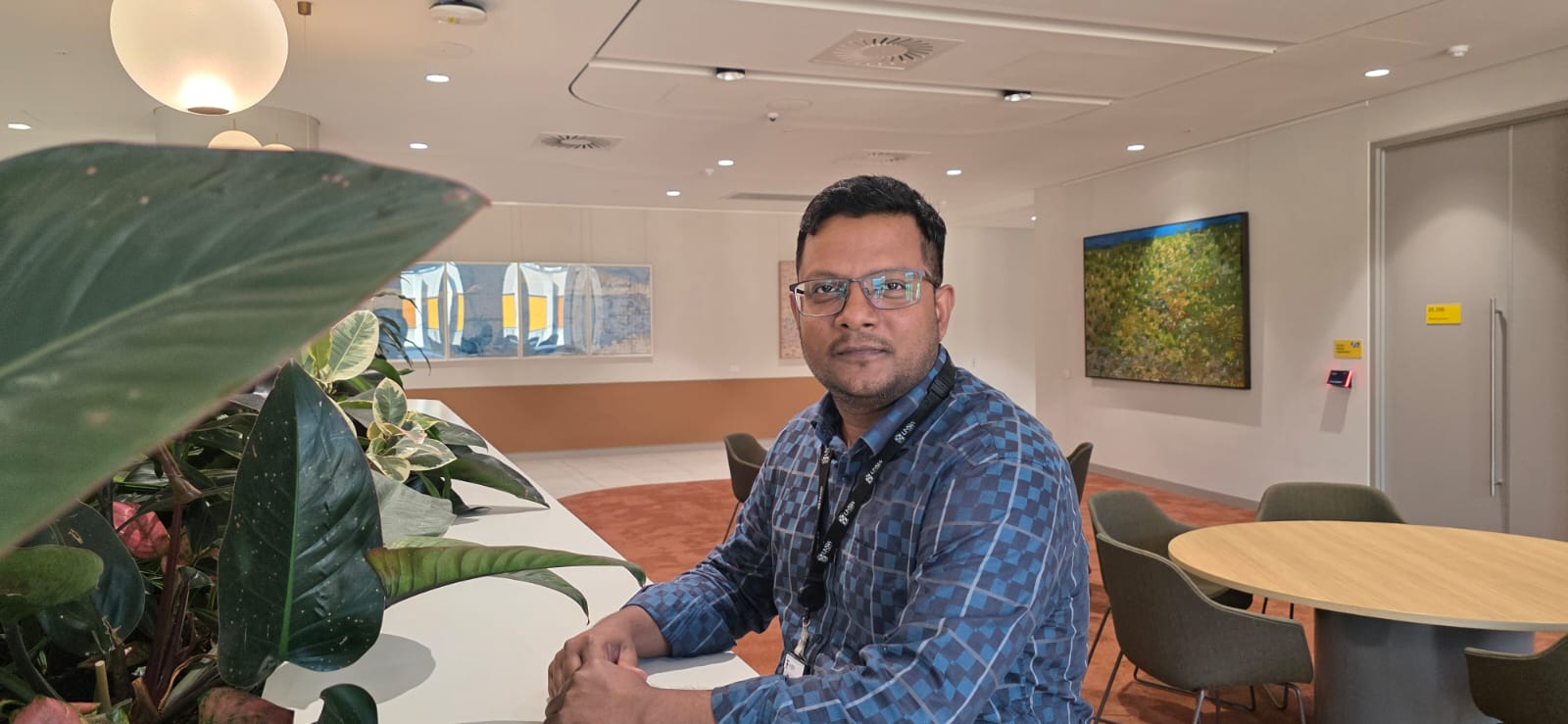
Dr. Anthony Sunjaya – Co-Lead

Anthony is a medical doctor, Senior Lecturer in Health Leadership and Management, and Director of Lifelong Learning at the School of Population Health. He runs the school's short courses and executive education, including the Masterclass in Digital Health and AI.
His research covers health systems, primary care and the decision support tools that help clinicians manage cardiorespiratory disease, diabetes and multimorbidity. He holds affiliate and honorary posts at Harvard Medical School, The George Institute for Global Health, the Royal Brompton and Harefield Hospitals and Imperial College London, and advises the Tyree Institute for Health Engineering on moving medical technology into clinical use.
-
-
Paul Nguyen – PhD Candidate - Clinical accuracy in a multilingual LLM triage tool
Dipankar Srirag – PhD Candidate - Multilingual clinical NLP for ED triage (TriageSim, TRIBOT)
Rohan Bopage - DrPH Candidate - Validation of LLMs in sexual health clinics -
Narcis Pasic - Project Manager
Phuong Nguyen - Project Officer
Umayr Mallah – Research Officer
Varun Dixit - Research Assistant -
Our project teams include collaborators from South Western Sydney Local Health District (SWSLHD), South Eastern Sydney Local Health District (SESLHD), Western Sydney Local Health District (WSLHD), NSW Multicultural Health Communication Service, CSIRO and Cogninet AI.





Join us
We take PhD, DrPH and MPhil candidates with clinical, informatics or public health backgrounds, and we welcome visiting researchers. Email digitalhealthandaihub@groups.unsw.edu.au with a short CV and a paragraph on what you want to work on.

News
Seminars, papers, reports and media from the group.
- Seminars
- Publications
- Reports
- Media
Our seminar series runs every two months, hybrid, from the Kensington campus. Recordings are posted where speakers agree.
To join the seminar list, email digitalhealthandaihub@groups.unsw.edu.au.


Selected papers from the last two years. Full lists sit on each member's profile.
LLMs anchor on chief complain and fail to integrate evidence in sequential clinical triage. 2026. In preprint. Read article.
TriageSim: a conversational emergency triage simulation framework from structured electronic health records. 2026. In preprint. Read article.
From triage to discharge: a survey of NLP tasks, methods and open challenges in the emergency department. 2026. In preprint. Read article.
Missed signals: Lessons from three concurrent 2026 outbreaks for AI-integrated epidemic surveillance. Digital Medicine 2026. Read article.
The 2026 Bundibugyo virus outbreak: a test of global outbreak preparedness. Infectious Diseases 2026. Read article.
Understanding patient satisfaction in virtual outpatient care: insights from a statewide survey in Australia. Journal of Public Health and Emergency 2026. Read article.
Artificial intelligence in clinical risk prediction: promise, performance and the path forward? BMJ Health & Care Informatics 2025. Read article.
What are the perceptions of AI in radiology among UK medical students and junior doctors? Acta Radiologica 2025. Read article.
Exploring current and potential roles of informal healthcare providers in tuberculosis care in West Bengal, India: A qualitative content analysis. PLOS Global Public Health 2025. Read article.
Towards social enterprises that digitally engage citizens for integrated people-centred health services: Organisational case studies and a framework analysis of community health alliances. SSM - Health Systems 2025. Read article.
Reports
A review of the use of mHealth to promote healthy ageing and support the delivery of age-friendly health care services in the Western Pacific Region. 2019
WHO Western Pacific Regional Office, via the WHO Collaborating Centre for eHealth, UNSW.

PODCAST
How can we use ChatGPT to better manage our health?
Dr Anthony Sunjaya on AI in Australian healthcare.
2026
SBS Indonesian.
Interview in Indonesian. Transcript in English.

NEWSLETTER HIGHLIGHT
TRIBOT team secures CSIRO Industry PhD scholarship on AI deployment and safety in healthcare
2026

NEWSLETTER HIGHLIGHT
Dr Anthony Sunjaya wins $890,000 MRFF grant to lead the BREATHE Dx Study
2026.

PODCAST INTERVIEW
Dr Lisa Sharwood on practical AI tools, inaugural episode.
2026
Partner
Most of our projects exist because a health service, agency or company brought us a problem. If you have one, we would like to hear it.
Who we work with
- Health services and local health districts that want to trial a digital tool in a real clinical setting
- Government agencies that need independent evaluation of AI or digital health programs
- Industry partners developing a product that needs clinical validation or an implementation study
- Universities and research institutes in Australia and the Asia-Pacific co-applying for grants
- Community and multicultural health organisations shaping tools for the people they serve
What a partnership can look like
Co-funded research
WHAT WE BRING
Study design, ethics, analysis, publication
WHAT YOU BRING
Clinical site, data access, co-investigators
TYPICAL LENGTH
1-4 years
Evaluation
WHAT WE BRING
Independent assessment of a tool or program already in us
WHAT YOU BRING
Access to the program and its data
TYPICAL LENGTH
6-18 months
Validation study
WHAT WE BRING
Clinical and linguistic testing of an AI tool before deployment
WHAT YOU BRING
The tool and its development team
TYPICAL LENGTH
6-12 months
Student project
WHAT WE BRING
A supervised PhD, DrPH or Masters project on your question
WHAT YOU BRING
A named contact and a real problem
TYPICAL LENGTH
1-4 years
Training
WHAT WE BRING
A tailored short course for your staff
WHAT YOU BRING
Participants and a venue
TYPICAL LENGTH
1 day to 1 term
Current partners
Health services
NSW Health
South Western Sydney LHD
South Eastern Sydney LHD
Western Sydney LHD
NSW Multicultural Health Communication Service
Research
UNSW AI Institute
Ingham Institute
CSIRO
University of Zurich, Switzerland
University Hospital Zurich, Switzerland
Industy
Cogninet AI
UST
Get in touch
Email digitalhealthandaihub@groups.unsw.edu.au with two or three sentences on the problem you want to solve. We reply within [n] working days and usually start with a 30-minute call.

Study digital health
Learn digital health and AI with us through a post graduate course or a research degree.
Digital Health and AI (PHCM9790)
A postgraduate course for clinicians, managers and public health professionals who will choose, use or evaluate digital tools. You learn how digital health and AI systems are built, where the evidence for them is strong and where it is thin, and how to assess a tool before it reaches patients. Topics include telehealth and virtual care, electronic records and interoperability, AI and decision support, evaluation methods, ethics and governance, and implementation in real services.
Research degrees
We supervise PhD, DrPH and MPhil candidates across all three research themes. See the People-Join us section for how to apply.

