



Meet Ajay Limaye
Visualisation Programmer

About Ajay
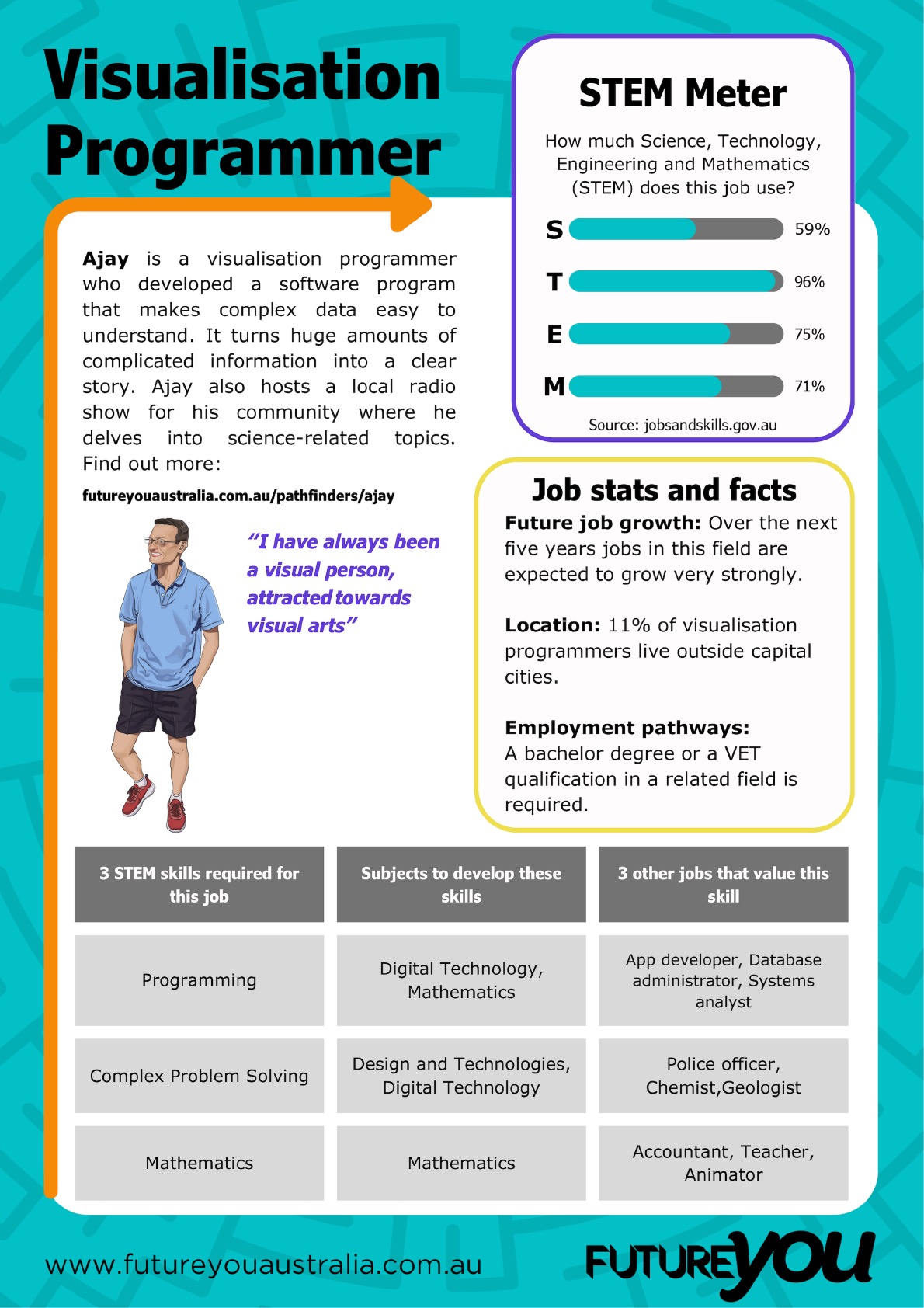
Ajay is a visualisation programmer at the National Computational Infrastructure who loves visual art and programming. During school, Ajay was interested in a career in medicine but he didn’t get the grades he needed so he studied computer science instead. After completing his Bachelor’s degree, Ajay went on to complete his Masters of Mathematics and did a Ph.D. in high-performance computing. In 1997, Ajay moved to Australia and got a job at the ANU Supercomputer Facility, now known as the NCI. Ajay’s job requires him to turn complex data into 3D visualisations. His work is crucial for helping us understand enormous datasets in fields like medicine, materials, biology, and more. His work not only aids research but also enhances communication across global teams.
STEM Meter
How much Science, Technology, Engineering and Mathematics (STEM) does this job use?

Ajay, Visualisation programmer
Download this PDF and learn more about Siobhan and discover how his experiences can inspire the next generation.


I have always been a visual person, attracted towards visual arts, so with my programming skills, gravitating towards scientific visualisation was natural.
Resources
- Students
- Teachers
- Parents
For students
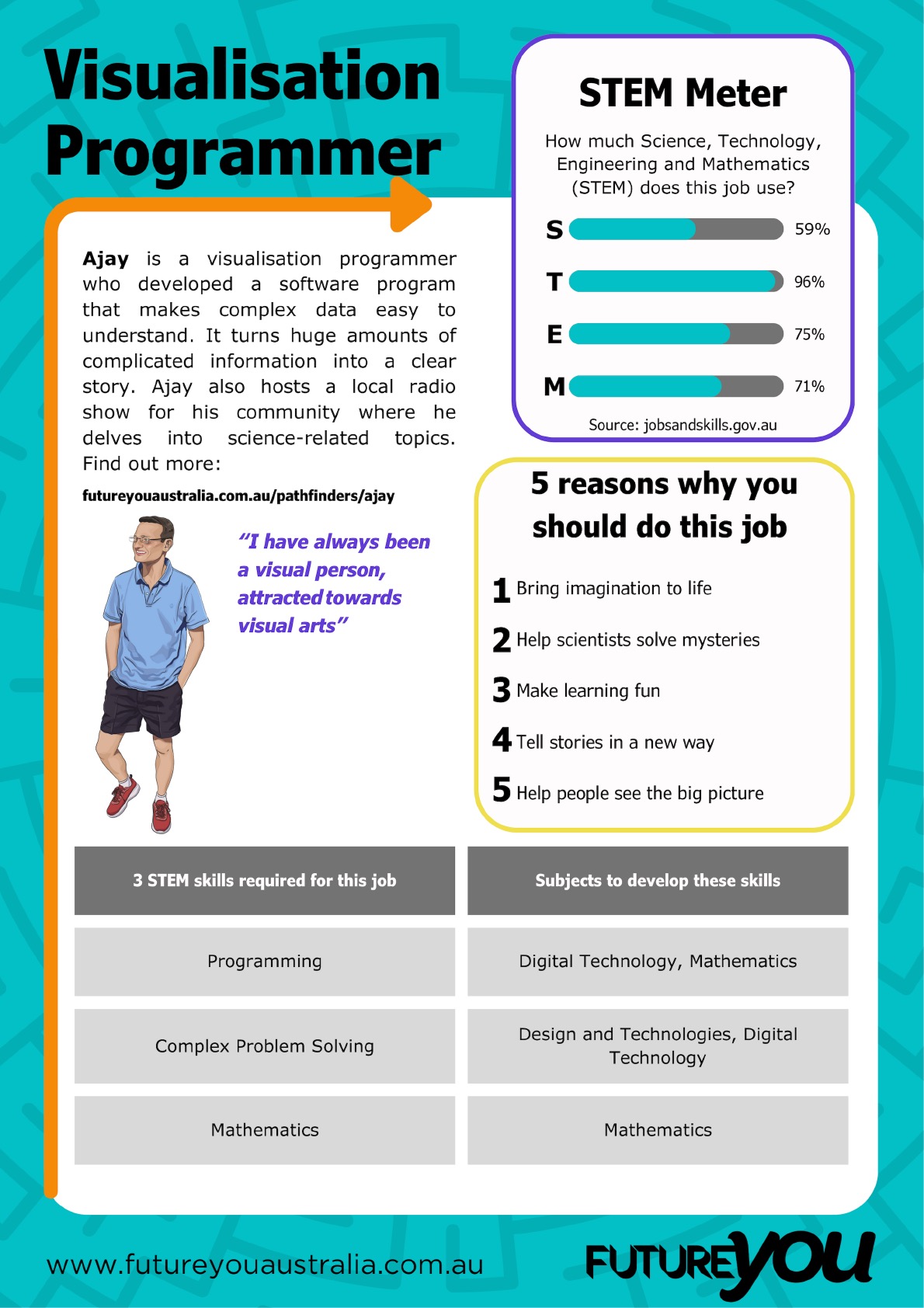
Career Info Sheet for kids – Ajay

Career pathway infographic – visualisation programmer

Meet Ajay

Poster – Ajay

Skills Colouring In – Ajay

Student Activity Pack – Ajay

Wordsearch – Ajay
For teachers

Capability Conversations – Ajay
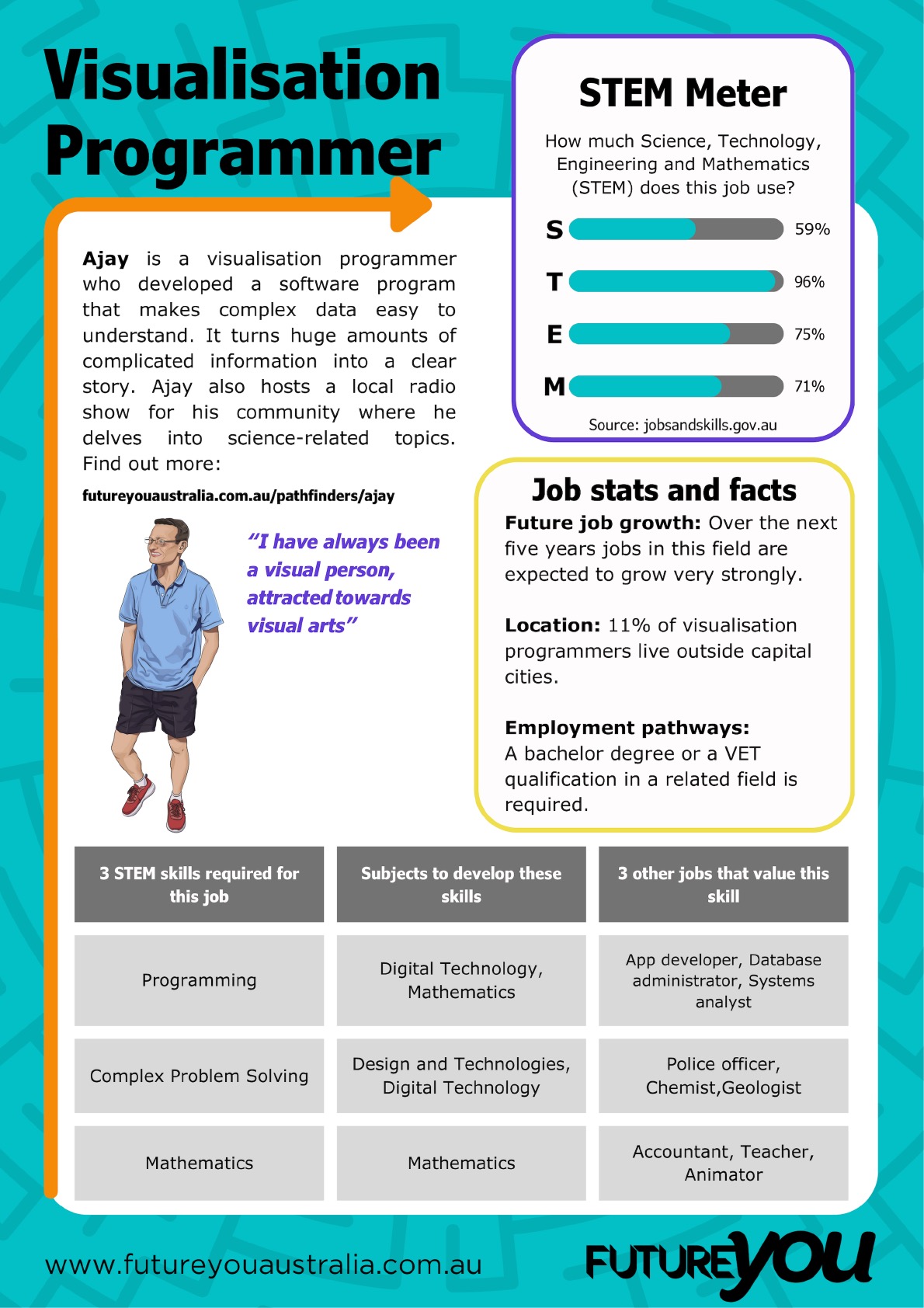
Career Information Sheet – Ajay

Career pathway infographic – visualisation programmer

Comprehension Questions – Ajay

Poster – Ajay
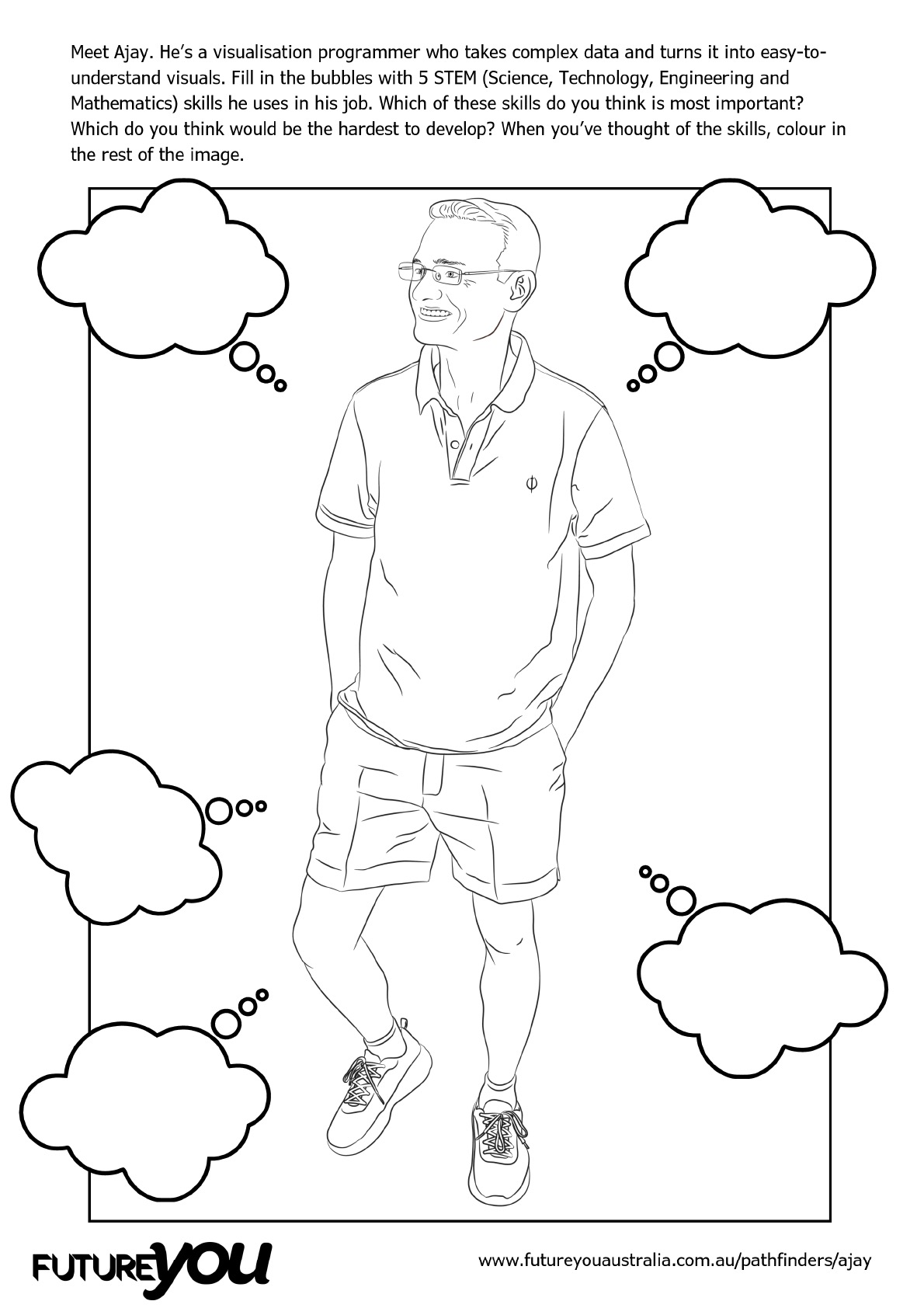
Skills Colouring In – Ajay
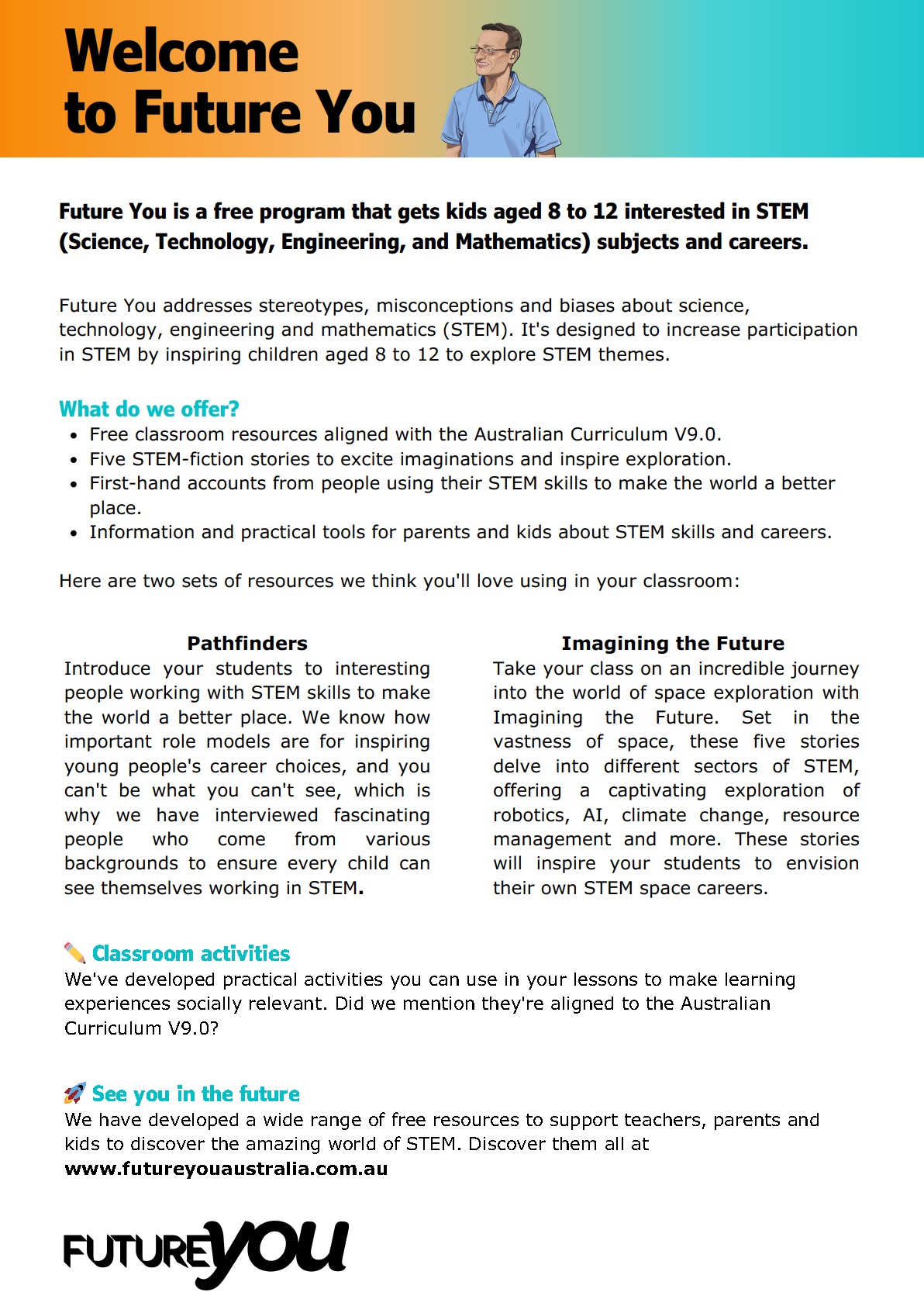
Teacher’s Pack – Ajay
For parents
Career Information Sheet – Ajay

Career pathway infographic – visualisation programmer

Meet Ajay

Poster – Ajay

Skills Colouring In – Ajay
Future You is hosted at UNSW Sydney and co-funded by the Optiver Foundation and the Faculties of Science at UNSW Sydney and The University of Sydney’.


