Equip yourself with the skills and knowledge to make a real impact in the field of vision impairment. The first qualification of its kind in Australia, this new program opens up a range of career opportunities in industries dedicated to improving the quality of life for people who are blind or visually impaired.
Commencing Terms
Term 1
Duration
Degree duration may vary depending on which intake you commence prior to 2028. Click below to check your specific degree duration and what it means for you.
UNSW is introducing a new academic calendar from 2028.
We're moving to a new Flex-Semester Academic Calendar from 2028. While your degree structure and requirements will remain the same, the duration of your studies may vary depending on when you commence your degree prior to 2028.
Make a positive difference in the lives of people living with blindness or low vision with the Graduate Certificate in Vision Impairment. Designed for professionals from a variety of backgrounds – including health, education and social services – this vision impairment course equips you with the specialist knowledge to deliver inclusive, client-centred support.
Delivered by UNSW’s School of Optometry & Vision Science, this is Australia’s first postgraduate qualification that focuses specifically on vision impairment. This program focuses on understanding the lived experience of vision impairment and building practical, evidence-based strategies to support individuals in their daily lives.
You’ll explore the causes and implications of vision loss, learn how to critically evaluate research in the field and develop the practical skills to improve the quality of life for people with blindness or low vision. This 100% online program offers maximum flexibility while helping you develop a deep understanding of how to deliver client-focused services with an ethical and culturally aware lens. Plus, you’ll have the opportunity to specialise further with elective courses that dive into acting on opportunities to design assistive technologies, implications of development and aging for vision impairment, public health issues and policy and research.
Key features
Expand your career opportunities
Vision 2020 forecasts that half of Australia’s population will need eye care services by 2050 (Vision 2020, 2022). This program gives you the specialised skills to work across sectors – from disability services to policy and education.
Flexible learning to suit your lifestyle
The Graduate Certificate in Vision Impairment is a fully flexible program that lets you tailor your studies to suit your life and your goals. Complete your certificate in one year or spread your studies over two years, and gain your qualification entirely online.
Discover evidence-based approaches
Learn how to critically evaluate the latest research on vision impairment rehabilitation, so you can create evidence-based solutions for people who are blind or visually impaired and continuously improve your knowledge in this field.
Why study at UNSW?
Join one of the world’s top-ranked schools Join the largest optometry and vision science school in Australasia. UNSW Medicine & Health is ranked #54 globally for life sciences and medicine (QS World University Rankings by Subject, 2026) and is one of the world’s top medical faculties.
Pioneers in vision and ocular disease research The School of Optometry & Vision Science is a leading research institution (Global Optometrist Top 200 Research Ranking, 2021) in major areas of vision and ocular disease. From dry eyes to sensory processes, our researchers are working to solve vision problems and shape the future of health in Australia.
Australian-first vision impairment program The Graduate Certificate in Vision Impairment is the first program of its kind in Australia, offering Bachelor of Vision Science graduates a unique opportunity to enhance their knowledge in vision impairment.
To gain entry to this program, students must have at least a three-year full-time AQF level 7 Bachelor degree in any discipline. This program is only open for Term 1 enrolments and is completed part-time.
English language requirements
You may be asked to provide evidence of your English proficiency to study at UNSW depending on your educational background and citizenship. English language skills are vitally important for coping with lectures, tutorials, assignments and examinations - this is why UNSW requires a minimum English language competency for enrolment.
If you’re completing an Australian Year 12 qualification (e.g. NSW HSC or equivalent), you do not need to provide anything extra to prove your proficiency. Your qualification will be used as evidence of your English proficiency.
If you do need to provide evidence of your English proficiency, this will be indicated in your application. You can prove this by providing evidence that you meet one or more of the following criteria:
English language tests and university English courses
Prior study in the medium of English
Other qualifications
If you need to improve your English skills before you start your degree, UNSW College’s Academic English Programs are for you. The programs are suitable for various English levels and help you prepare for university studies and life in Australia.
To gain entry to this program, students must have at least a three-year full-time AQF level 7 Bachelor degree in any discipline. This program is only open for Term 1 enrolments and is completed part-time.
English language requirements
You may be asked to provide evidence of your English proficiency to study at UNSW depending on whether you are from an English-speaking background or non-English speaking background. English language skills are vitally important for coping with lectures, tutorials, assignments and examinations - this is why UNSW requires a minimum English language competency for enrolment.
If English is not your first language, you’ll need to provide proof of your English proficiency before you can be given an offer to study at UNSW. You can do this by providing evidence that you meet one or more of the following criteria:
English language tests and university English courses
Prior study in the medium of English
Other qualifications
If you need to improve your English skills before you start your degree, UNSW College’s Academic English Programs are for you. The programs are suitable for various English levels and help you prepare for university studies and life in Australia.
Check the specific English language requirements for this program
What will I study?
Program structure
The Graduate Certificate in Vision Impairment is a one-year, full-time postgraduate degree (with the option to study part-time over a longer period). The program consists of three core courses and your choice of five electives, totalling 42 units of credit (UOC).
Through fully supported online learning, you’ll uncover the functional impact of ocular disease, create strategies to critically evaluate the latest research on vision impairment and deliver client-focused services that improve the lives of those living with blindness or vision impairment.
Full program structure
The Graduate Certificate in Vision Impairment contains a total of 24 units of credit (UOC). This postgraduate qualification can be completed in less than one year when studied full-time or two years when studied part-time. Students must complete:
Three core courses – 18 UOC
The Visual System, Impairments & Implications
Disability and Inclusion in Vision Rehabilitation
Vision Rehabilitation
One elective course – 6 UOC
Research Skills in Vision Science
Rehabilitation Engineering and Assistive Technology
Development and Ageing: Implications for Orientation and Mobility
Health Promotion and Social Perspectives of Health
Ethics & Law in Public Health
Sensory Processes and Movement*
*Required for students wishing to transfer to the Graduate Diploma in Orientation & Mobility
Healthcare and social assistance are among Australia's fastest-growing sectors, with job growth expected to rise by 25.2% by 2033 (Jobs and Skills Australia, 2024). A Graduate Certificate in Vision Impairment opens doors to meaningful roles where you can positively impact the lives of people with blindness or low vision.
Graduates work across public and private settings – including rehabilitation centres, disability services, government agencies, community organisations and the assistive technology sector. You might work directly with clients or influence broader systems through advocacy, education, or policy development.
Potential roles in vision impairment
Accessibility Consultant
Assistive Technology Specialist
Community Worker
Disability Sector Manager
Disability Support Worker
Education Support Worker
NDIA Coordinator
NDIS Planner
Vision Rehabilitation Support
Youth Worker
The Graduate Certificate in Vision Impairment is purposefully constructed to provide students from diverse industry backgrounds with the ability to upskill and enhance their knowledge and expertise in vision impairment as well as vision rehabilitation.
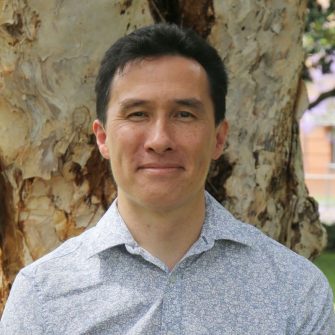
Juno Kim
Associate Professor & Program Lead
How to apply
Apply for this degree through the UNSW Applicant Portal. We encourage you to submit your completed application as early as possible to ensure it will be processed in time for your preferred term. Some high-demand programs and faculties with limited places may have earlier application deadlines or commencement dates.
Application closing dates vary by program and intake. Please refer to our application closing dates page for current deadlines and program-specific information before submitting your application.
For most international students, applications are submitted via our UNSW Applicant Portal service. We encourage you to submit your completed application as early as possible to ensure it will be processed in time for your preferred term.
Offers to international students are issued through offer rounds. You can find the offer release schedules, application deadlines and frequently asked questions (FAQs) on the international admissions information page.
There are a limited number of Commonwealth Supported Places (CSP) available for this degree/program. Your eligibility to receive a CSP will be automatically assessed when you apply, please ensure you preference the CSP code to be considered. Start your postgraduate application today with our guide on how to apply.
Please note that eligibility for Commonwealth Supported Places (CSPs) is competitive, with places awarded based on academic merit. To find out more about Commonwealth Supported Places visit Postgraduate Commonwealth Support.
Commonwealth Study Assistance such as Austudy, and Youth Allowance is available for some master’s degrees. For the most up-to-date information and list of degrees visit UNSW Current Student Financial Support.
2026 Indicative First Year Full Fee
$24,000*
2026 Indicative Full Fee to Complete Degree
$23,000*
*Fees are subject to annual review (or when required) by the University and may vary accordingly.
Indicative fees are a guide only and have been calculated based on the typical enrolment patterns of students undertaking the degree/program. The indicative fees listed here is an estimate for tuition only and excludes non-tuition fees and charges. The amount you pay will vary depending on the calendar year of enrolment, the courses you select and whether your study load is more or less than 1 Equivalent Full Time Student Load (48 units of credit (UOC) per year).
You should not rely on indicative fees as fee increases are assessed when required and may exceed the indicative figures listed here. Actual fees are calculated on enrolment. More information on fees can be found at the UNSW fees website.
2026 Indicative First Year Fee
$31,000*
2026 Indicative Fee to Complete Degree
$31,500*
*Fees are subject to annual review (or when required) by the University and may vary accordingly.
The indicative fees listed here are based on an estimated average using historical student enrolment patterns for each program, which may change every year. The amount you pay will vary depending on the calendar year you enrol, the courses you select and whether your study load is more or less than 1 Equivalent Full Time Student Load (8 courses per year).
Indicative fees are a guide for comparison only based on current conditions and available data. You should not rely on indicative fees. More information on fees can be found at the UNSW fees website.
Indicative first year fees are for tuition only. Indicative fees to complete the degree/program include tuition plus an estimate of study-related costs of approximately $1,000 per year and have been calculated based on percentage increase for every year of the degree/program, noting that actual fee increase may exceed the indicative figures listed here. Other fees and charges are not included. To find out more about other costs for international students, visit UNSW International.
Scholarships
At UNSW, we award over $83 million in scholarships each year. We pride ourselves on rewarding excellence and making university accessible to students from all walks of life. Whether you’re a domestic or international student, our range of scholarships, prizes and awards can support your journey.



 Entry Requirements
 Fees
Fees

 Cross-disciplinary learning