Master of Economics

- Commencing Terms
- Term 1
- Delivery Mode
- Distance (online with some face-to-face), Face-to-face (includes blended)
- Campus
-
Kensington
- Codes
- Program code 8412
- CRICOS code 055189E


-
2026 Indicative first year full fee
- $42,000*
-
2026 Indicative full fee to complete degree
- $42,000*
-
2026 Indicative first year full fee
- $62,000*
-
2026 Indicative full fee to complete degree
- $63,000*
 Entry Requirements
 Fees
Fees
Fees
Fees
-
 Hybrid learning
-
Flexible delivery
-
Leading educators


Postgraduate Information Evening
Online | Thursday, 29 October 2026 | 6–7pm AEDT
Join us online for our Postgraduate Information Evening and get the information you need to plan your next move.
Hear from current postgraduate students, explore your study options and get your questions answered live by faculty and admissions experts.
UNSW is introducing a new academic calendar from 2028.
We're moving to a new Flex-Semester Academic Calendar from 2028. While your degree structure and requirements will remain the same, the duration of your studies may vary depending on when you commence your degree prior to 2028.
Find out what this means for you.
Admissions update for international students
Some programs are at capacity for 2026 intakes and new applications are closed to New Overseas Student Commencement (NOSC). Applications to all 2027 intakes are open.
Click to find our latest updates for international student admissions.
- Overview
- Entry requirements
- What will I study?
- Future careers
- How to apply
- Fees & Scholarships
Overview
The Master of Economics delivers advanced, one-year training for early and mid-career professionals seeking to sharpen their skills, broaden their expertise and take on greater professional responsibility across government, industry and academia.
Designed to accommodate your commitments, this flexible program enhances accessibility while maintaining the highest standards of academic rigour and impact.
From public policy to behavioural economics, the program enables you to deepen your expertise in areas that align with your professional focus and strategic goals. You’ll strengthen your capacity for responsible economic and business decision-making, grounded in ethical practice and sustainability principles that drive long-term impact. The program delivers the expertise and adaptability needed to pursue and succeed at the highest level in a variety of professional settings and leadersship positions.
Key features
Advanced, specialised coursework
Building on your foundational knowledge in economics, the Master of Economics is an advanced program designed to deliver first-class training in both the theoretical and applied dimensions of modern economics and econometrics. Choose from a range of high-quality electives — from Health Economics to Industrial Organisations — and tailor your studies to your professional goals.
Aligned with public and private sectors
Designed and delivered by globally recognised economists, this program develops advanced analytical and leadership skills essential for success in today's complex economic environment. You’ll graduate prepared to create impact across both public and private sectors, from consulting and finance to government and public policy.
Hybrid learning to accommodate work schedules
The Master of Economics is offered in both face-to-face and online modes, giving you the flexibility to balance study, work and life. This hybrid model lets you learn on your terms while advancing your career and building connections with peers and industry experts.
Why study at UNSW?
Join a global top 20 university
Recognised for academic excellence, world-class research, and global impact, UNSW is ranked as a global top 20 university (QS World University Rankings 2024–2027). Learn from leading academics and study alongside ambitious peers, gain insights from industry and graduate with from a globally respected qualification that enhances your career prospects and empowers you to drive economic progress anywhere in the world.
Practical, hands-on learning
Apply your knowledge to real-world challenges as you define economic and business problems, analyse data, and propose optimal, evidence-based solutions. Develop your ability to communicate effectively across diverse audiences and build practical experience through individual and team-based projects.
Expand your professional network globally
Join a diverse community of current and emerging leaders in economics and econometrics, both in Australia and around the world. At UNSW Business School, you’ll benefit from a supportive network, access to prestigious industry connections and the strong partnerships that come with being part of a Group of Eight (Go8) university.
FAQs
-
The Master of Applied Economics is designed for students seeking to build a strong applied foundation in economics - ideal for those transitioning intothe field or broadening their experise. Entry to this program typically requires a general bachelor’s degree, with the option for Recognition of Prior Learning (RPL) based on relevant experience or related study.
In contrast, the Master of Economics is tailored for professionals seeking to deepen their expertise, specialise further or advance into more senior leadership roles. This accelerated one-year program is suited to those who already hold a bachelor’s degree in economics or a related discipline and who possess a solid grounding in economic principles.
-
The Master of Economics at UNSW equips you with high-level analytical, technical, communication and leadership skills to tackle complex economic and business challenges. Graduates can pursue senior roles in a variety of sectors, including:
- Government and public policy
- Finance and consulting
- Industry and corporate sectors
- Research and academia
With this degree, you’ll also gain a competitive edge through specialised knowledge, advanced quantitative skills and a strong professional network, opening doors to leadership and specialist positions in Australia and internationally.
-
Yes. Employment for economists is experiencing stable growth across both public and private sectors. According to Jobs and Skills Australia, economists are primarily employed in industries expected to expand over the next decade, including Professional, Scientific and Technical Services as well as Education and Training.
With strong analytical and quantitative skills, economists are increasingly sought after for roles in government policy, finance, consulting, research and corporate strategy, as well as international organisations, making this a field with long-term career prospects and opportunities for advancement.
Hear from our alumni

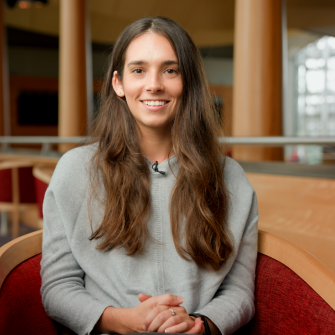
I completed the UNSW MEc [Master of Economics] program while I was working as an economist at the RBA in Sydney. At that time, my mentors impressed upon me the importance of postgraduate study to boost my skills and further my career. The UNSW MEc program was a natural choice, as I was looking for a high-quality and highly regarded, one-year program based on coursework, with practical courses for professional economists. The courses were very well taught by experts at the cutting edge of their fields, and I have been able to apply what I have learnt to my work in public policy. I would highly recommend this program to early/mid career economists looking to take the next step in their careers.
Melissa Wilson | Commissioner at South Australian Productivity Commission, MEc (2015)

In an increasingly complex world, having advanced analytical skills is critical. Industry professionals are aware of the importance of upskilling themselves to remain competitive and achieve career growth. Employers also value advanced training obtained through reputable universities such as UNSW. With growing appreciation of high-quality economic analysis in the business world, the Master of Economics program has strong potential to satisfy industry needs.
Sherman Chan | Chief Economist of the Australian Property Institute
Want to see more from UNSW Business School?
Entry requirements
Applicants must have at least one of the following qualifications:
- An honours degree (or equivalent) in Economics or a cognate discipline*, with a minimum WAM of 70
- A double bachelor’s degree (or equivalent) where one major or degree is in Economics and the other in a cognate discipline*, with an overall WAM of at least 70
- A bachelor’s degree (or equivalent) with a major in Economics or a cognate discipline*, with an overall WAM of at least 70, plus a minimum of two years of relevant professional experience.
*Cognate disciplines include Econometrics, Finance, Mathematics, Statistics, Data Science and Engineering.
Assumed knowledge
A level of knowledge equivalent to a first-year undergraduate mathematics subject is assumed. Students without such knowledge are advised to contact the Postgraduate Program Coordinator in Economics, complete an appropriate self-assessment of university mathematics knowledge before the commencement of their first term and complete a mathematics bridging course where appropriate.
English language requirements
You may be asked to provide evidence of your English proficiency to study at UNSW depending on your educational background and citizenship. English language skills are vitally important for coping with lectures, tutorials, assignments and examinations - this is why UNSW requires a minimum English language competency for enrolment.
If you’re completing an Australian Year 12 qualification (e.g. NSW HSC or equivalent), you do not need to provide anything extra to prove your proficiency. Your qualification will be used as evidence of your English proficiency.
If you do need to provide evidence of your English proficiency, this will be indicated in your application. You can prove this by providing evidence that you meet one or more of the following criteria:
- English language tests and university English courses
- Prior study in the medium of English
- Other qualifications
If you need to improve your English skills before you start your degree, UNSW College’s Academic English Programs are for you. The programs are suitable for various English levels and help you prepare for university studies and life in Australia.
For more details, visit the English Language Requirements page.
Applicants must have at least one of the following qualifications:
- An honours degree (or equivalent) in Economics or a cognate discipline*, with a minimum WAM of 70 as determined by UNSW Postgraduate Coursework Entry Calculator.
- A double bachelor’s degree (or equivalent) where one major or degree is in Economics and the other in a cognate discipline*, with an overall WAM of at least 70
- A bachelor’s degree (or equivalent) with a major in Economics or a cognate discipline*, with an overall WAM of at least 70, plus a minimum of two years of relevant professional experience.
*Cognate disciplines include Econometrics, Finance, Mathematics, Statistics, Data Science and Engineering.
UNSW Business School English Language Requirement
International students are required to satisfy the UNSW Business School English Language requirement of IELTS 7.0 overall (minimum 6.0 in each subtest) or equivalent test.
Note: Applicants from non-211 universities in China wishing to study Postgraduate Coursework in the UNSW Business School must achieve a minimum overall average of 88 in their current university’s grading system. This is equivalent to an 85% Australian scaled average using the entry calculator above.
Assumed knowledge
A level of knowledge equivalent to a first-year undergraduate mathematics subject is assumed. Students without such knowledge are advised to contact the Postgraduate Program Coordinator in Economics, complete an appropriate self-assessment of university mathematics knowledge before the commencement of their first term and complete a mathematics bridging course where appropriate.
English language requirements
You may be asked to provide evidence of your English proficiency to study at UNSW depending on whether you are from an English-speaking background or non-English speaking background. English language skills are vitally important for coping with lectures, tutorials, assignments and examinations - this is why UNSW requires a minimum English language competency for enrolment.
If English is not your first language, you’ll need to provide proof of your English proficiency before you can be given an offer to study at UNSW. You can do this by providing evidence that you meet one or more of the following criteria:
- English language tests and university English courses
- Prior study in the medium of English
- Other qualifications
If you need to improve your English skills before you start your degree, UNSW College’s Academic English Programs are for you. The programs are suitable for various English levels and help you prepare for university studies and life in Australia.
For more details, visit the English Language Requirements page.
Check the specific English language requirements for this program
What will I study?
Program structure
The Master of Economics is a one-year program comprising of eight courses, including both core courses and electives. Through this program, you’ll develop rigorous analytical and critical thinking skills to address complex economic issues and inform evidence-based decision-making.
Full program structure
You'll complete four core courses (24 units of credit), providing a solid foundation in advanced economic theory and quantitative analysis. You will undertake the following courses:
- Microeconomic Theory I
- Macroeconomic Theory I
- Mathematical Economics
- Empirical Method for Causal Inference
You'll then choose four elective courses (24 units of credit) to tailor their studies to their interests and career goals. The electives cover the full breadth of economics, including:
- Policy Applications of Behavioural Economics
- Public Economics and Regulation
- Macroeconomic Theory II
- Macroeconometrics
- Microeconometrics
- Industrial Organisation
- Health Economics
- Economic Measurement
Future careers
Graduate from the Master of Economics with the knowledge, skills and perspective to influence economic polsicy and business practice at the highest level, shaping more resilient and sustainable futures. Whether you’re aiming for the next step in your career of leadership roles, this advanced training opens up a wide range of jobs across industry and government, including providing a pathway to academia.
Potential careers
- Health economist
- Behavioural economist
- Financial economist
- Labour economist
- Macroeconomist
- Data & Quantitative Analyst
- Economic researcher
- Economic consulting
- Financial consultant
- Management consultant
- Policy advisor
- Pathways towards academic careers
Potential Employers
- Reserve Bank of Australia (RBA)
- Australian Treasury and state treasuries
- Australian Bureau of Statistics (ABS)
- Australian Prudential Regulation Authority (APRA)
- Productivity Commission (PC)
- e61 Institute
- Infrastructure NSW
- International organisations such as the International Monetary Fund (IMF), World Bank (WB), Organisation of Economic Co-operation and Development (OECD)
- Private-sector employers including NERA Economic Consulting, Deloitte Access Economics, Frontier Economics, Macquarie Group, Commonwealth Bank of Australia (CBA), BlackRock.
UNSW Business School Career Accelerator
UNSW Business School's Career Accelerator provides work experiences and professional development opportunities to help take your career to the next level.
The Master of Economics includes up to two for-credit industry experiences, such as internships or global business practicums. These professional development opportunities complement your studies, build connections to industry and give you a clear advantage after graduation.
Your opportunities are supported by our industry and alumni networks. As one of Australia's leading business schools, we have strong connections to industry and more than 100,000 alumni worldwide who could be connections to your future career. UNSW also has a strong start-up culture, with over 300 clubs to find people with complementary skillsets.
How to apply
Apply for this degree through the UNSW Applicant Portal. We encourage you to submit your completed application as early as possible to ensure it will be processed in time for your preferred term. Some high-demand programs and faculties with limited places may have earlier application deadlines or commencement dates.
Application closing dates vary by program and intake. Please refer to our application closing dates page for current deadlines and program-specific information before submitting your application.
Ready to start your application?
For most international students, applications are submitted via our UNSW Applicant Portal service. We encourage you to submit your completed application as early as possible to ensure it will be processed in time for your preferred term.
Offers to international students are issued through offer rounds. You can find the offer release schedules, application deadlines and frequently asked questions (FAQs) on the international admissions information page.
Ready to start your application?
Fees & Scholarships
*Fees are subject to annual review (or when required) by the University and may vary accordingly.
Indicative fees are a guide only and have been calculated based on the typical enrolment patterns of students undertaking the degree/program. The indicative fees listed here is an estimate for tuition only and excludes non-tuition fees and charges. The amount you pay will vary depending on the calendar year of enrolment, the courses you select and whether your study load is more or less than 1 Equivalent Full Time Student Load (48 units of credit (UOC) per year).
You should not rely on indicative fees as fee increases are assessed when required and may exceed the indicative figures listed here. Actual fees are calculated on enrolment. More information on fees can be found at the UNSW fees website.
*Fees are subject to annual review (or when required) by the University and may vary accordingly.
The indicative fees listed here are based on an estimated average using historical student enrolment patterns for each program, which may change every year. The amount you pay will vary depending on the calendar year you enrol, the courses you select and whether your study load is more or less than 1 Equivalent Full Time Student Load (8 courses per year).
Indicative fees are a guide for comparison only based on current conditions and available data. You should not rely on indicative fees. More information on fees can be found at the UNSW fees website.
Indicative first year fees are for tuition only. Indicative fees to complete the degree/program include tuition plus an estimate of study-related costs of approximately $1,000 per year and have been calculated based on percentage increase for every year of the degree/program, noting that actual fee increase may exceed the indicative figures listed here. Other fees and charges are not included. To find out more about other costs for international students, visit UNSW International.
Scholarships
At UNSW, we award over $83 million in scholarships each year. We pride ourselves on rewarding excellence and making university accessible to students from all walks of life. Whether you’re a domestic or international student, our range of scholarships, prizes and awards can support your journey.
Progress starts here – at a world-leading university

#19 Worldwide
UNSW is Australia’s #1 university, ranked among the top 20 universities globally
QS World University Rankings, 2027

Most Employable Graduates
Winner of the AFR Most Employable University Award seven years in a row
AFR Top100 Future Leaders & Graduate Employers Awards, 2020–2026

Australia's #1 for Innovation
Highest number of startups and spinouts from university-developed tech
SCOPR report, 2024
I can flexibly choose my subjects each term depending on the workload that I’m able to take on.