Using nature-based, integrated water management solutions for improved livelihoods and wellbeing in rural communities
With funding from the Australian Centre for International Agricultural Research (ACIAR), the UNSW Global Water Institute is supporting Permatil Timor-Leste in their efforts to improve health and livelihoods in rural communities in Timor-Leste.
Working across six municipalities and three different climate zones, researchers are beginning to better understand how rural communities can sustainably manage available water resources for improved food and water security. They are using a combination of social science and hydrological research to explore solutions that are practical, sustainable and fit for purpose.
Members of the UNSW water community are working with the National University of Timor Lorosa’e, Permatil and municipal governments to build research and technical capacity among local communities, while supporting community-led catchment management initiatives.
In Timor-Leste, around 25% of people cannot meet their daily food needs. Many suffer from malnutrition and nearly 50% of children under the age of five experience stunted growth. Water insecurity and climate impacts are exacerbating this with unpredictable rainfall, prolonged dry spells, and extreme weather events. Families are often unable to produce enough food to meet their daily intake and nutrition needs.
The goal
Through research, partnership and capacity-building, rural communities will have the tools and knowledge to manage their available water resources so that they can access enough food and water all year round. The methods implemented will be Nature-based Solutions, using natural systems to benefit both people and the environment.
The direction
Key activities include: evaluating the effectiveness of community land and water management practices; fostering community networks and capacity for monitoring and reporting on rainfall, stream fall, groundwater and salinity levels; providing training in survey methods and systems to collect and analyse hydrological data; and producing actionable recommendations that can be integrated into local and national policies.
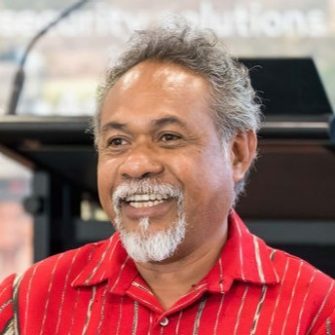
This important research initiative, implemented in partnership with Permatil across Timor-Leste, empowers evidence-based water restoration and catchment management using nature-based solutions. The evidence generated through this work contributes meaningfully to the development of Timor-Leste as a whole."
Mr Ego Lemos
Executive Director, Permatil
The research
Stream 1: Social Science
Researchers are working to answer the following questions:
What are the primary causes and consequences of food and water insecurity at the village and sub-village level?
What coping strategies do households employ in response to food and water insecurity?
How does gender influence experiences and management of food and water insecurity within households?
How does food and water insecurity vary as a function of water availability in the local catchment? (accounting for topography, hydrology and climate variables, as well past efforts to improve catchment (if any).
Stream 2: Hydrology
Researchers are working to answer the following questions:
Can variability in satellite derived catchment greenness be explained by precipitation variability and catchment management activities?
How do groundwater levels and spring flow respond to precipitation and infiltration at higher elevations in the catchment? And how do groundwater levels and spring flow respond to catchment management activities (e.g. construction of shallow infiltration basins)?
What is the sustainable yield from existing groundwater and springs during the dry season in different climate zones?
To what extent can saline ingress in coastal groundwater be managed through conjunctive use of rainwater harvesting in dry season and groundwater in wet season?
What is a technically appropriate water balance model to inform conjunctive use of rainwater, groundwater and stream flow to support domestic consumption and food production at the village and sub-village level?
Timor-Leste visit 2026
In February 2026, members of the UNSW water community travelled to Timor-Leste for a week to collaborate with partners on the water and food security project. The visit enabled project partners to build closer ties and further advance critical aspects of the project that are helping to build research and technical capacity among communities.
Communities lead the way in Timor-Leste water and food security project
Through training, fieldwork and partnerships, communities and researchers are working together to address water and food insecurity in Timor-Leste.
Associate Professor Martin Andersen is a groundwater expert at the UNSW School of Civil and Environmental Engineering and the Hydrology Program Lead on this project. Martin Andersen participated in the 2025 Permayouth Camp on Atauro Island and supervised the installation of groundwater loggers at 5 locations on the island. He is currently mentoring Ms Jovita Costa, Lecturer in Geology at National University of Timor Leste.
Associate Professor Fiona Johnson from the UNSW School of Civil and Environmental Engineering is Director of Water Research Centre and a Hydro-climatologist on this project. Fiona Johnson specialises in catchment modelling, climate change impact assessment and Humanitarian Engineering.
Associate Professor Chris Cvitanovic is a Social Scientist UNSW Canberra and a knowledge exchange expert. He is the ACIAR program liaison on this project and lead of Monitoring and Evaluation.
Professor Greg Leslie is Director of the UNSW Global Water Institute. Greg Leslie has visited Timor-Leste on six occasions since August 2023 and is UNSW’s primary contact with Permatil.
Professor Jacqui Webster is the Lead coordinator for the Food InSecurity Experience (FISE) and Water InSecurity Experiences (WISE) survey component of this project. Jacqui Webster leads the World Health Organisation salt reduction program in the Pacific and is the Chief Investigator on the National Health and Medical Research Council (NHMRC) Food and Water for Life project in Indigenous communities.
Mr Ego Lemos is CEO of Permatil. Mr Ego Lemos is Timor Leste’s ambassador for Culture and the Environment. He has worked on catchment management techniques for water conservation since 2005 and is the Timor-Leste lead for the project.
Mr James Palmer has a background in International Development and has worked with Permatil since 2022. He is fluent in Tetum and English.
Ms Jovita Costa is a lecturer in geology and groundwater at UNTL. Jovita Costa leads a team of students who are mapping groundwater resources in Timor-Leste and she participated in the 2025 Permayouth Camp on Atauro Island.