
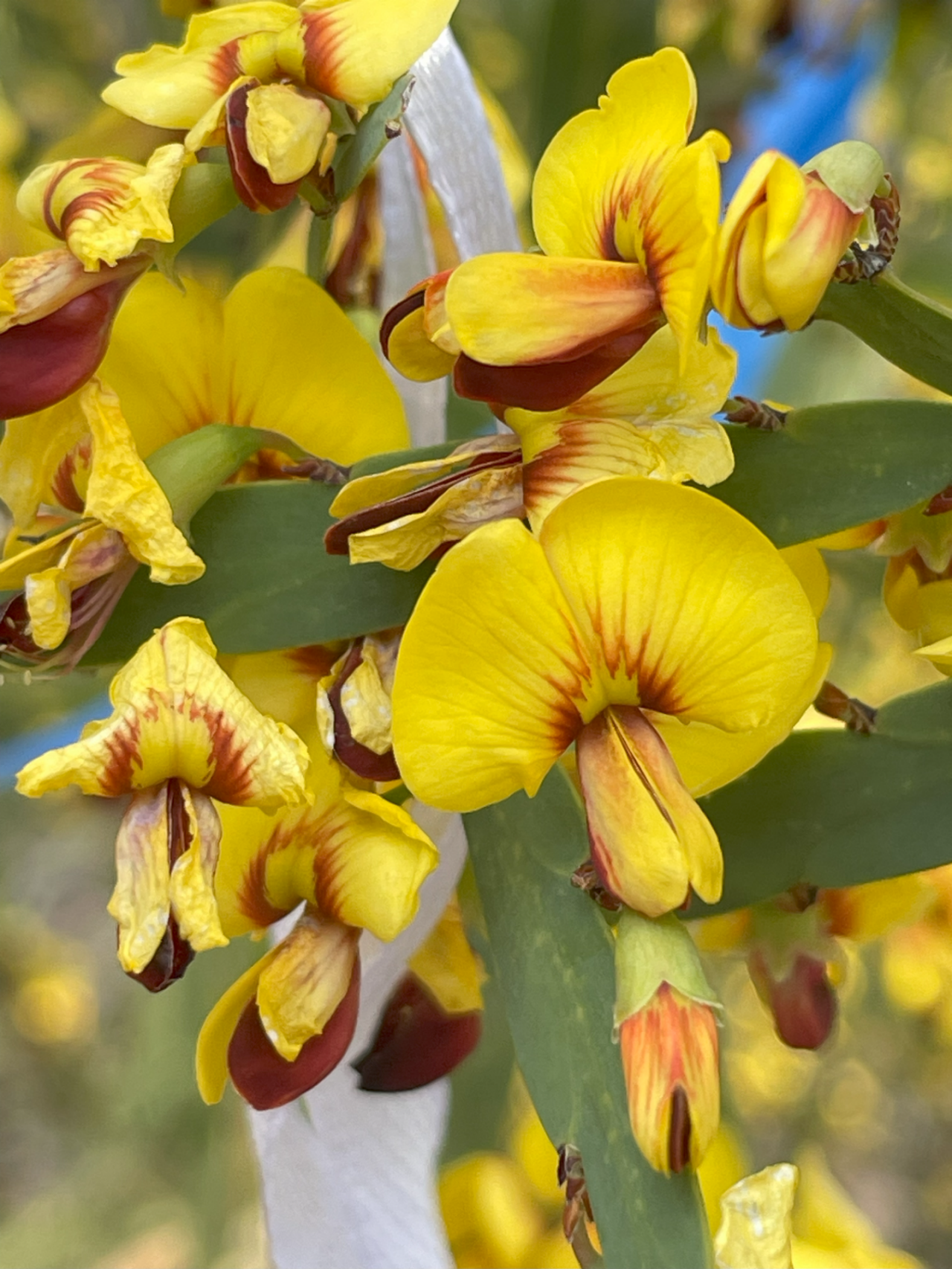
Aptly named for its fragrant smell when in bloom, Bossiaea fragrans is an endemic ‘leafless’ shrub species known from one geographically and genetically fragmented population, with evidence to date of offspring recruitment. Although it is currently under threat, largely due to grazing by introduced goats and deer, effective conservation management is difficult due to a substantial gap in ecological knowledge. This project, led by the TRE group aims to address this gap by exploring factors relevant to B. fragrans’ persistence and circumstances, including life-history strategies linked to fire, seed dormancy mechanisms, breeding system strategies, the effects of genetic relatedness on reproduction, and the role of subpopulation microclimatic niches in seed quality and dormancy.
The Bossiaea fragrans project has the potential to be a case study for the effects of landscape fragmentation and the disruption to natural systems such as fires on endemic plant species and will inform the future translocation and conservation management of the species.
This project builds on previous genetic work conducted by the Research Centre for Ecosystem Resilience (ReCER) (McMaster et al. 2024) at the Botanic Gardens of Sydney and involves active collaboration with stakeholders in the NSW Saving our Species program (NSW DCCEEW), the NSW National Parks and Wildlife Services, and is supported by the Australian Plants Society North Shore group.
For more information visit:
- Overview
- News
- Our team
- References