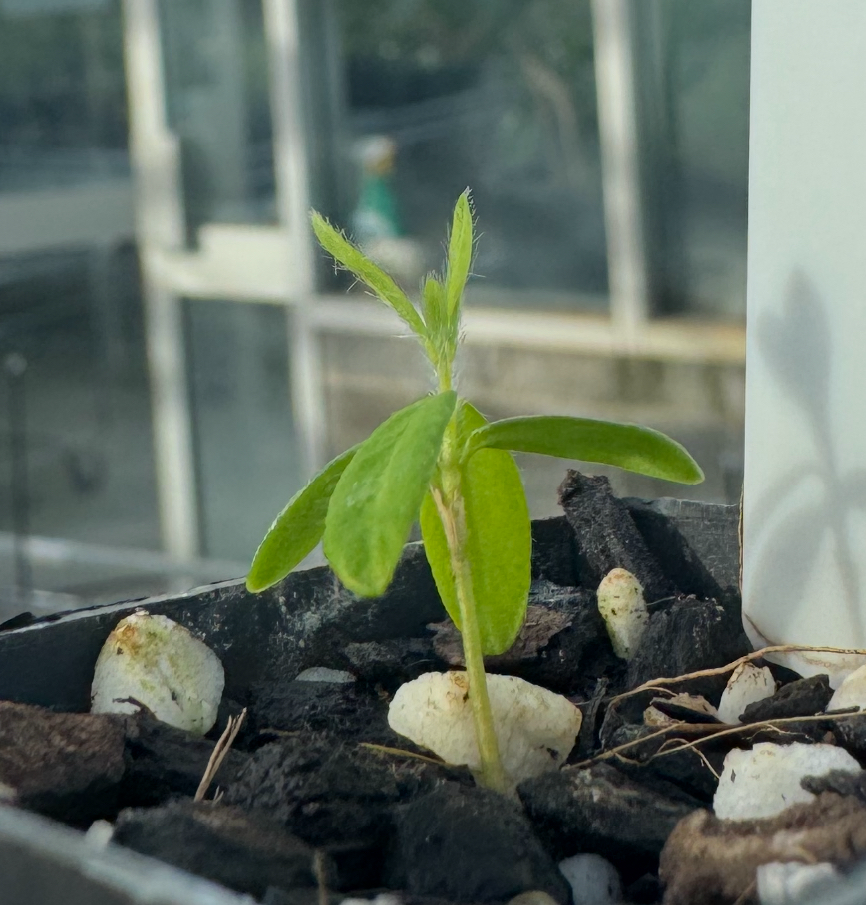
Pimelea venosa
Ecology and translocation planning for Pimelea venosa.

Ecology and translocation planning for Pimelea venosa.
Since 1999, surveys of the critically endangered Pimelea venosa have recorded consistently low and declining numbers of individuals. However, a significant germination event following the 2019 wildfires resulted in two populations rebounding with over 1000 seedlings emerging in locations where no above ground plants were recorded. This project explores the seed ecology of this species as well as threats to its persistence.
Project team: Chantelle Doyle, Kelvin Chong, Mark Ooi
Chantelle, Kelvin and Mark are investigating how seasonality and fire cues are interacting to drive the recruitment dynamics and seed ecology of Pimelea venosa. We are using laboratory germination trials to apply smoke and heat which replicate fire cues across different seasons. We are also identifying if seed priming treatments using gibberellic acid (GA₃ and smoke, can be used to enhance germination success. These results will be used for future translocations and population augmentation.
One the main threats to Pimelea venosa is grazing. To determine if fencing or microtopographic niche can reduce grazing impacts on plants in situ, we have installed long term monitoring. This monitoring will determine the longevity of plants as well as identify whether niche, such as areas of natural protection like rock crevices and nurse plants, influence the species’ resilience to grazing and regeneration capacity. Ecological data is being used to plan the best locations for reintroductions or translocations.
This work is being conducted in collaboration with NSW Saving our Species (NSW DCCEEW).