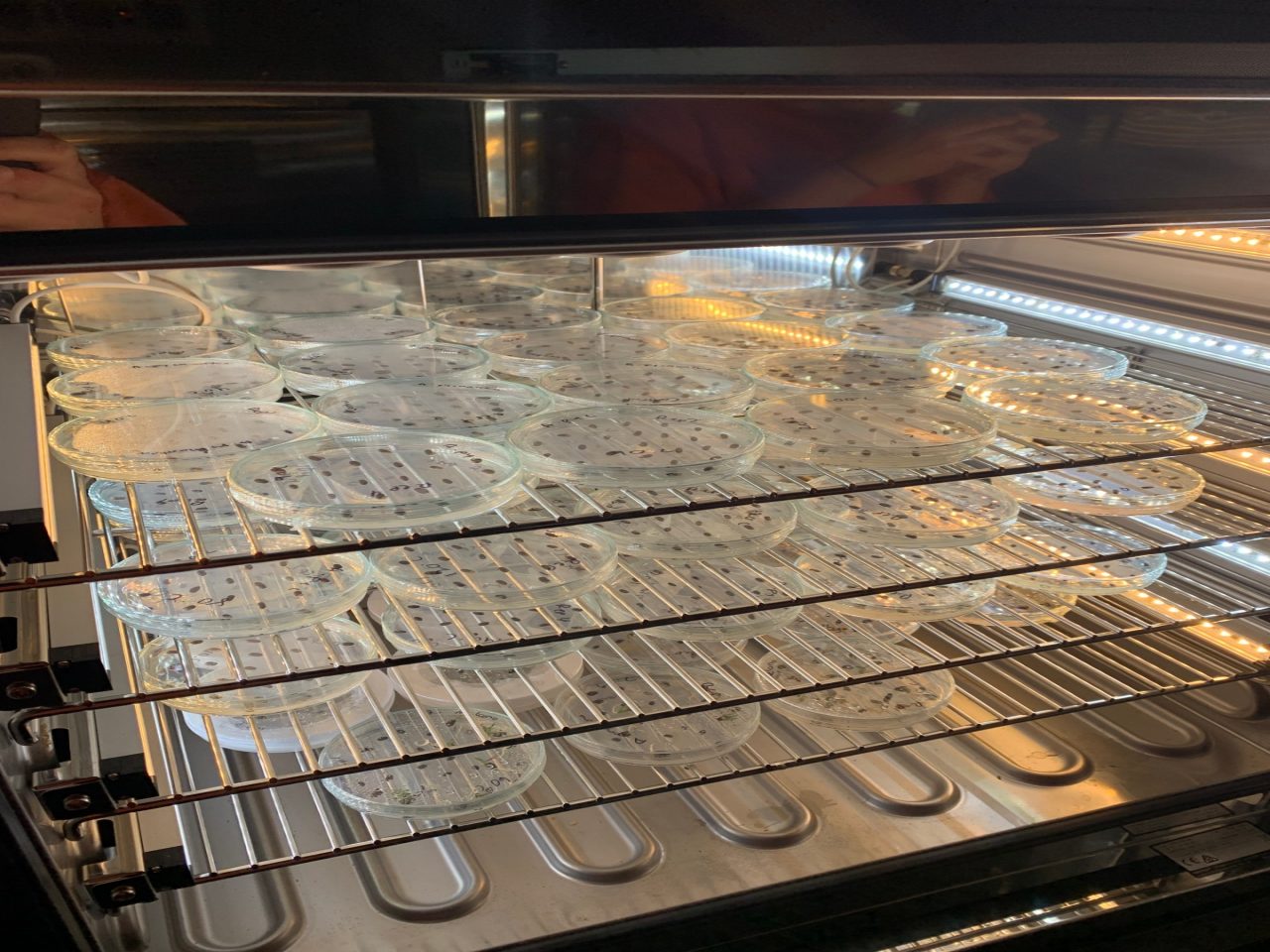
Many Australian plant species have evolved dormancy-breaking cues tied to the passage of fire, with one such cue being heat shock. Understanding the thresholds for dormancy breaking helps us predict fire related threats to plant persistence under changing fire severity.
Project lead: Sarah McInnes (PhD Candidate). Supervisors: Mark Ooi, Ryan Tangney (DBCA), Will Cornwell (UNSW EERC)
The heat shock generated by fire, breaks seed dormancy and allows for germination, and thus species recruitment, into the post-fire landscape. This mechanism is critical for species persistence through bushfires. Projects led by Sarah and Ryan characterise these heat thresholds (collectively known as the ‘pyro-thermal niche’) in many native plant species across Australia. Specific aims involve understanding the relationship between the pyro-thermal niche and fire regime, seed traits, and species phylogeny, alongside exploring the fundamental molecular mechanisms that contribute to seed persistence through extreme fire-related heat. This knowledge helps us understand how heat thresholds evolved under recurrent fire, and the trade-offs made to enable resilience under extreme temperatures.
Tangney R, McInnes SJ, Dalziell EL, Cornwell WK, Miller BP, Auld TD, Ooi MKJ. 2025. Defining the pyro‐thermal niche: do seed traits, ecosystem type and phylogeny influence thermal thresholds in seeds with physical dormancy? New Phytologist 246: 1567-1582.