School of Education
Critical thinking in arts education helps strengthen students’ artistic autonomy
Art education must foster critical thinking to scaffold strong art criticism and aesthetic sensibility.
Published on the 26 February 2026

Art education must foster critical thinking to scaffold strong art criticism and aesthetic sensibility.

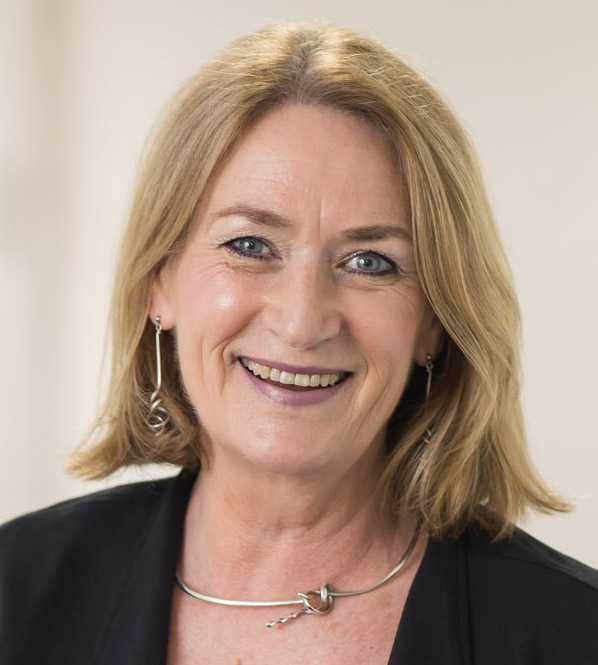
Critical thinking is integral to arts education to support the development of art understanding and aesthetic knowledge, says Associate Professor Karen Maras from UNSW’s School of Education.
“Art making is a generative act. To be creative, you have to make critical judgements about what you're doing and why,” the UNSW alumna says. “This act of reasoning – the evaluative stance you take – underscores, shapes and defines the creative act.
“Equally, creative thinking is central to constructing critical judgements. Critical and creative thinking are integrated, inseparable and essential for empowering our emerging artists and critics.”
A/Prof. Maras’s research promotes art as a form of practice and a body of knowledge that can be taught. “My work challenges the idea that students are naturally inclined to be aesthetic in their reasoning.
“They're actually inclined to be logical and talk about their role as an artist, their role as an audience, what the subject matter of the work is and why it was made.”
Children’s critical thinking gradually becomes more complex as they learn to make and explain these connections between artist, artwork, subject matter and audience, she says.
She conducted a study mapping age-related changes in critical thinking about aesthetic value. Children aged six, nine and 12 were tasked with curating an exhibition of ‘good’ portrait paintings from a range of examples, discussing their reasoning for the artworks they chose and rejected.
The study tracked students’ progression from the literal to more reflexive and meta-level understandings of art.
“If you take Vincent van Gogh, for example, [this moves from] ‘I drew a sunflower’ to my painting of sunflowers represents symbolically ideas about joy and inspiration. By twelve, children are capable of complex artistic interpretations.”
The curriculum should work with rather than discount the theoretical structures in students’ minds, she says. “Their well-defined common-sense theories of art present art educators with substantial theoretical bases upon which to further develop art knowledge.”
Making judgements about their own and others’ artworks across diverse media helps build a repertoire of ideas that support greater autonomy and creative risk taking, she says.
“Unless you know what other art is like, and understand how and why it is made, how do you know how to make it and how to think about what you are making? How do you know how to subvert or challenge or reproduce or emulate? Or what's possible in an artistic sense?
“By contrast, dosing students with formalist aesthetics alone reduces art criticism to a paint-by-numbers exercise of visual literacy rather than promoting its strong, discursive tradition.”
A/Prof. Maras is an expert in curriculum, assessment and mapping students’ learning and development in Visual Arts. She has led and advised on Visual Arts curriculum development in New South Wales (NSW), from Kindergarten to Year 12 (K-12), for more than 30 years.
Despite several attempts to achieve a national curriculum in Australia, Visual Arts in NSW has largely maintained independence from national reforms.
A/Prof. Maras is one of few academic representatives on the NSW Education Standards Authority (NESA) Technical Advisory Group for the Years 7-10 and Stage 6 (Years 11 and 12) Visual Arts Syllabus revisions as part of the NSW Curriculum Reform.
“The decision to not adopt the Australian Curriculum in 2018 was grounded in concerns about the quality and coherence in its provision in the Arts.
“We noted the lack of parity with the existing evidence-based NSW curriculum, arguing that the national curriculum was not equal to or better than what was offered in NSW schools.”
The national curriculum for the Arts, developed and implemented by the Australian Curriculum, Assessment and Reporting Authority (ACARA), aims to deliver an educational entitlement through a single curriculum framework for the Arts – Dance, Drama, Media Arts, Music and Visual Arts – in which cross-curriculum priorities and general capabilities are integrated.
The assumption is that a common structure exists across all arts forms, A/Prof. Maras says.
“However, this is not the case. Standardising art understanding in a one-size-fits-all structure denies teachers the opportunity to work within the discrete and distinctive nature of each of the Arts disciplines,” she says.
A/Prof. Maras’s research has contributed to the evidence base for maintaining a conceptual framework in the NSW Visual Arts syllabuses K-12. The conceptual framework is foundational within the continuum of learning in art and applies to both modes of study: art making and art criticism and history.
“The framework prioritises the relationships between the concepts of artwork, artist, audience and world, providing an explanatory system for supporting students’ deep learning and art understanding in art making and art criticism and history.”
It scaffolds reflexive critical and creative thinking about how artworks exist in the artworld as a social reality.
“This framework helps teachers to support students to explain connections between artworks artists make, their reasons for making them, what artworks represent about the world in terms of subject matter, and how the meaning of artworks can be interpreted in various ways by different audiences. It helps students to formulate their own roles as artists and audiences in the artworld as well.”
Art education is a space where philosophical framing and reasoning are important, she says. “What makes the subject so interesting is that it’s not settled on fact in the traditional sense.
“Knowing a sculpture was found in the Parthenon does not help you understand what it means or why it was made. Students need to understand something of the circumstances in which artworks are produced to make sense of them.
“That’s why we have debates and arguments and dissonances within the discipline. And that’s what students love. Reducing opportunities for students and teachers to engage in critical reasoning by assuming that knowledge in art is just about facts is disrespectful of the students the curriculum purports to support.
“Students understand that artistic performances are about inferences, meaning and different points of view – they demonstrate this kind of higher order thinking in Year 7!”
Many countries within the Organisation for Economic Co-Operation and Development (OECD) have prioritised 21st-century skills in national curricula. Australia’s national curriculum includes critical and creative thinking as one of seven general capabilities.
ACARA provides advice about how to integrate this within English, mathematics, science and history learning, “the implication being critical and creative thinking is self-evident to art teachers. We have seen through our research that this is not the case,” she says.
A/Prof. Maras engages with teachers to promote knowledge translation to address the limited research, professional development opportunities and advice on strategies to promote critical and creative thinking in the classroom.
She designed a collaborative research-based professional learning program with Kathrine Kyriacou from Dulwich High School of Visual Arts and Design to investigate how critical and creative thinking plays out in teaching and learning in Visual Arts.
The program, funded by the NSW Department of Education, supported five early-career and more experienced teachers from metropolitan and remote rural public schools to engage in theory and practice, through online and face-to-face meetings.
Teachers participated in workshops, designed and implemented a lesson sequence within their schools, and reflected on challenges and student engagement as evaluation.
“The teachers reported an improvement in their practice, with many students gradually gaining confidence in reasoning and more students actively contributing to these investigations of art.”
They employed strategies to extend critical understanding through reasoning activities, such as working with extracts from critical reviews and historical accounts, statements by artists and audiences, and extracts from documentaries or video clips on the artist and their practice.
Our standing as a nation is characterised by our engagement with the arts on so many levels, yet this is not reflected in the curriculum development, she says. “Learning to engage with and examine art helps us to understand how we might navigate the world.
“A critical and creative thinking-driven approach to art education allows students to have and represent and defend their position on issues in the world, whether it's about the conflict in the Ukraine or an event in their adolescence or the beauty of the landscape out at Wagga.
“It's what matters to them, but it's filtered through this very important structure of learning by engaging in critical and creative thinking that’s grounded in a knowledge of practice and artworld concepts. This is framed according to different points of view gleaned through research in the art classroom to support their autonomy as an artist.”
School of Education
Associate Professor Karen Maras
Pillar 7: Advance economic and social prosperity