UNSW School of Built Environment
Mapping stories of disaster recovery and resilience promotes community-centred policy and practice
Community accounts of disaster and recovery offer invaluable insights for response efforts.
A new interactive global map elevates community voices to promote more effective disaster relief.
The map, produced by HowWeSurvive at UNSW, locates and shares first-hand accounts of disaster recovery and resilience with a focus on marginalised and vulnerable communities.
Community-centred approaches to disaster recovery, where organisations listen and work with affected communities, are recognised as the most effective response, says Professor David Sanderson, the Judith Neilson Chair of Architecture in UNSW’s School of Built Environment.
“However, too often top-down approaches dominate; well-intentioned organisations provide disaster relief that interrupts the ways communities want to pursue recovery.
“This leads to disenfranchised communities and wasted investments, known as the ‘second disaster’.”
The map enables policymakers, disaster response organisations and other decision-makers to better understand what recovery looks like for communities in diverse contexts.
“By elevating authentic accounts of disaster relief – both good and bad – the map demonstrates the necessity for greater community engagement.
“People’s experiences matter. Affected communities’ needs must be at the heart of disaster recovery. After all, whose reality counts?”
David Sanderson is an international expert in urban and rural resilience, disaster preparedness and community-led recovery. He leads HowWeSurvive, a long-term initiative driven to reshape how community-centred disaster recovery is enacted and understood through research, education and advocacy.
HowWeSurvive, funded by the Judith Neilson Chair of Architecture’s endowment, is producing the map with MapAI, a startup from UNSW’s City Futures Research Centre; University of Canterbury, New Zealand; SEEDS (Sustainable Environment and Ecological Development Society) India; the African Centre for Disaster Studies; and other in-country organisations and community groups.
Climate-fuelled disasters, such as bushfires, windstorms and floods, are increasing in frequency and severity. In 2024, 45.8 million people were displaced by disasters, nearly double the last decade’s annual average.
“Amplifying the voices of communities affected by disaster showcases local and First Nations knowledge, providing invaluable insights for communities at risk.
The map’s AI capability, developed with MapAI, allows users to filter stories according to location, disaster type and phase (before/during/after), and year.
Users can explore themes and locations of interest on the map and ask questions of other communities to learn more about their experiences of disaster relief.
The HowWeSurvive map has more than 1,300 stories from Australia, New Zealand, India and Nepal with stories from South Africa currently under development.
It will continue to grow iteratively in partnership with international organisations, sharing diverse stories of recovery and resilience from across the globe.
“In this time of escalating urban disasters and sharply reduced aid budgets, humanitarian aid – long identified as needing reform – has no choice but to reset,” Prof. Sanderson says. “It’s time to prioritise people’s agency and localise our response.
“Disaster recovery can be reshaped to put people at the centre of decisions that affect them and their families. Responding agencies can find better ways to listen and to support communities more successfully.
“Through better recovery, the threat of future disasters can be reduced or even prevented altogether.”
The HowWeSurvive map contains more than 1,300 stories from across the globe and continues to grow. Photo: Supplied.
UNSW School of Built Environment
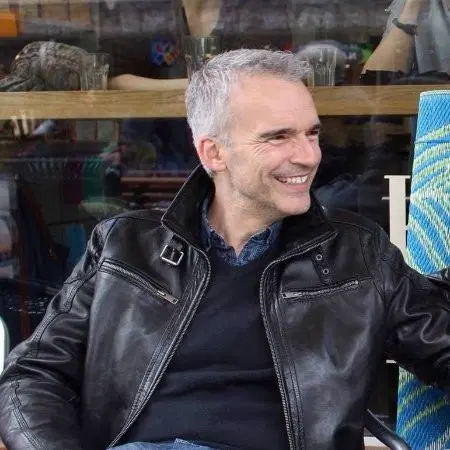
Professor David Sanderson
Pillar 7: Advance economic and social prosperity