School of the Arts & Media
Worlds away: co-designing virtual reality worlds with seriously ill young people in hospital
Imagination becomes a tool for well-being in immersive worldbuilding with young patients.
Published on the 26 February 2026

Imagination becomes a tool for well-being in immersive worldbuilding with young patients.

A virtual reality (VR) program gives young people with serious illnesses in hospitals an opportunity to escape, explore and express themselves.
Future Stories, an Australian Research Council (ARC) Discovery Project, explores the benefits of co-designing VR experiences with 12- to 21-year-olds in long-term treatment.
Young people at Queensland Children’s Hospital, Sydney Children’s Hospital and Cairns Hinterland Hospital have created bespoke immersive worlds, using their imaginations as a tool for wellbeing.
The project sits at the nexus of creativity and care, says chief investigator Professor Michael Balfour from UNSW’s School of the Arts & Media.
“For young patients, long-term hospital stays can feel endless. The double burden of illness and isolation can lead to feelings of anxiety, alienation and disempowerment, particularly adolescents whose friends are starting to socialise more and gain more independence,” says the expert in applied theatre and interdisciplinary arts research.
“The project makes the young person the ‘boss’. It gives them the agency and tools to shape their stories and transform their hospital experience.
“This co-creation approach demonstrates how the arts can play a vital role in supporting patients with compassion and ethical care, while recognising their capacity to participate, share their ideas, and celebrate their talents—even in the midst of illness.”
UNSW Sydney is partnering on the research with Central Queensland University (Dr Jan Cattoni), Griffith University (A/Prof. Margaret Gibson), Creative Arts and Health Research Lab (CAHREL) at Leeds Beckett University in the UK (Prof. Persephone Sextou), Queensland Children’s Hospital (Lynne Seear, Dr Anthony Herbert), Sydney Children’s Hospital (Susan Trethewie, Kirsty-Leah Goymour) and Cairns and Hinterland Hospital (Dr Neil Archer).
The project brings together multidisciplinary expertise in VR, film, applied theatre and sociology (specifically grief, death and dying) with medical and health teams, including paediatric oncology and palliative care, arts and health, and child life therapy (helping children cope positively with their healthcare experience).
The artists-in-residence program links young people with VR artist Guy Lobwein (UNSW) and filmmaker and former paediatric nurse Dr Jan Cattoni (Central Queensland University) for sessions over several weeks. The young person guides the creation of a virtual world that mirrors their interests, identity and dreams.
The worlds are distinctive and discovery-based with young people investing in a very personal process of meaning making, says Prof. Balfour.
“They’re populated with activities symbolic to the individual. Every young person has their own style. Their virtual worlds can feel like a reflection of how they play.”
The journey to world building is slow, mindful; “it’s about respectfully listening to their ideas”. It can involve drawing, writing, collecting images and video, narrative storytelling, AI image generation, building soundscapes and making 3D models.
“After the initial meeting where we introduce young people to VR and what they can do in these worlds, we often return to find all kinds of research and creative responses pasted up around their room.”
Dylan, a teenager with a passion for filmmaking and planes, knew almost instantly he wanted to fly a Concorde over the Brisbane River. “As soon as we got a really good idea, then it started firing up all these other ideas,” he said. “We had a whole story within a couple of weeks, and we started making it.”
He sketched a Concorde jet complete with a design livery and a plan of the runways at Brisbane Airport where you could land the aircraft, adding an interception by an unidentified aerial phenomenon (UAP) and a rescue by two F18 fighter jets over subsequent sessions.
Dylan took his role as co-researcher and co-creator seriously, becoming very interested in the coding and technology. “How to make it – coding and everything – is so much more simple than I actually thought, because Guy [Lobwein] showed me all the coding stuff,” he said.

Dylan, a teenager with a passion for planes, knew almost instantly he wanted to fly a Concorde over the Brisbane River. Photo: Supplied.
“It's just a click together on the computer. It's not really that hard. It's not as hard as you possibly think.”
By weeks five or six, the worlds are pretty much built, and the creators get to play in them. “It's like you've been taken out of the room into another world and it's like you're actually fully engaged in the other world,” Dylan says.
The project expands young patients’ environments, giving them access to the limitless landscapes of their imaginations, says Lynne Seear, Strategic Lead, Arts in Health Program at Children’s Health Queensland.
“We’re not just offering distraction—we’re offering agency. This is about giving young people a way to reclaim their space, their voice and their sense of self during a time when so much feels out of their control,” she says.
The project supports empowerment, Prof. Balfour says. “What makes Future Stories different is the co-design process. It’s not about escaping into someone else’s world—it’s about building your own.
“The experience of online co-creating can sometimes be more engaging than a bedside visit, as it allows young people to see the build take place and allows them to make decisions at each stage of the process. We’re there to celebrate and help realise the young people’s ideas, and they get enormous satisfaction.”
One of the highlights for the research team was seeing Dylan connect with his family during the design of his world and their shared experience of exploring it together, Prof. Balfour says.
“These virtual spaces aren’t just for solo exploration. They’re social, allowing young patients to connect and play with peers, staff and family. The creator becomes the tour guide of their world.”
The hospital environment is geared around their treatment by necessity; while young patients are consulted, this is more about what the treatment will look and feel like, he says.
“Whereas in their virtual worlds, they’re in control. They have a lot of fun showing their medical team – the experts – through their worlds, in some cases seeing how bad they are at navigating them. There’s a lot of laughter.”
These virtual worlds extend beyond the young people’s hospital stays. Each hospital has a VR headset that participants can access to play in worlds created by young people who might have gone through a similar experience or long-term stay.
Over the course of the project, some participants have passed away. “One of the things we hadn't quite appreciated was the legacies of these worlds and what they might mean for families,” Prof. Balfour says.
“Some parents have reported that it's been a really lovely way for them to celebrate the life of their child, through their imagination.
“Those legacy elements have been very powerful, for parents and siblings, but also the medical team. It gives them a window into the personality of those young people, an extra dimension to that relationship.”

Prof. Balfour says: “What makes Future Stories different is the co-design process. It’s not about escaping into someone else’s world – it’s about building your own.” Photo: Supplied.
Carter Giddy, a self-confessed “space-nerd”, knew instantly what he wanted to create: a moonscape you accessed via rocket and explored by moon buggy; you can meet and play fetch with Laika, the Russian dog that was the first animal to orbit Earth in 1957.
Carter lived with spinal muscular atrophy, a rare genetic condition that progressively weakens the muscles. The then 15-year-old took part in the pilot project during a 10-week stay at the Queensland Children's Hospital in Brisbane, describing the experience as “something to look forward to in-between doctors' appointments”.
“He was incredibly thorough; he knew the dimensions of the moon,” Prof. Balfour says. “We were able to download geographic maps of the moon, so his VR lunar scape is almost a replica.”
Carter passed away in 2022 at 17 years old. Having spent his life in and out of hospital, he could see the benefits of VR for long-term paediatric patients. “With a lot of kids who are in hospital for a very long time, they not only suffer from mental illness, but a lot of other things,” he said in 2021.
“With VR, it can give them a childhood that they never had. They can have fun without leaving their hospital room.”
With all the co-design research complete, the project team are engaging in qualitative research with nursing and medical staff, participants and families to examine how the model might scale across different institutions and cohorts.
The project has also attracted interest from the tech industry and has been officially selected for South x Southwest Sydney, accessing audiences outside academia and health.
“Future Stories offers young people a world away from their health needs and families an alternative space for re/connection with loved ones,” Prof. Balfour says.
“The research demonstrates how arts-based initiatives can improve quality of life and support critical care, enabling agency, creativity and connection for young patients.”
School of the Arts & Media
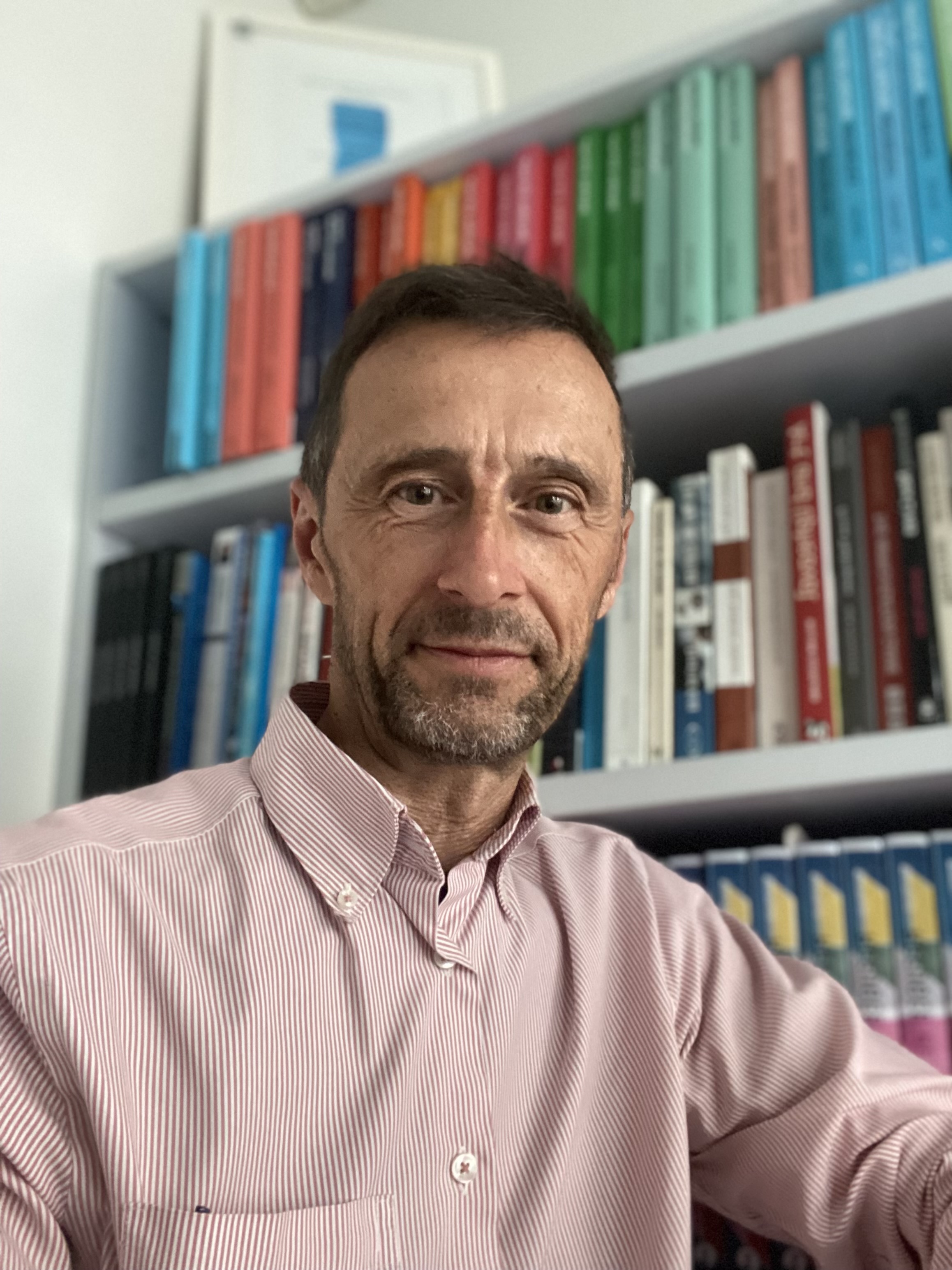
Professor Michael Balfour
Pillar 8: Enable healthy lives