Collaborations between Afghan and Pakistani journalists can raise hope and highlight humanitarian issues.

New research examines how cross-border collaborations create opportunities for peace journalism during prolonged conflict. Peace journalism moves beyond conflict-focused, often violent reporting to highlight constructive solutions and de-escalate tensions.

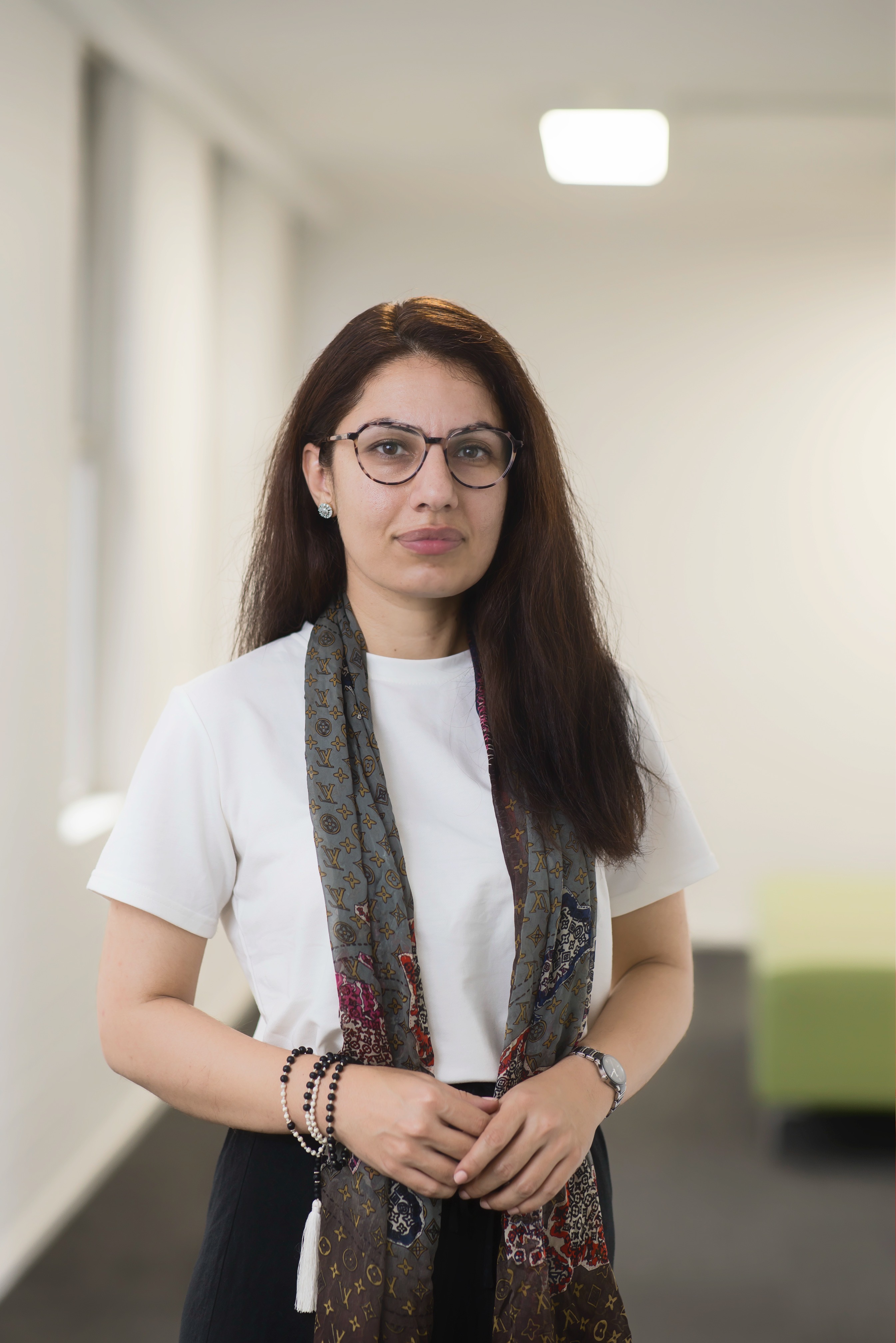
“Peace journalism promotes hope; it calls for justice and human rights. It’s about the choices journalists and editors make to support social and moral clarity,” says research co-lead Dr Ayesha Jehangir from UNSW’s School of the Arts & Media.

Dr Jehangir worked as a journalist in Pakistan and Afghanistan covering conflict, military operations, displacement and refugees. She is examining collaborations between Afghan and Pakistani journalists based in their homelands and working in exile.

“We know cross-border collaborations develop open-minded, multicultural journalists who are united through shared discourse and collective interpretations of key events,” Dr Jehangir says.

Recent exposés, including the Panama Papers and the Pandora Papers uncovering the offshore finance industry, have demonstrated the potential for collaboration to lead to large-scale impact. “But what if the journalists belong to countries involved in protracted conflict?

“Afghanistan and Pakistan – both under authoritarian regimes – have been in conflict for more than 40 years. Both sides blame each other for cross-border terrorism and violence on their lands.”

Hundreds of thousands of lives have been lost in direct terrorist attacks, military operations, armed violence and clashes at border checkpoints – with 1,871 casualties in 2024 alone.

In January 2025, 46 people were killed in unprovoked Pakistani military aerial strikes in Afghanistan, followed by the illegal deportation of registered Afghan refugees, often used as collateral in this conflict.

“These geopolitical rivalries shape the media agendas with mutual mistrust and historical grievances amplifying stereotypes.” However, there is an emerging consensus for change and moral clarity demonstrated within cross-border collaborations, she says.

“Many journalists already practice elements of peace, solutions-focused, development or conflict-sensitive journalism. They realise the need to focus on conflict causes, human cost and context over sensationalism.”

One Afghan journalist said: I try to focus on structural and cultural causes of violence and how it must not be accepted as normal ... That’s fundamental to my peace journalism.”

The research examines how cross-border collaborations can counteract the perpetuation of hate and stereotypes and help humanise the narratives surrounding those affected on both sides.

Dr Jehangir researches the mediation of human suffering in war and conflict zones and how such news is received by the broader audience. She’s the author of Afghan Refugees, Pakistani Media and the State: The Missing Peace (2024) and was a 2024 Weizenbaum Institute Open Fellow (Berlin), where her research focused on exiled journalists from war and conflict zones.

She is partnering on the project, conducted as part of her International Association for Media and Communication Research (IAMCR) Peace Fellowship (2024-2026), with Shabir Hussain, professor of media studies and peace communication at Bahria University, Pakistan.

Legitimising the personal alongside the political

The study identifies shared journalistic values and challenges inherent in the production of cross-border peace journalism between the two countries. It examines the emerging strategies, innovations and technologies journalists use in their collaborations, particularly in reporting human suffering, peace and social justice.

The project uses mixed methods research. It has mapped three years of coverage by Afghan and Pakistani media to identify cross-border peace journalism collaborations from the fall of Kabul in August 2021.

“The period covers many key events, such as the Pakistani government's illegal crackdown on Afghan refugees who entered the country post-2021, as well as their forced repatriation in 2025,” she says. “For years, most of the journalism produced in both countries has echoed nationalistic narratives of war.

“Journalists can experience editorial pressures to perpetuate bias and omit human stories. This leads to an over-emphasis on terrorism, trade disputes, and law and order issues. The blame game is framed through media coverage.”

The team conducted in-depth interviews with 20 Afghan and Pakistani journalists, and other media professionals, who engaged in cross-border collaboration during this time.

“The [stories’] predominant focus was human suffering – it was not about the Taliban. It was not about the Pakistani military and its control over government.

“It was about the suffering of the people, about the refugees who have to cross the Durand line [the disputed colonial border between Afghanistan and Pakistan that separates the Pashtun-majority areas].

“They do this [crossing] sometimes on a daily basis for health reasons – in Afghanistan, a male doctor cannot help a woman give birth – to visit family or conduct trade.”

These journalists have often experienced the conflict firsthand, “so it becomes very political but also very personal,” she says. “They want their people’s voice to be listened to, because they’ve realised nobody else is going to tell their stories.

“So they find in themselves a moral responsibility towards social justice, towards human rights.” However, these personal connections – to the land, the language, the people – have been used to discredit their work, she says.

“Here objectivity is weaponised, it’s used to silence journalists. But stories are meant to evoke emotions. Journalism is a public good. There was a recognised need [demonstrated in the interviews] to preserve agency and self-determination in storytelling, to promote accuracy rather than objectivity.”

As one Afghan journalist said: “Peace starts when people see each other with empathy.” Human stories are integral to this, she says.

Structural barriers to balanced reporting

Structural barriers make balanced reporting difficult, the research found. “The journalists agreed the current coverage is typically negative, scrutinised and shaped by elite interests,” Dr Jehangir says.

“Journalists rely heavily on official sources prone to bias and propaganda. Access to conflict zones and border areas as well as data can be restricted.”

One Pakistani journalist of Pashtun background said: “I had no other choice but to stay with a family of refugees in the camp – pretending to be one of them – so I could get some access at least.”

Many reported fearing surveillance and prosecution. An Afghan journalist said: “We have to be very careful about what we report here, because the Taliban will prosecute us if they think we are writing against them … When we go back home, it can be dangerous.

“They arrested my friend who went [back] as part of forced refugee repatriation by Pakistani government and they kept him in detention, beat him for four days, and starve [sic] him. When he came out, his body was all blue and black.”

The unequal power dynamics within these inter-personal, structural and institutional relationships as well as professional hierarchies act as a barrier to forging collaborations, Dr Jehangir says.

Creating contact zones to promote cross-border journalism

As part of the project, Dr Jehangir and her co-lead are working on launching the Cross-border Peace Journalism Initiative (CPJI), an encrypted online initiative to bring together Afghan and Pakistani journalists to promote peace journalism.

“During the research, we discovered there were a lot of lost opportunities, because of ethno-nationalism, cultural and political tensions, access issues, and hierarchies within newsrooms,” she says.

“The CPJI creates a contact zone to (re)connect journalists and media outlets and produce impactful pieces and platform grassroots voices on issues underreported, misrepresented or entirely ignored by mainstream media.”

It creates new avenues to build trust and establish networks with independent and digital newsrooms, such as Zan Times, resourced by Afghan women editors and journalists (Zan is the Persian word for woman), The New Humanitarian, and Global Voices.

The CPJI will host workshops and seminars to share insights and promote greater visibility of cross-border peace journalism. “We hope to help facilitate and sustain peace journalism collaborations within this charged political context.

“This case study provides lessons for cross-border initiatives in the wider South Asian region. As one of the Afghan journalists we interviewed said: ‘Media has contributed to suspicion ... [but] the same media can help solve the problem’.”


Written by Kay Harrison
School/Centre

School of the Arts & Media

Researcher

Dr Ayesha Jehangir

Pillar

Pillar 9: Strengthen societal resilience, security and cohesion