School of the Arts & Media
Dementia-friendly screening program advances inclusion in Australian screen culture
The program fosters an ethics of care through the cinema experience for people living with dementia.
Published on the 26 February 2026

The program fosters an ethics of care through the cinema experience for people living with dementia.

A dementia-friendly screening program is developing more inclusive cinema practices, prioritising lived experience, community collaboration and policy transformation.
A Day at the Movies, the first program of its kind in Australia, is hosting nine dementia-friendly matinee screenings in partnership with the National Film and Sound Archive (NSFA), Canberra.
The three-year program facilitates social opportunities for people living with dementia and their friends and families; raises dementia awareness; and contributes to more inclusive cities through training and development.
The past decade has seen a steady stream of dementia-themed films with some, such as The Father (2020) and Supernova (2020), receiving both critical and popular acclaim, says project creator and lead researcher Associate Professor Jodi Brooks from UNSW’s School of the Arts & Media.
“Some use film’s expressive means to try and portray lived experiences of Alzheimer’s disease, others –perhaps the majority – offer sensationalist and stigmatising representations of dementia as a fate worse than death, depicting a rapid, linear decline from diagnosis to an erasure of self.
“But none of these dementia-themed films are for people with dementia. Despite the industry’s voracity for films about dementia, little has been done to make the cinema experience more equitable and accessible for people living with dementia.”
The program promotes an ethics of care for people living with dementia through the cinema experience, she says. “It prioritises the familiar, sensory experience of cinema going, revaluing small everyday moments. For example, our audiences love the complimentary choc-tops and the post-screening conversations and company.
“It creates opportunities for people living with dementia to connect with the broader community, friends and family, and indeed their own histories, pleasures and the pleasure of the moment.”
A/Prof. Brooks is partnering on the research with screen and media academic Dr Fincina Hopgood from the University of New England and independent screen culture and audience development specialist Karina Libbey.
The project is funded by the ACT Government as part of its Age-Friendly City Plan with in-kind support from the NFSA, Carers ACT, Dementia Australia and the ACT Ministerial Advisory Council on Ageing, and sponsorship from Bulla Dairy Foods.
The program is building capacity within film institutions and creating enduring stakeholder relationships as well as developing film discourse and community knowledge. It prioritises accessibility and inclusion as critical aspects of audience development, expanding who is included, welcomed and valued.
The program launched during Dementia Action Week in 2024 with a screening of the 2016 Australian film Strictly Ballroom. Audience numbers are kept below 70 for comfort, ease of movement and to enhance opportunities for connections. Tickets often booked many weeks in advance.
The launch follows several years of research, extensive community consultation and a successful 2022 pilot screening of The Sapphires. Its success prompted the NFSA to embed dementia-inclusiveness into its new Disability Inclusion Action Plan.
A/Prof. Brooks’ research includes an interest in ageing, both in and with cinema; the program continues her interest in “category-trouble”, here the ambiguous positioning of dementia across categories of health, ageing and disability.
“This ambiguity has often led to its exclusion from accessibility conversations in cinema, which tend to focus on assistive technologies,” she says.
“Societal responses to dementia are further complicated by its reference to a range of symptoms caused by disorders to the brain. Dementia is not a singular condition and there’s no singular lived experience of dementia.”
There are an estimated 446,500 people living with dementia in Australia. Without a significant intervention, this number is expected to increase to more than 1 million by 2065.
“With the acceleration of dementia and early onset dementia diagnosis across our population now and into the future, providing such friendly community-based recreational spaces is as important as providing ‘mums and bub's movie sessions’ currently available in mainstream cinemas,” says Associate Professor Cathy Hope, Chair of the ACT Ministerial Advisory Council and Ageing.
At the screening of 9 to 5, a partner-carer shared that it was the first time her husband, a film lover who has dementia and is non-verbal, had been able to go to the movies in more than a decade; he had really enjoyed the experience.

A Day at the Movies screening of the Hollywood comedy Send Me No Flowers (1964) at the Arc cinema, National Film and Sound Archive, Canberra. Photo: Fincina Hopgood.
The screenings are informed by dementia-friendly principles, from programming and scheduling (time of day, film choice) to venue design.
They draw on both Dementia Australia’s guidelines for creating dementia-friendly venues and A/Prof. Brooks’s research into dementia-friendly and dementia-inclusive film screenings and movie memory activities in the UK.
“Designing dementia-friendly screenings is about removing and rethinking the physical and social barriers to cinema-going so that accessibility and inclusion, regardless of age and ability, are built into the movie-going experience,” says Dr Hopgood.
The project has helped build dementia-awareness and dementia-inclusive practices at the NFSA. Dementia Australia-trained NFSA venue staff and event organisers are on site to welcome and assist visitors.
Staff training and awareness is critical to increasing accessibility, says Ms Libbey. “Ensuring front of house staff are confident and understand how to engage with people with a range of access needs makes a world of difference to that person’s experience.”
The house lights are on low to enable people to move around, the volume slightly reduced, with additional wayfinding and information signage provided. Coffee and tea prior, an interval with movie snacks, and afternoon tea in the NFSA courtyard, along with an associated film appreciation group provide opportunities to connect.
“People living with dementia often experience forms of social isolation and discrimination. They can lose access to familiar, meaningful and enjoyable social activities, such as going to the movies,” says A/Prof. Brooks.
“While these sessions are open to the public, they’re tailored for the enjoyment and comfort of people living with dementia. The screenings, film club and afternoon tea help strengthen community networks and enable participation in the life of the city.
“Film sharing becomes a point of entry to discussing other areas of their lives, to promoting knowledge and awareness within the broader community, and connecting people living with dementia, some of whom are in residential care, as well as their partner-carers and families to the wider community.”
Films are chosen for their familiarity, sensory qualities and potential to provoke nostalgia and engagement, she says. “But most importantly, for their enjoyment level.
“The Sapphires, for example, is enjoyable without full narrative comprehension; it features songs from the sixties many of our intended audience would be familiar with.”
The screenings tie in with community calendar events to help build a more intersectional understanding of dementia and its impacts. For example, the American classic 9 to 5 (1980) with screen icons Dolly Parton, Jane Fonda and Lily Tomlin screened during springOUT, Canberra’s LGBTQIA+ festival.
“Showing 9 to 5, a film loved by the LGBT+ community that also has broader appeal, enabled LGBT+ audiences to attend without feeling they had to out themselves in the way that screening a queer classic like Desert Hearts or Brokeback Mountain might.”
Dementia-friendly screenings have been a feature of UK screen culture for close to a decade; they’re a regular part of UK’s accessible and inclusive screen culture, A/Prof. Brooks says.
“While there’s been a lot of interest in dementia-friendly screenings in Australia, cinemas are yet to offer these as a part of their regular programming.
“Here, discussion and initiatives around disability and inclusion has focused more on on-screen representation and behind the camera participation, rather than those consuming and enjoying it.”
The program capitalises on advances made overseas, she says. “This includes understanding the best ways to reach the rich diversity of people living with dementia, and how to make these kinds of screenings sustainable.”
The project is evaluating feedback and program design to promote a broader understanding of inclusivity. “This means resourcing across the range of elements that can make a cinema screening accessible, from scheduling, event promotion and film selection to assistive technologies, wayfinding signage and theatre layout,” she says.
“Ultimately, I’d like to see us have something like the BFI Film Audience Network (BFI FAN), which aims to increase access to screen culture for all and ensure that the greatest choice of film is available for everyone.”
An inclusive screen culture helps facilitate more connected communities, she says. “Cinema-going is a multi-sensory participatory activity. Cinemas are spaces where people get to feel part of a crowd, spaces where we get to be amongst other people to enjoy an activity that’s both personal and shared.
“Catering for diverse audiences creates opportunities for interaction and understanding, across generations, cultures, socio-economic status and more.
“The dementia-friendly screening program demonstrates how broader awareness and training can play a valuable role in de-stigmatising dementia and creating dementia-friendly communities.”
School of the Arts & Media
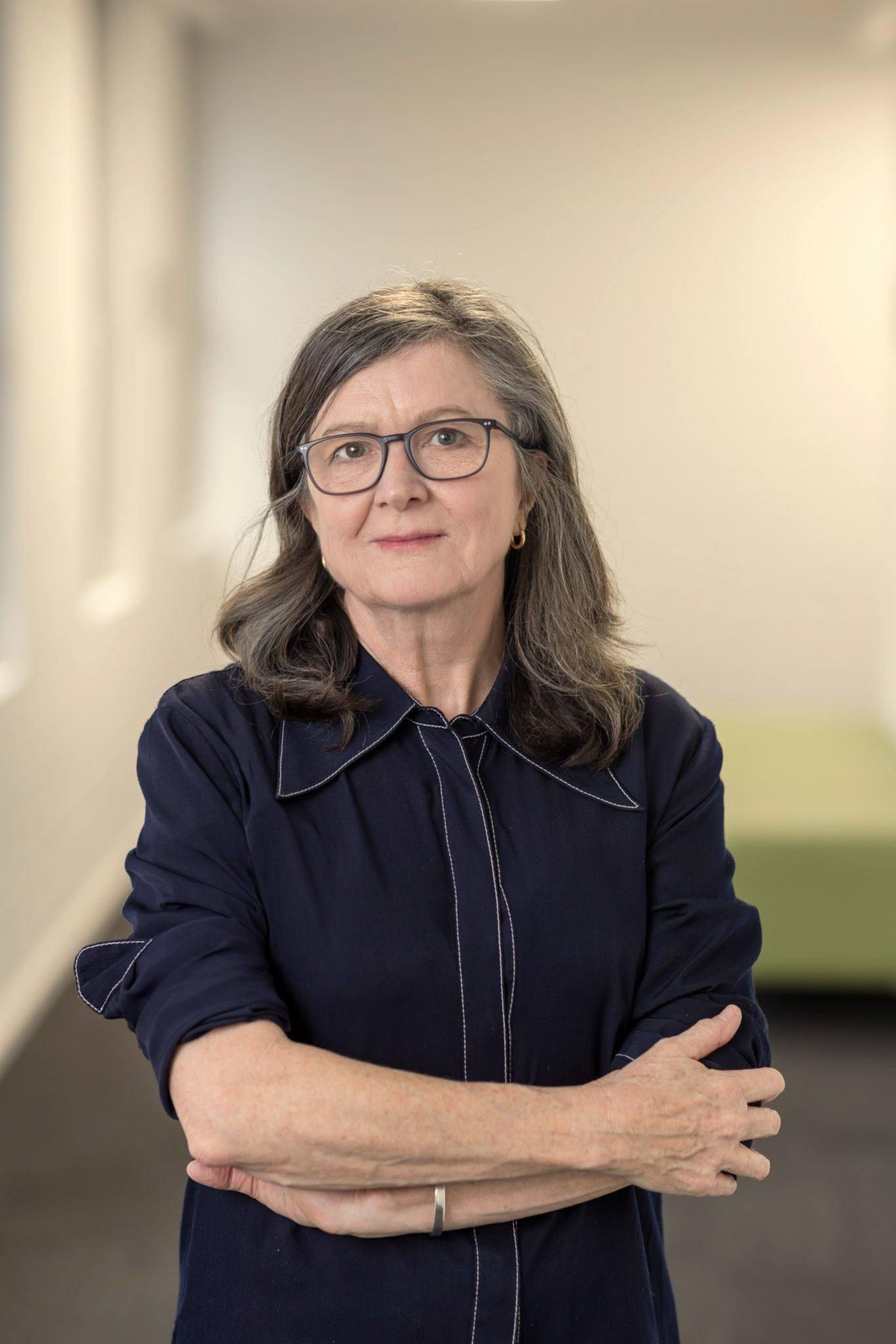
Associate Professor Jodi Brooks
Pillar 8: Enable healthy lives